Wolever Ruth Q, Simmons Leigh Ann, Sforzo Gary A, Dill Diana, Kaye Miranda, Bechard Elizabeth M, Southard Mary Elaine, Kennedy Mary, Vosloo Justine, Yang Nancy
Duke Integrative Medicine, Duke University Health System, Durham, North Carolina and Department of Psychiatry and Behavioral Science, Duke School of Medicine, Durham, NC, United States.
Duke Integrative Medicine, Duke University Health System, Durham, North Carolina and Duke School of Nursing, Durham, United States.
Glob Adv Health Med. 2013 Jul;2(4):38-57. doi: 10.7453/gahmj.2013.042.
Review the operational definitions of health and wellness coaching as published in the peer-reviewed medical literature.
As global rates of preventable chronic diseases have reached epidemic proportions, there has been an increased focus on strategies to improve health behaviors and associated outcomes. One such strategy, health and wellness coaching, has been inconsistently defined and shown mixed results.
A Preferred Reporting Items for Systematic Reviews and Meta-Analyses (PRISMA)-guided systematic review of the medical literature on health and wellness coaching allowed for compilation of data on specific features of the coaching interventions and background and training of coaches.
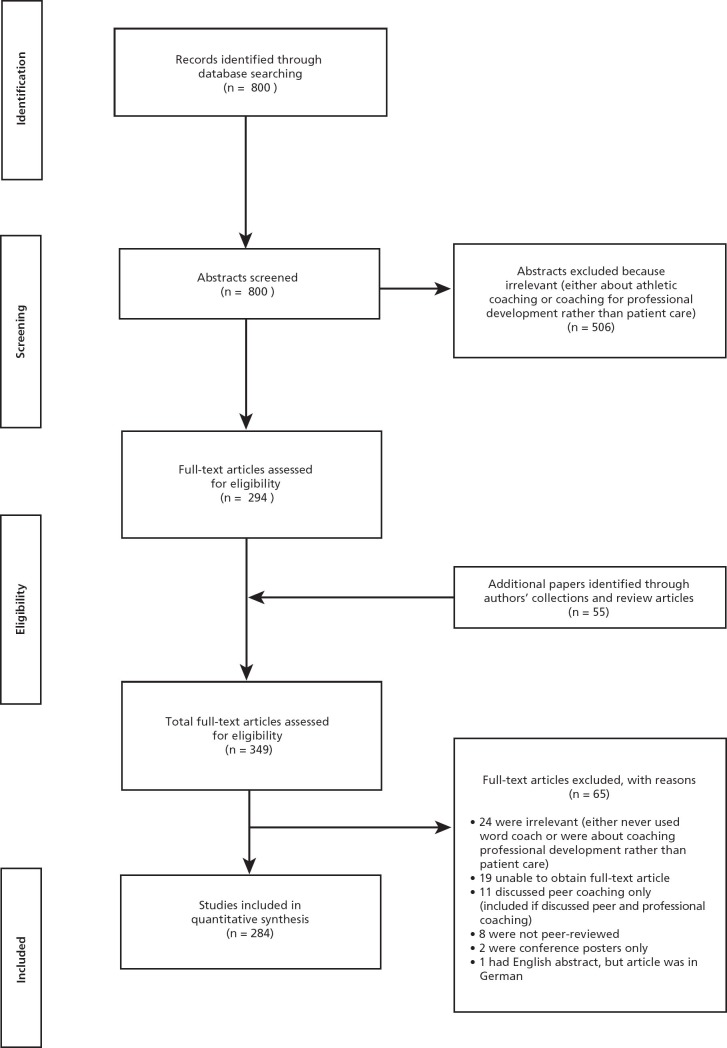
Eight hundred abstracts were initially identified through PubMed, with 284 full-text articles ultimately included. The majority (76%) were empirical articles. The literature operationalized health and wellness coaching as a process that is fully or partially patient-centered (86% of articles), included patient-determined goals (71%), incorporated self-discovery and active learning processes (63%) (vs more passive receipt of advice), encouraged accountability for behaviors (86%), and provided some type of education to patients along with using coaching processes (91%). Additionally, 78% of articles indicated that the coaching occurs in the context of a consistent, ongoing relationship with a human coach who is trained in specific behavior change, communication, and motivational skills.
Despite disparities in how health and wellness coaching have been operationalized previously, this systematic review observes an emerging consensus in what is referred to as health and wellness coaching; namely, a patient-centered process that is based upon behavior change theory and is delivered by health professionals with diverse backgrounds. The actual coaching process entails goal-setting determined by the patient, encourages self-discovery in addition to content education, and incorporates mechanisms for developing accountability in health behaviors. With a clear definition for health and wellness coaching, robust research can more accurately assess the effectiveness of the approach in bringing about changes in health behaviors, health outcomes and associated costs that are targeted to reduce the global burden of chronic disease.
回顾同行评审医学文献中发表的健康与健康指导的操作定义。
由于全球可预防慢性病的发病率已达到流行程度,人们越来越关注改善健康行为及相关结果的策略。健康与健康指导就是这样一种策略,其定义一直不统一,效果也参差不齐。
按照系统评价与Meta分析的首选报告项目(PRISMA)指南,对关于健康与健康指导的医学文献进行系统评价,以便汇总有关指导干预措施的具体特征以及指导者背景和培训的数据。
最初通过PubMed识别出800篇摘要,最终纳入284篇全文文章。大多数(76%)为实证文章。文献将健康与健康指导定义为一个完全或部分以患者为中心的过程(86%的文章),包括患者确定的目标(71%),纳入自我发现和主动学习过程(63%)(相比更多被动接受建议),鼓励对行为负责(86%),并在使用指导过程的同时为患者提供某种类型的教育(91%)。此外,78%的文章表明,指导是在与经过特定行为改变、沟通和激励技能培训的人类指导者建立持续、稳定关系的背景下进行的。
尽管此前健康与健康指导的操作方式存在差异,但本系统评价观察到在所谓的健康与健康指导方面正在形成一种共识;即一个以患者为中心的过程,该过程基于行为改变理论,由背景各异的健康专业人员实施。实际的指导过程需要患者确定目标,除了内容教育外还鼓励自我发现,并纳入培养健康行为责任感的机制。有了健康与健康指导的明确定义,有力的研究就能更准确地评估该方法在带来健康行为、健康结果及相关成本变化方面的有效性,这些变化旨在减轻全球慢性病负担。