Department of Pharmacy, Unit of Pharmaco Epidemiology & Pharmaco Economics, University of Groningen, Groningen, The Netherlands.
BMC Nephrol. 2014 Jan 15;15:15. doi: 10.1186/1471-2369-15-15.
Structured comparison of pharmacoeconomic analyses for ACEIs and ARBs in patients with type 2 diabetic nephropathy is still lacking. This review aims to systematically review the cost-effectiveness of both ACEIs and ARBs in type 2 diabetic patients with nephropathy.
A systematic literature search was performed in MEDLINE and EMBASE for the period from November 1, 1999 to Oct 31, 2011. Two reviewers independently assessed the quality of the articles included and extracted data. All cost-effectiveness results were converted to 2011 Euros.
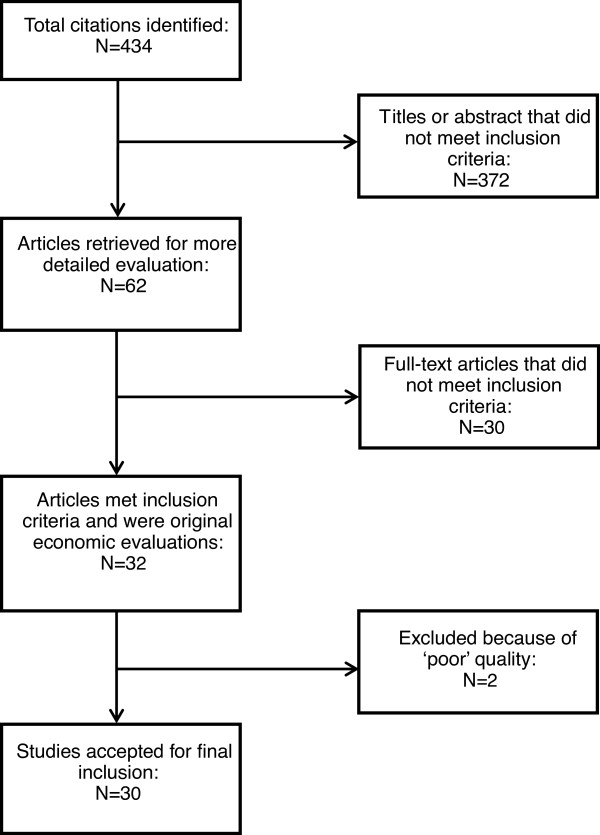
Up to October 2011, 434 articles were identified. After full-text checking and quality assessment, 30 articles were finally included in this review involving 39 study settings. All 6 ACEIs studies were literature-based evaluations which synthesized data from different sources. Other 33 studies were directed at ARBs and were designed based on specific trials. The Markov model was the most common decision analytic method used in the evaluations. From the cost-effectiveness results, 37 out of 39 studies indicated either ACEIs or ARBs were cost-saving comparing with placebo/conventional treatment, such as amlodipine. A lack of evidence was assessed for valid direct comparison of cost-effectiveness between ACEIs and ARBs.
There is a lack of direct comparisons of ACEIs and ARBs in existing economic evaluations. Considering the current evidence, both ACEIs and ARBs are likely cost-saving comparing with conventional therapy, excluding such RAAS inhibitors.
在 2 型糖尿病肾病患者中,血管紧张素转换酶抑制剂(ACEI)和血管紧张素受体阻滞剂(ARB)的药物经济学分析比较仍然缺乏。本综述旨在系统地评价 ACEI 和 ARB 在 2 型糖尿病肾病患者中的成本效益。
在 1999 年 11 月 1 日至 2011 年 10 月 31 日期间,我们在 MEDLINE 和 EMBASE 中进行了系统的文献检索。两位审查员独立评估了纳入文献的质量并提取数据。所有成本效益结果均转换为 2011 年欧元。
截至 2011 年 10 月,共检索到 434 篇文献。经过全文审查和质量评估,最终有 30 篇文献符合纳入标准,涉及 39 个研究地点。6 项 ACEI 研究均为基于文献的评价,综合了来自不同来源的数据。其他 33 项研究针对 ARB,是基于特定试验设计的。Markov 模型是评价中最常用的决策分析方法。从成本效益结果来看,39 项研究中有 37 项表明 ACEI 或 ARB 与安慰剂/常规治疗相比具有成本效益,如氨氯地平。缺乏证据来评估 ACEI 和 ARB 之间成本效益的直接比较。
在现有的经济学评价中,缺乏 ACEI 和 ARB 的直接比较。考虑到目前的证据,ACEI 和 ARB 与常规治疗相比可能具有成本效益,除了这类 RAAS 抑制剂。