Biermann B, Sokoll S, Klueva J, Missler M, Wiegert J S, Sibarita J-B, Heine M
1] Research Group Molecular Physiology, Leibniz-Institute of Neurobiology, Brenneckestrasse 6, D-39118 Magdeburg, Germany [2] Institute of Anatomy and Molecular Neurobiology, Westfälische Wilhelms-University, Vesaliusweg 2-4, D-48149 Münster, Germany [3].
1] Research Group Molecular Physiology, Leibniz-Institute of Neurobiology, Brenneckestrasse 6, D-39118 Magdeburg, Germany [2].
Nat Commun. 2014;5:3024. doi: 10.1038/ncomms4024.
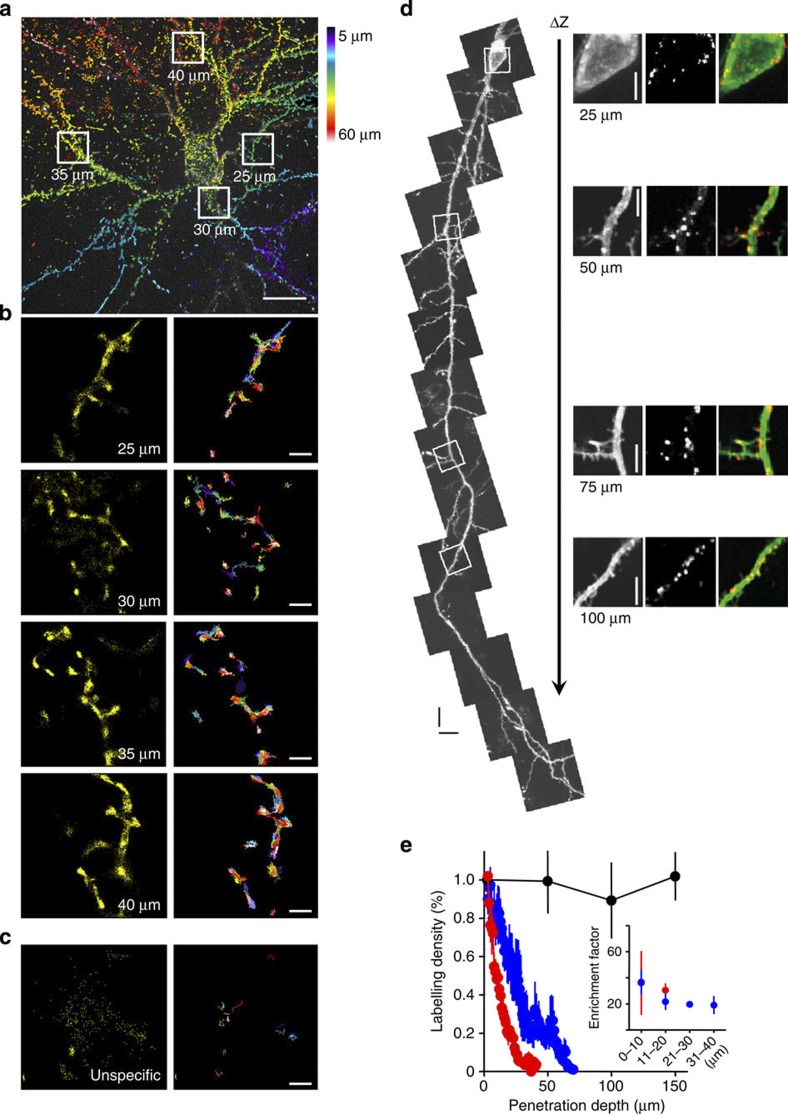
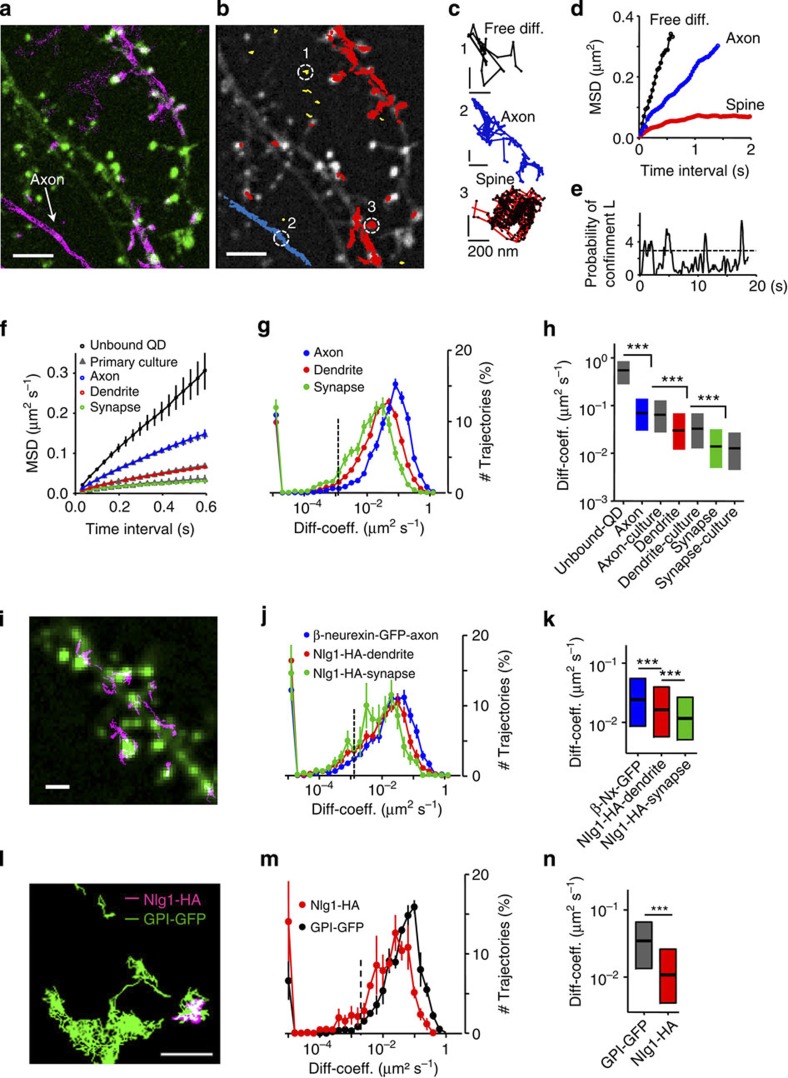
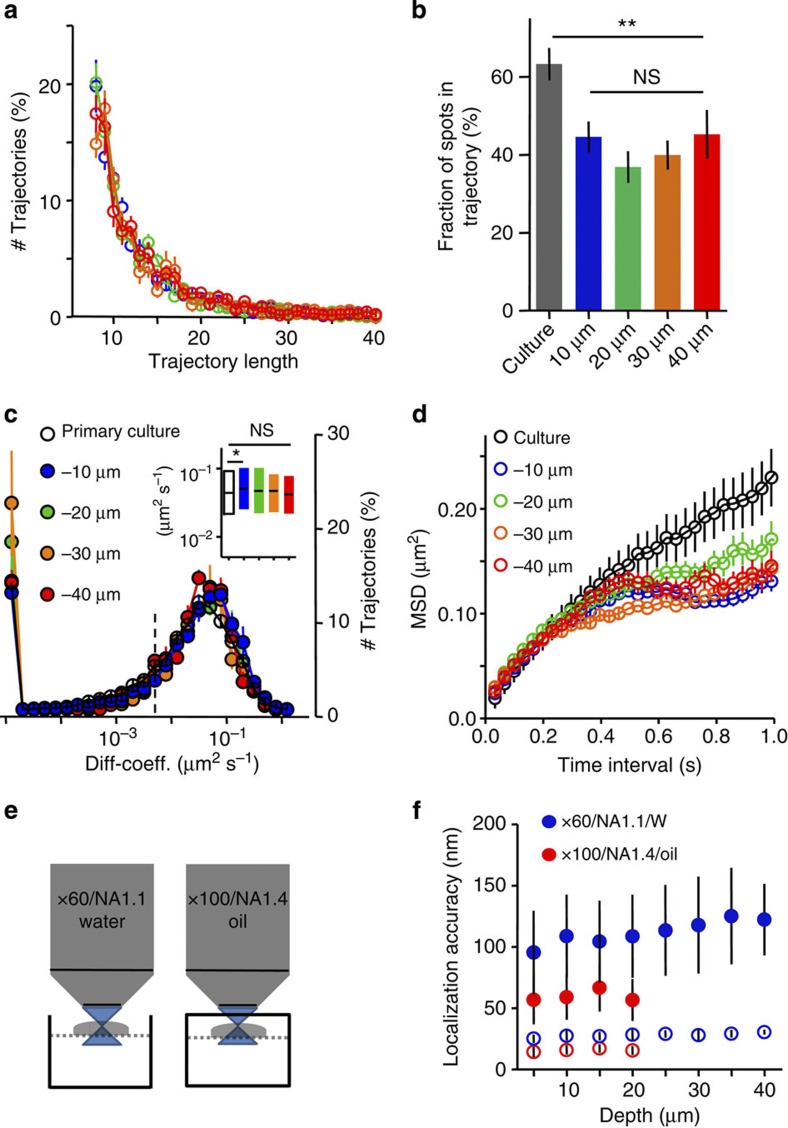
Organization of signalling molecules in biological membranes is crucial for cellular communication. Many receptors, ion channels and cell adhesion molecules are associated with proteins important for their trafficking, surface localization or function. These complexes are embedded in a lipid environment of varying composition. Binding affinities and stoichiometry of such complexes were so far experimentally accessible only in isolated systems or monolayers of cell culture. Visualization of molecular dynamics within signalling complexes and their correlation to specialized membrane compartments demand high temporal and spatial resolution and has been difficult to demonstrate in complex tissue like brain slices. Here we demonstrate the feasibility of single-particle tracking (SPT) in organotypic brain slices to measure molecular dynamics of lipids and transmembrane proteins in correlation to synaptic membrane compartments. This method will provide important information about the dynamics and organization of surface molecules in the complex environment of neuronal networks within brain slices.
生物膜中信号分子的组织对于细胞通讯至关重要。许多受体、离子通道和细胞粘附分子都与对其运输、表面定位或功能很重要的蛋白质相关联。这些复合物嵌入在成分各异的脂质环境中。迄今为止,此类复合物的结合亲和力和化学计量仅在分离系统或细胞培养单层中通过实验才能获得。信号复合物内分子动力学的可视化及其与特殊膜区室的相关性需要高时间和空间分辨率,并且在像脑片这样的复杂组织中很难证明。在这里,我们证明了在器官型脑片中进行单粒子追踪(SPT)以测量脂质和跨膜蛋白与突触膜区室相关的分子动力学的可行性。该方法将提供有关脑片内神经网络复杂环境中表面分子的动力学和组织的重要信息。