Lee M-J, Fried S K
Section of Endocrinology, Diabetes and Nutrition, Department of Medicine, Boston University School of Medicine, Boston, MA, USA.
Int J Obes (Lond). 2014 Sep;38(9):1228-33. doi: 10.1038/ijo.2014.6. Epub 2014 Jan 16.
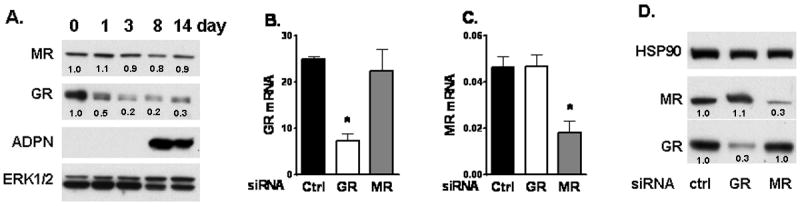
Both the glucocorticoid receptor (GR) and the mineralocorticoid receptor (MR) are expressed in adipose tissue and assumed to mediate cortisol actions on adipose tissue. The relative significance of the two receptors in mediating glucocorticoid regulation of adipogenesis and adipokine expression in human adipocytes has not been addressed.
We investigated the differential roles of the GR and MR in mediating glucocorticoid actions on adipogenesis and adipokine production using RNA interference in primary cultures of human preadipocytes and adipocytes.
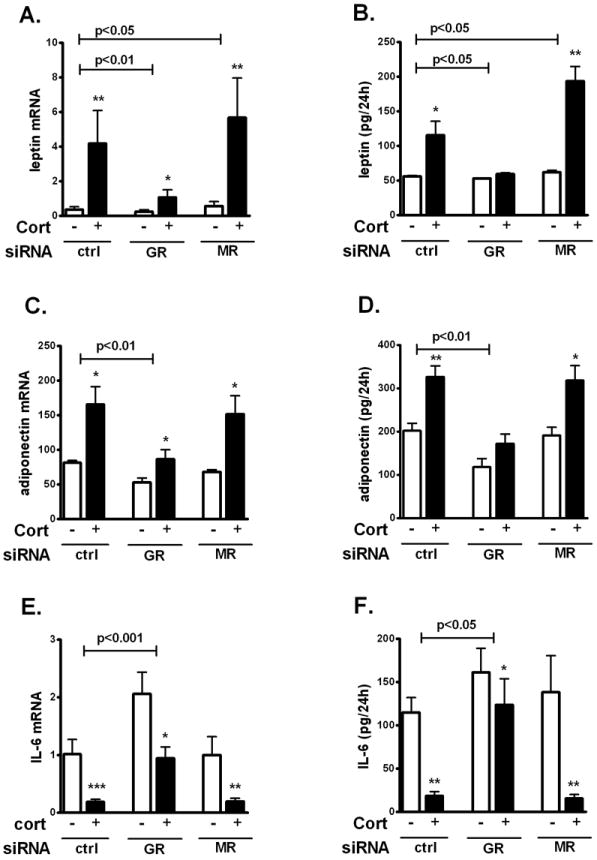
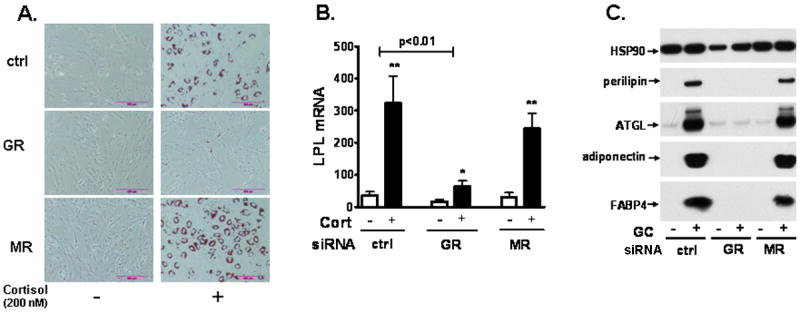
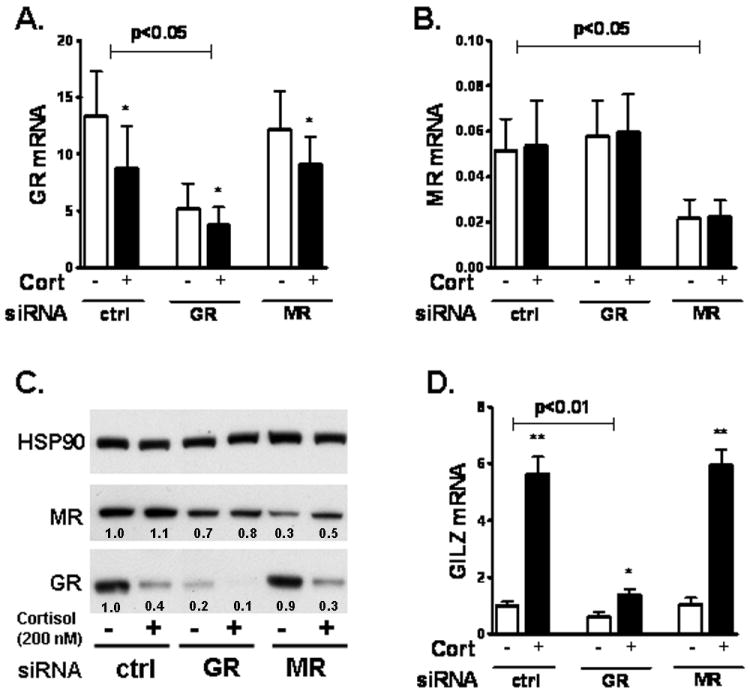
Both types of receptors are expressed, but levels of GR were several hundred fold higher than MR in both human preadipocytes and adipocytes. As expected, cortisol added during adipogenesis increased the differentiation of human preadipocytes. Silencing of GR, but not MR, blocked these proadipogenic actions of cortisol. In differentiated human adipocytes, addition of cortisol increased leptin and adiponectin, while suppressing interleukin-6 (IL-6), messenger RNA levels and protein secretion. Knockdown of GR by 65% decreased leptin and adiponectin while increasing IL-6 production. In addition, GR silencing blocked the effects of cortisol on adipokine expression. In contrast, although MR knockdown increased leptin, it did not affect adiponectin and IL-6 expression.
Our data demonstrate that although both GR and MR have roles in regulating leptin expression, GR plays more important roles in mediating the actions of cortisol to regulate adipogenesis and adipokine production in human adipocytes.
糖皮质激素受体(GR)和盐皮质激素受体(MR)均在脂肪组织中表达,并被认为介导皮质醇对脂肪组织的作用。这两种受体在介导糖皮质激素对人脂肪细胞脂肪生成和脂肪因子表达的调节中的相对重要性尚未得到探讨。
我们使用RNA干扰技术,在人前脂肪细胞和脂肪细胞的原代培养物中研究了GR和MR在介导糖皮质激素对脂肪生成和脂肪因子产生的作用中的不同作用。
两种受体均有表达,但在人前脂肪细胞和脂肪细胞中,GR的水平均比MR高数百倍。正如预期的那样,在脂肪生成过程中添加皮质醇可增加人前脂肪细胞的分化。GR的沉默而非MR的沉默阻断了皮质醇的这些促脂肪生成作用。在分化的人脂肪细胞中,添加皮质醇可增加瘦素和脂联素,同时抑制白细胞介素-6(IL-6)的信使RNA水平和蛋白质分泌。GR敲低65%会降低瘦素和脂联素水平,同时增加IL-6的产生。此外,GR沉默阻断了皮质醇对脂肪因子表达的影响。相比之下,尽管MR敲低会增加瘦素,但它不影响脂联素和IL-6的表达。
我们的数据表明,尽管GR和MR在调节瘦素表达中均起作用,但GR在介导皮质醇调节人脂肪细胞脂肪生成和脂肪因子产生的作用中发挥更重要的作用。