Department of Pediatrics, University of Southern California Keck School of Medicine, 2250 Alcazar St, Ste 211, Los Angeles 90089, CA, USA.
BMC Complement Altern Med. 2014 Jan 17;14:28. doi: 10.1186/1472-6882-14-28.
There is an urgent need for innovative and developmentally appropriate lifestyle interventions to promote healthy lifestyle behaviors and to prevent the early onset of type 2 diabetes and cardiovascular disease risk in obese Latino adolescents. Guided imagery offers promise to reduce stress and promote lifestyle behavior change to reduce disease risk in obese adolescents. Our objectives were: 1) To pilot test a new 12-wk lifestyle intervention using a randomized trial design in obese Latino adolescents, in order to determine the effects of the mind-body modality of Interactive Guided ImagerySM (IGI), over and above those of a didactic lifestyle education, on insulin resistance, eating and physical activity behaviors, stress and stress biomarkers; and 2) To explore the role of intervention-related changes in stress and stress biomarkers on changes in metabolic outcomes, particularly insulin resistance.
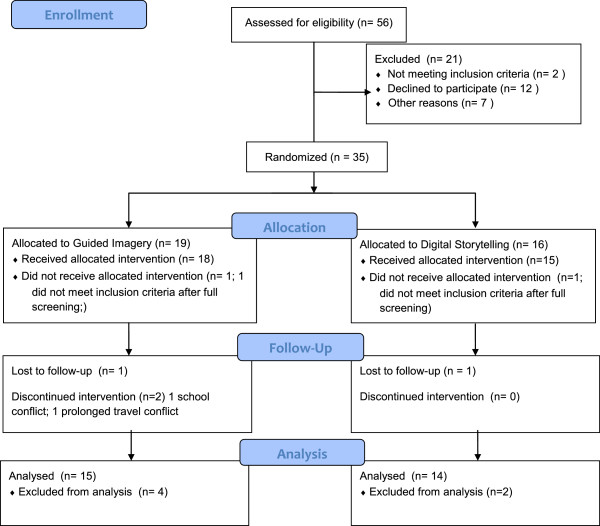
Obese (BMI > 95th percentile), Latino adolescents (n = 35, age 14-17) were randomized to receive either 12 weekly sessions of a lifestyle education plus guided imagery program (GI), or lifestyle education plus a digital storytelling computer program (DS). Between-group differences in behavioral, biological, and psychological outcomes were assessed using unpaired T-tests and ANCOVA in the 29 subjects who completed the intervention.
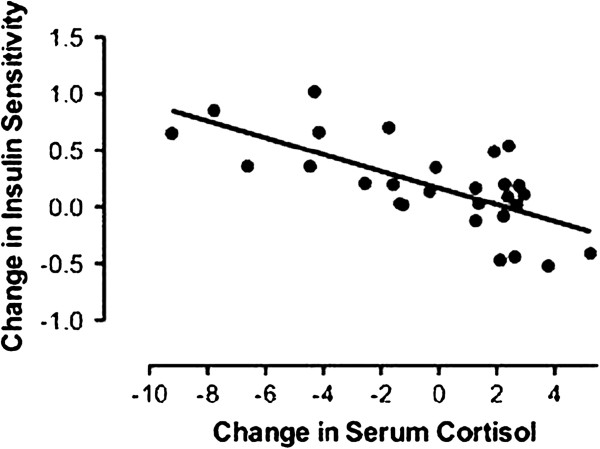
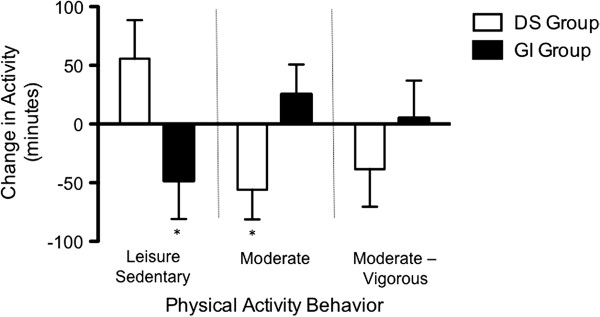
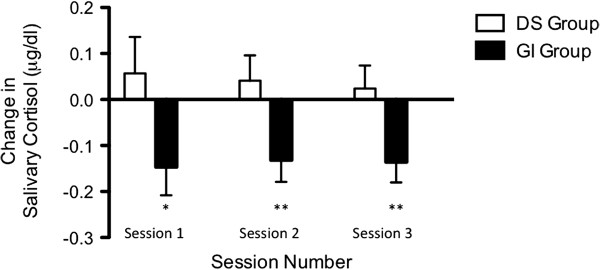
The GI group demonstrated significant reductions in leisure sedentary behavior (p < .05) and increases in moderate physical activity (p < .05) compared to DS group, and a trend toward reduced caloric intake in GI vs DS (p = .09). Salivary cortisol was acutely reduced by stress-reduction guided imagery (p < .01). There were no group differences in adiposity, insulin resistance, perceived stress, or stress biomarkers across the 12-week intervention, though decrease in serum cortisol over the course of the intervention was associated with improved insulin sensitivity (p = .03) independent of intervention group and other relevant co-variates.
The improvements in physical activity and stress biomarkers following this pilot intervention support the role of guided imagery in promoting healthy lifestyle behavior change and reducing metabolic disease risk in obese Latino adolescent populations. Future investigations will be needed to determine the full effects of the Imagine HEALTH intervention on insulin resistance, stress, and stress biomarkers.
Clinicaltrials.gov Registry #: NCT01895595.
迫切需要创新和适合发展的生活方式干预措施,以促进健康的生活方式行为,并预防肥胖拉丁裔青少年 2 型糖尿病和心血管疾病风险的早期发生。引导意象有望减轻压力并促进生活方式行为的改变,以降低肥胖青少年的疾病风险。我们的目标是:1)通过随机试验设计,在肥胖的拉丁裔青少年中试用一种新的 12 周生活方式干预措施,以确定身心模式的互动引导意象(IGI)的效果,超过生活方式教育的效果,对胰岛素抵抗、饮食和体力活动行为、压力和压力生物标志物;2)探讨干预相关的压力和压力生物标志物变化对代谢结果变化的作用,特别是胰岛素抵抗。
肥胖(BMI>第 95 百分位数)、拉丁裔青少年(n=35,年龄 14-17 岁)随机分为接受 12 周生活方式教育加引导意象计划(GI)或生活方式教育加数字故事计算机程序(DS)的两组。使用未配对 T 检验和 ANCOVA 评估完成干预的 29 名受试者之间的行为、生物学和心理结果的组间差异。
与 DS 组相比,GI 组的休闲久坐行为显著减少(p<0.05),中度体力活动增加(p<0.05),GI 组的热量摄入呈下降趋势(p=0.09)。应激还原引导意象使唾液皮质醇急性降低(p<0.01)。在 12 周的干预过程中,两组之间的肥胖、胰岛素抵抗、感知压力或压力生物标志物均无差异,尽管血清皮质醇在干预过程中的下降与胰岛素敏感性的改善相关(p=0.03)独立于干预组和其他相关协变量。
这项初步干预后的身体活动和应激生物标志物的改善支持引导意象在促进健康的生活方式行为改变和降低肥胖拉丁裔青少年人群代谢疾病风险方面的作用。未来的研究将需要确定 Imagine HEALTH 干预对胰岛素抵抗、压力和压力生物标志物的全部影响。
Clinicaltrials.gov 注册号:NCT01895595。