Faculty of Chemical and Food Technology, Slovak Technical University, Bratislava SK-812 37, Slovakia.
Molecules. 2014 Jan 15;19(1):980-91. doi: 10.3390/molecules19010980.
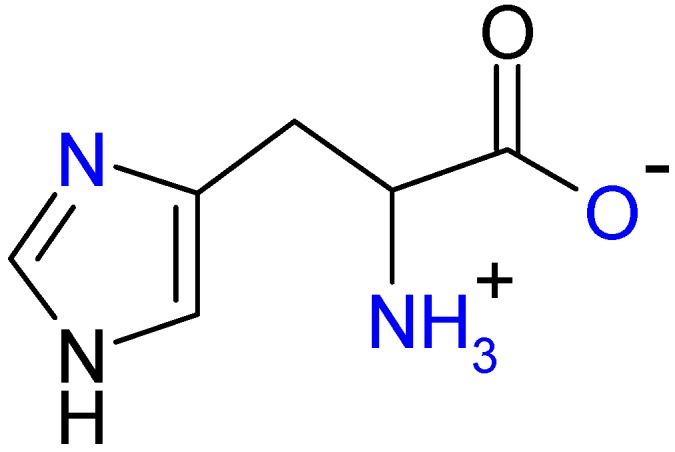
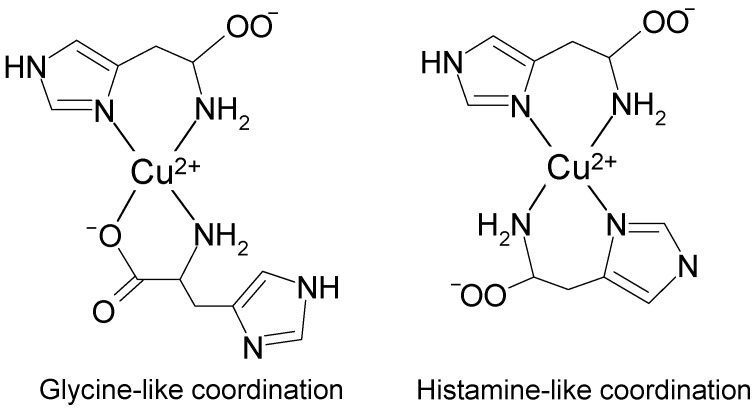
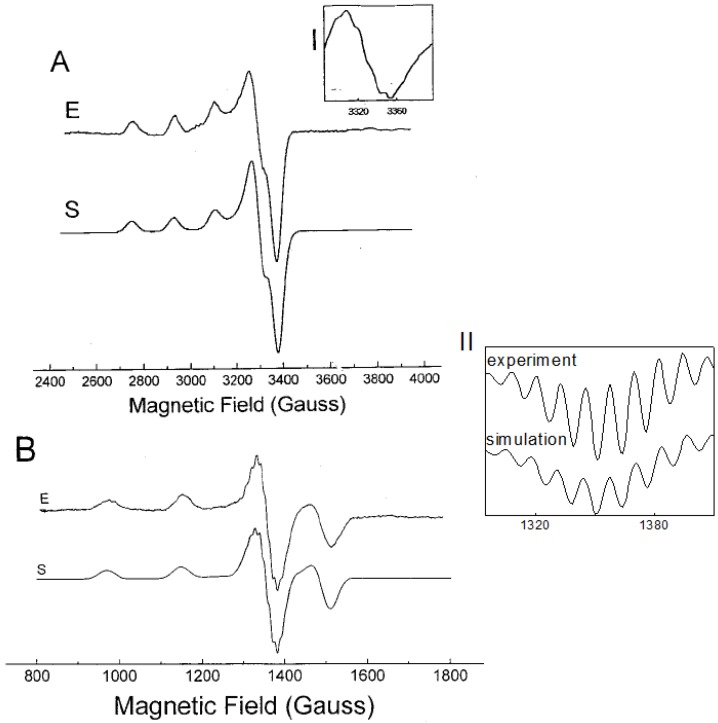
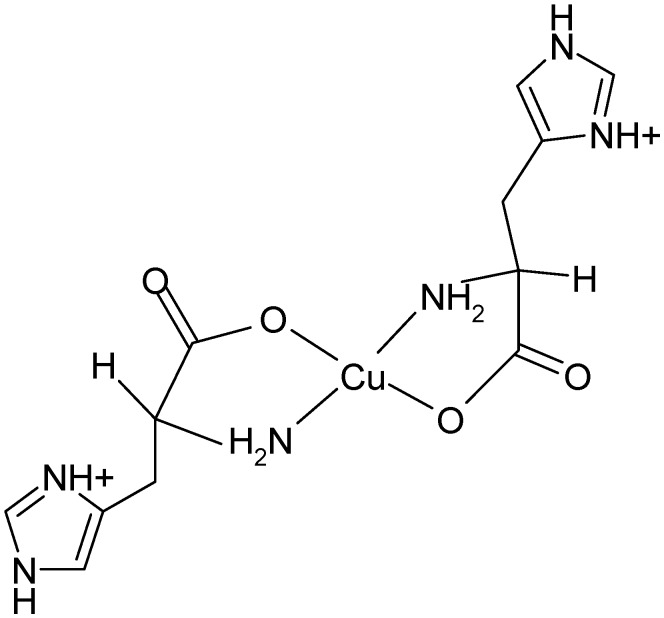
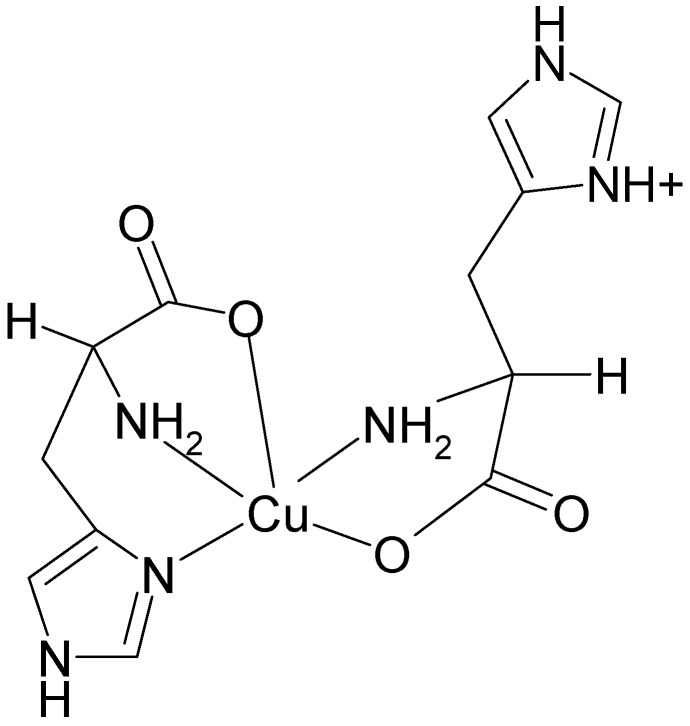
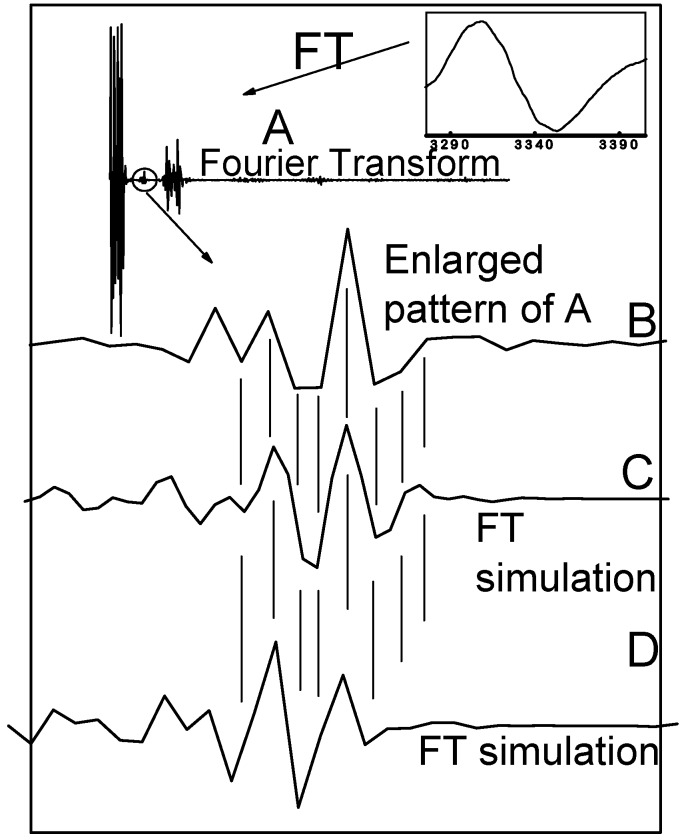
Redox active transition metal ions (e.g., iron and copper) have been implicated in the etiology of many oxidative stress-related diseases including also neurodegenerative disorders. Unbound copper can catalyze formation of reactive oxygen species (hydroxyl radicals) via Fenton reaction/Haber-Weiss chemistry and therefore, under physiological conditions, free copper is potentially toxic and very rarely exists inside cells. Copper(II) bound to the aminoacid L-histidine represents a species discovered in blood in the mid 60s and since then extensive research on this complex was carried out. Copper bound to L-histidine represents an exchangeable pool of copper(II) in equilibrium with the most abundant blood plasma protein, human serum albumin. The structure of this complex, in aqueous solution, has been a subject of many studies and reviews, however without convincing success. The significance of the (1:2) copper(II)-L-histidine complex at physiological pH documents its therapeutic applications in the treatment of Menkes disease and more recently in the treatment of infantile hypertrophic cardioencephalomyopathy. While recently the (1:2) Cu(II)-L-His complex has been successfully crystallized and the crystal structure was solved by X-ray diffraction, the structure of the complex in fluid solution at physiological pH is not satisfactorily known. The aim of this paper is to study the (1:2) Cu(II)-L-histidine complex at low temperatures by X-band and S-band EPR spectroscopy and at physiological pH at room temperature by Fourier transform CW-EPR spectroscopy.
氧化还原活性过渡金属离子(例如铁和铜)与许多氧化应激相关疾病有关,包括神经退行性疾病。未结合的铜可以通过芬顿反应/哈伯-魏斯化学催化活性氧(羟基自由基)的形成,因此,在生理条件下,游离的铜具有潜在的毒性,并且在细胞内很少存在。与氨基酸 L-组氨酸结合的铜(II)代表 20 世纪 60 年代中期在血液中发现的一种物质,此后对该配合物进行了广泛的研究。与 L-组氨酸结合的铜代表铜(II)的可交换池,与最丰富的血浆蛋白人血清白蛋白处于平衡状态。该配合物在水溶液中的结构已经成为许多研究和综述的主题,但没有令人信服的成功。(1:2)铜(II)-L-组氨酸配合物在生理 pH 值下的重要性证明了其在 Menkes 病治疗中的应用,最近在婴儿肥厚性心肌病的治疗中也有应用。虽然最近(1:2)Cu(II)-L-His 配合物已成功结晶,其晶体结构通过 X 射线衍射法解决,但在生理 pH 值下在流体溶液中的配合物结构尚不清楚。本文的目的是通过 X 波段和 S 波段 EPR 光谱在低温下研究(1:2)Cu(II)-L-组氨酸配合物,并在生理 pH 值和室温下通过傅里叶变换 CW-EPR 光谱进行研究。