Department of Biostatistics (Holford, McKay), Yale School of Public Health, New Haven, Connecticut.
Cancer Control Department of Oncology (Levy), Washington DC.
Am J Prev Med. 2014 Feb;46(2):e31-7. doi: 10.1016/j.amepre.2013.10.022.
Characterizing the smoking patterns for different birth cohorts is essential for evaluating the impact of tobacco control interventions and predicting smoking-related mortality, but the process of estimating birth cohort smoking histories has received limited attention.
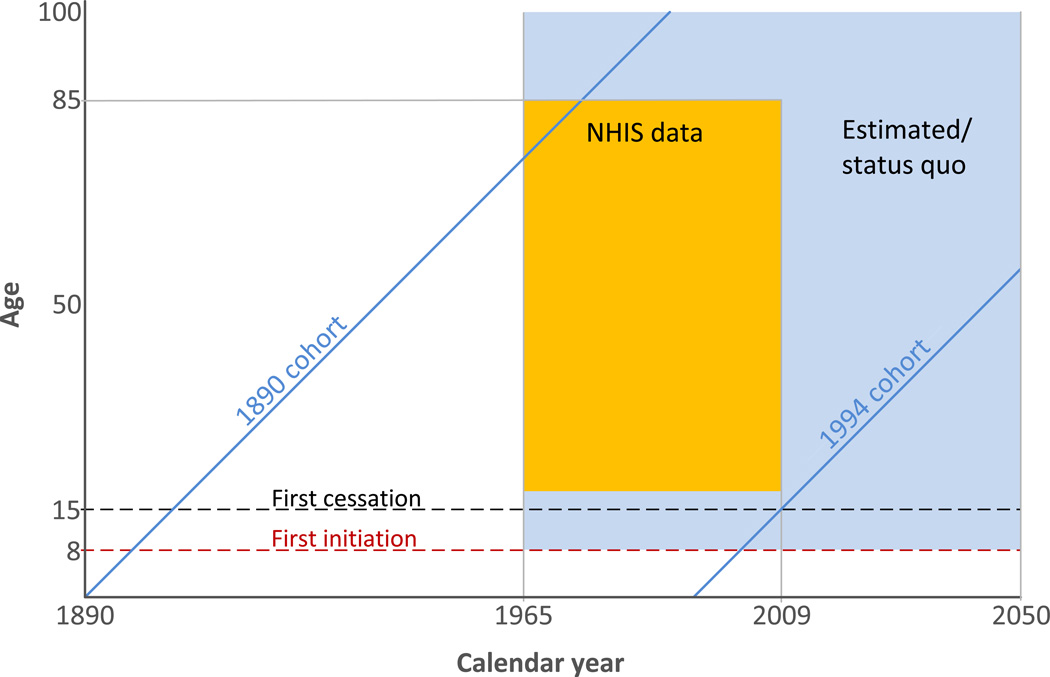
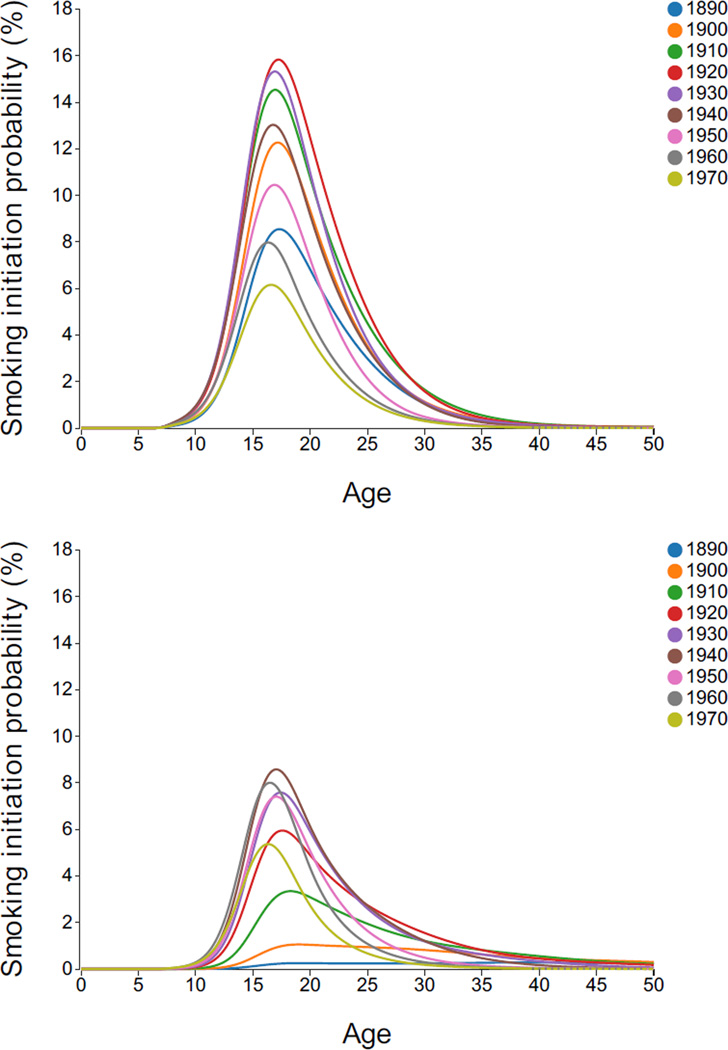
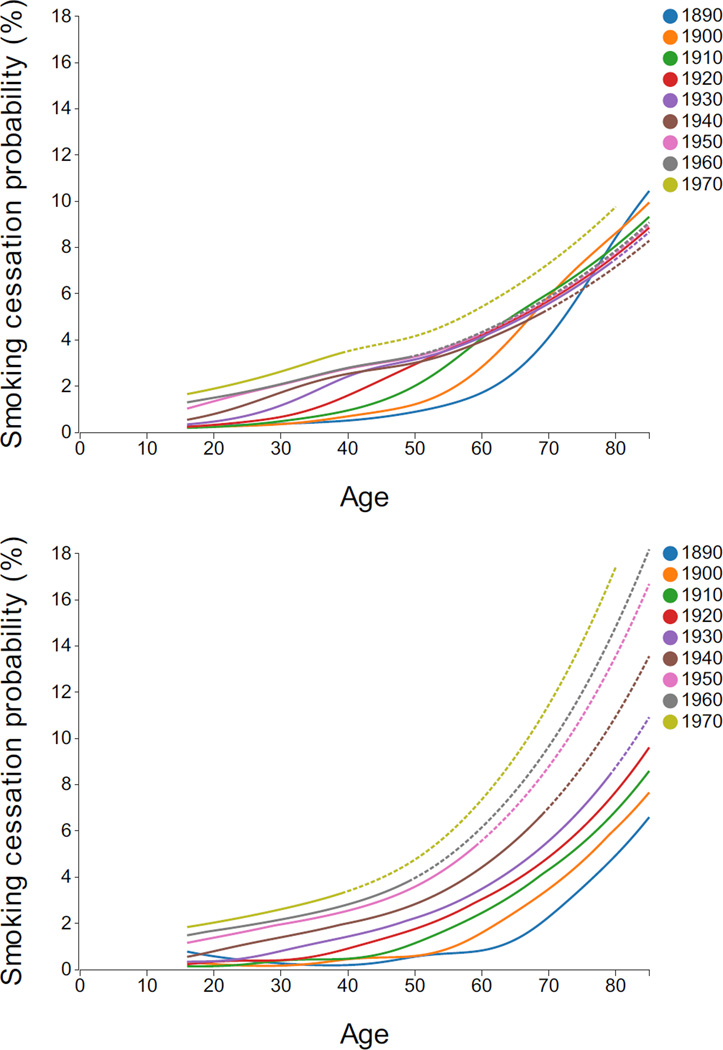
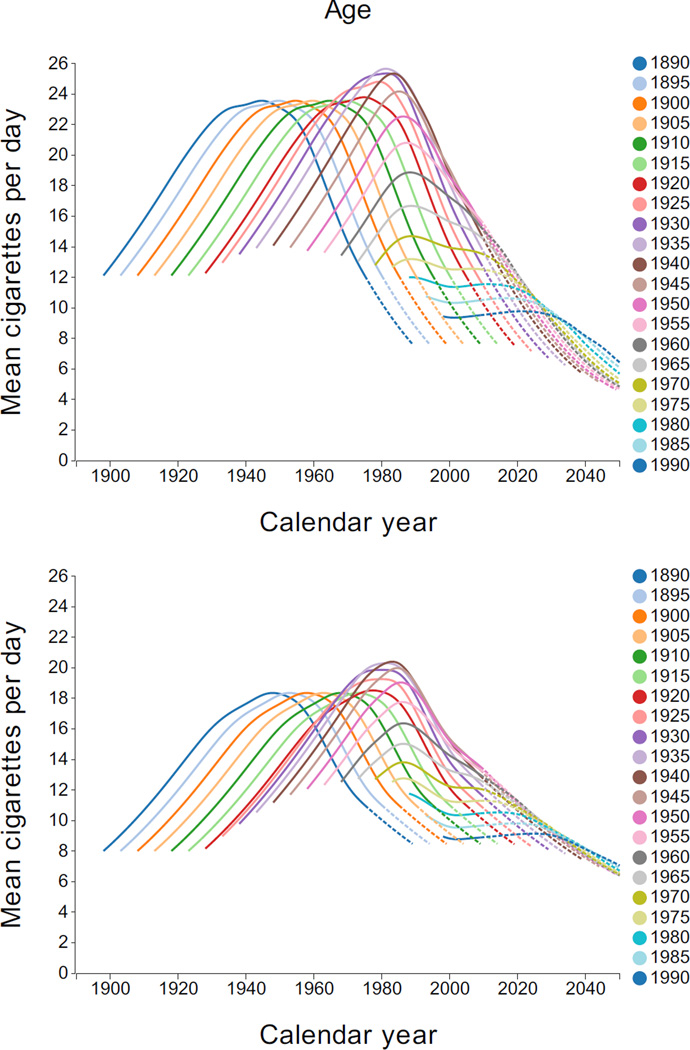
Smoking history summaries were estimated beginning with the 1890 birth cohort in order to provide fundamental parameters that can be used in studies of cigarette smoking intervention strategies.
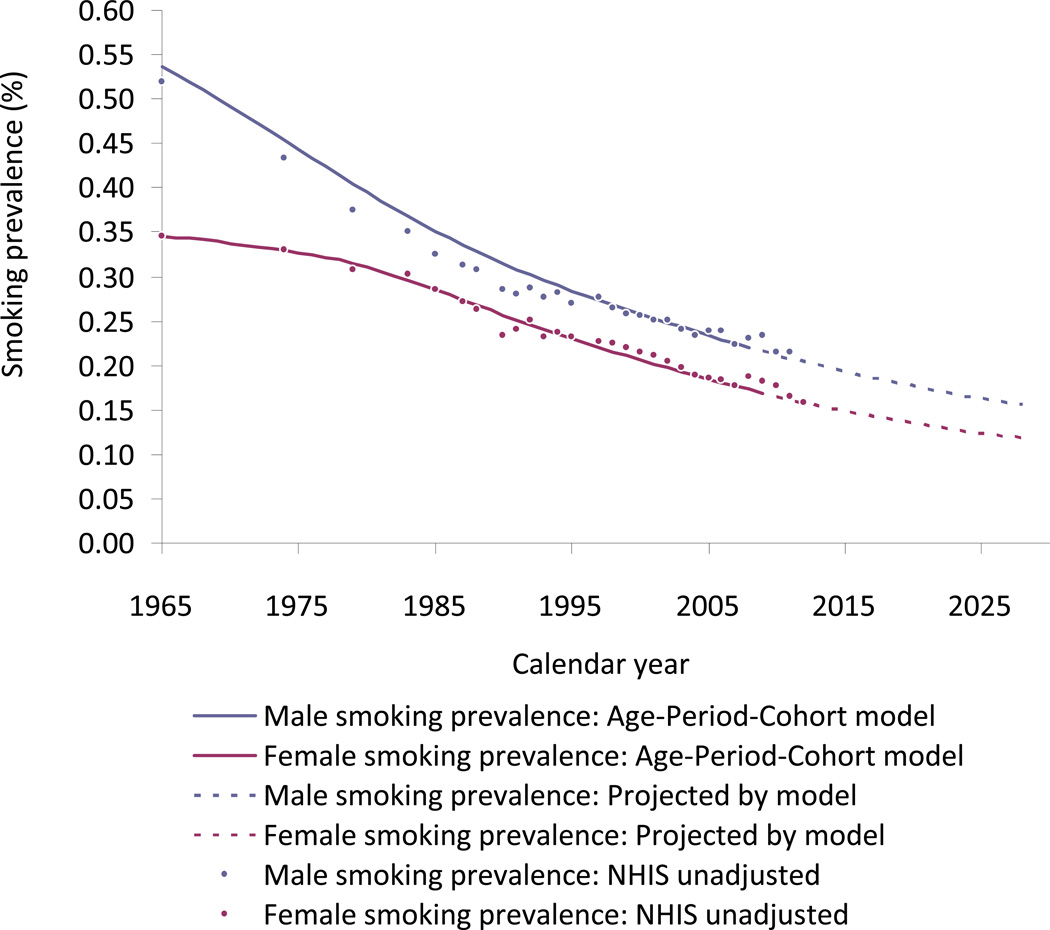
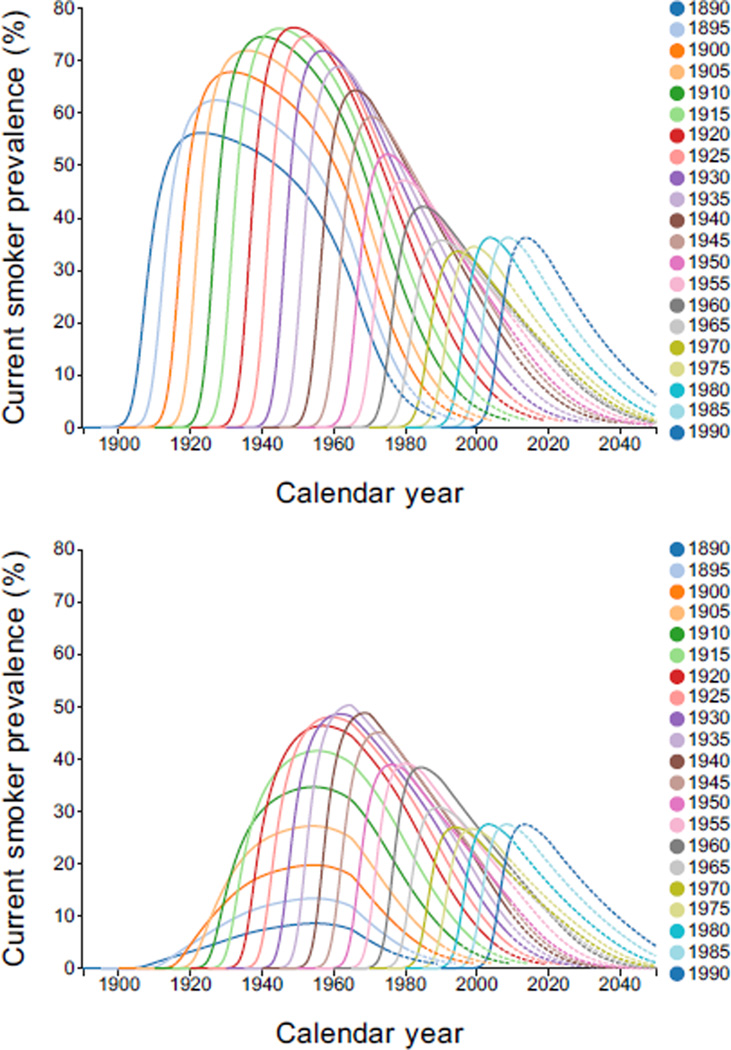
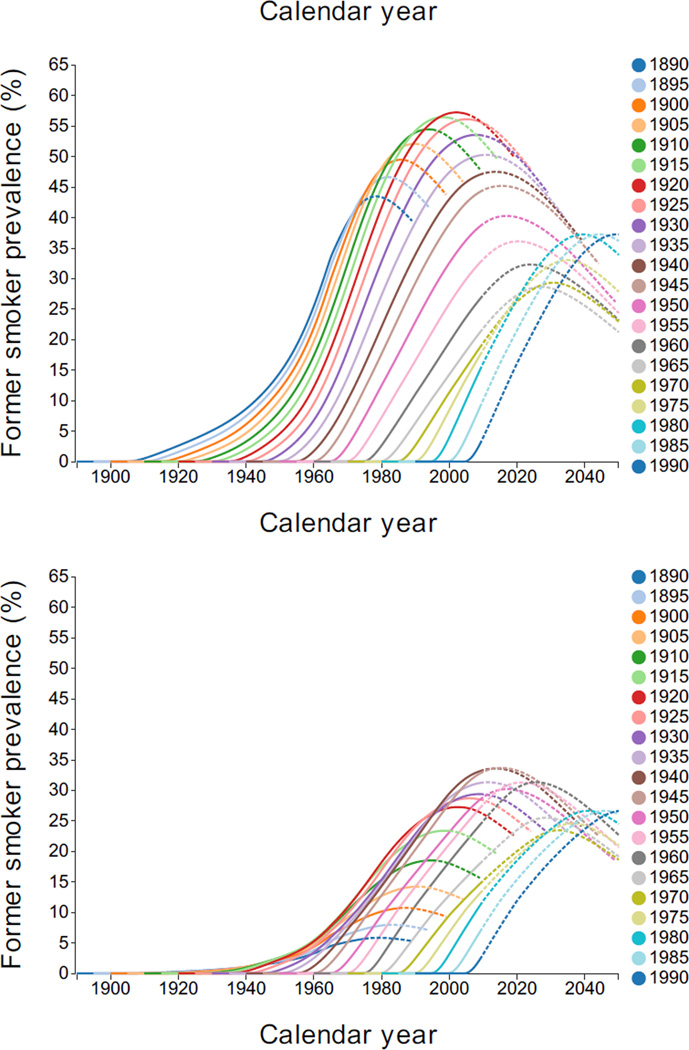
U.S. National Health Interview Surveys conducted from 1965 to 2009 were used to obtain cross-sectional information on current smoking behavior. Surveys that provided additional detail on history for smokers including age at initiation and cessation and smoking intensity were used to construct smoking histories for participants up to the date of survey. After incorporating survival differences by smoking status, age-period-cohort models with constrained natural splines were used to estimate the prevalence of current, former, and never smokers in cohorts beginning in 1890. This approach was then used to obtain yearly estimates of initiation, cessation, and smoking intensity for the age-specific distribution for each birth cohort. These rates were projected forward through 2050 based on recent trends.
This summary of smoking history shows clear trends by gender, cohort, and age over time. If current patterns persist, a slow decline in smoking prevalence is projected from 2010 through 2040.
A novel method of generating smoking histories has been applied to develop smoking histories that can be used in micro-simulation models, and has been incorporated in the National Cancer Institute's Smoking History Generator. These aggregate estimates developed by age, gender, and cohort will provide a complete source of smoking data over time.
描述不同出生队列的吸烟模式对于评估烟草控制干预措施的影响和预测与吸烟有关的死亡率至关重要,但对估计出生队列吸烟史的过程关注有限。
从 1890 年出生队列开始估计吸烟史摘要,以便为研究吸烟干预策略提供基本参数。
使用 1965 年至 2009 年进行的美国国家健康访谈调查,获取当前吸烟行为的横断面信息。使用提供有关吸烟者历史更详细信息(包括起始和停止年龄以及吸烟强度)的调查来构建参与者的吸烟史,直至调查日期。在结合吸烟状况的生存差异后,使用带有约束自然样条的年龄-时期-队列模型来估计从 1890 年开始的队列中当前、前吸烟者和从不吸烟者的流行率。然后,使用这种方法获得每个出生队列的年龄特定分布的起始、停止和吸烟强度的年度估计值。根据最近的趋势,这些速率被向前预测到 2050 年。
该吸烟史摘要显示了随时间推移的性别、队列和年龄的明显趋势。如果目前的模式持续下去,预计从 2010 年到 2040 年,吸烟率将缓慢下降。
一种生成吸烟史的新方法已被应用于开发可用于微观模拟模型的吸烟史,并已被纳入美国国家癌症研究所的吸烟史生成器。这些按年龄、性别和队列细分的综合估计值将提供随时间推移的完整吸烟数据来源。