Nanjappa Deepak, d'Ippolito Giuliana, Gallo Carmela, Zingone Adriana, Fontana Angelo
Stazione Zoologica Anton Dohrn, Villa Comunale, Naples 80121, Italy.
Mar Drugs. 2014 Jan 17;12(1):368-84. doi: 10.3390/md12010368.
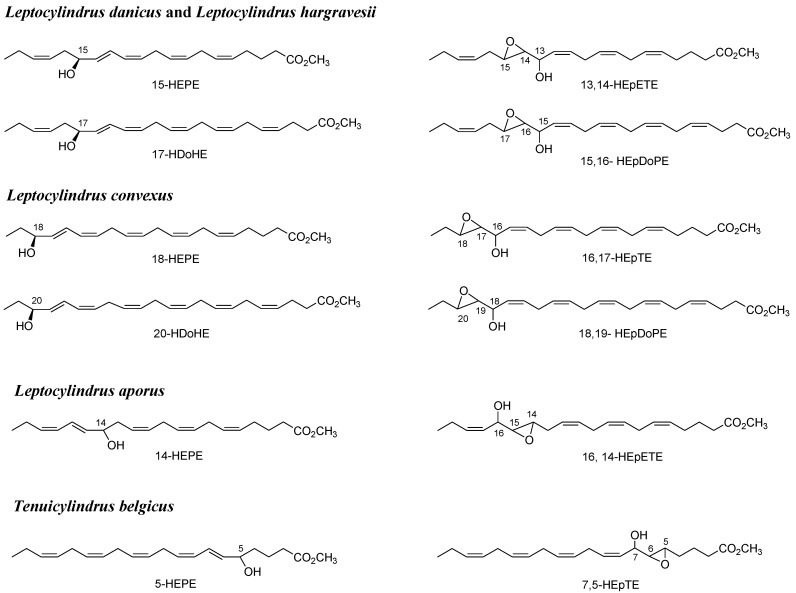
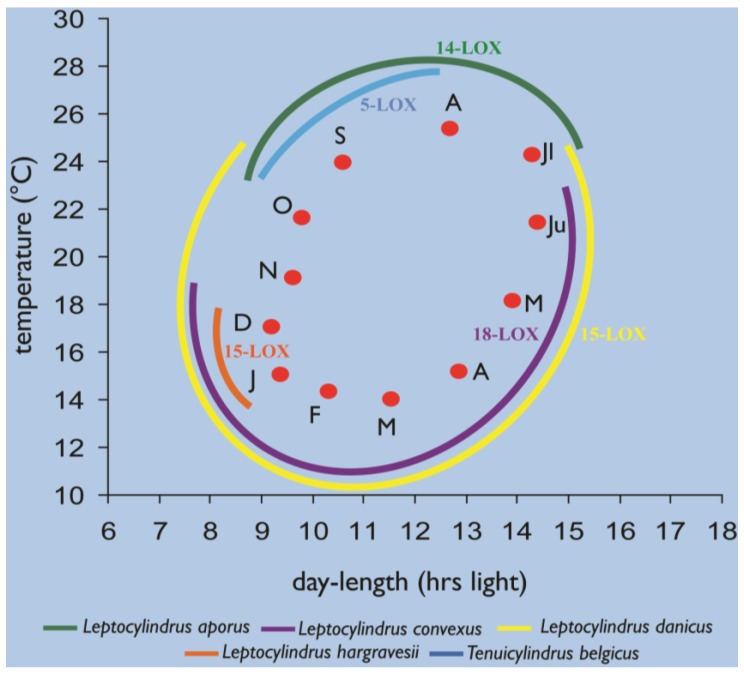
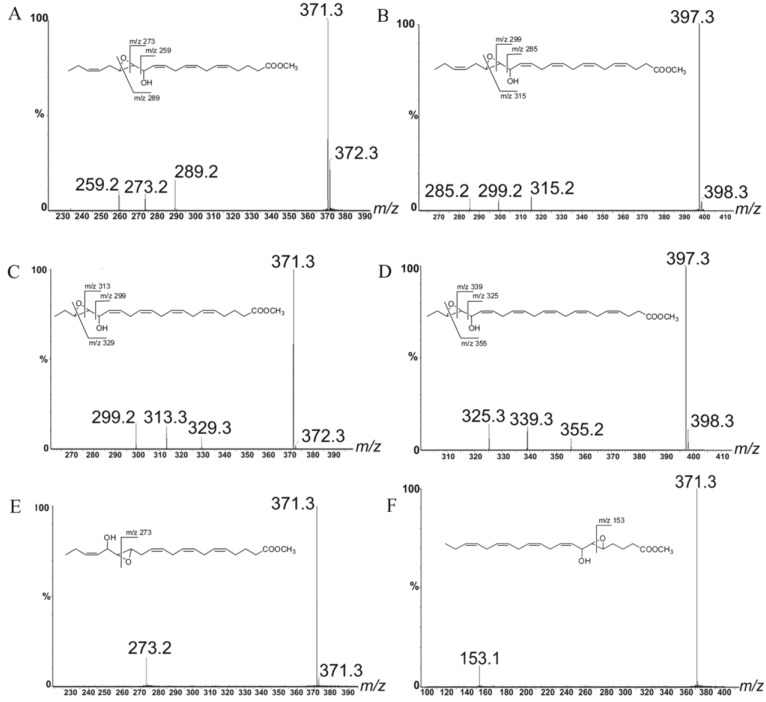
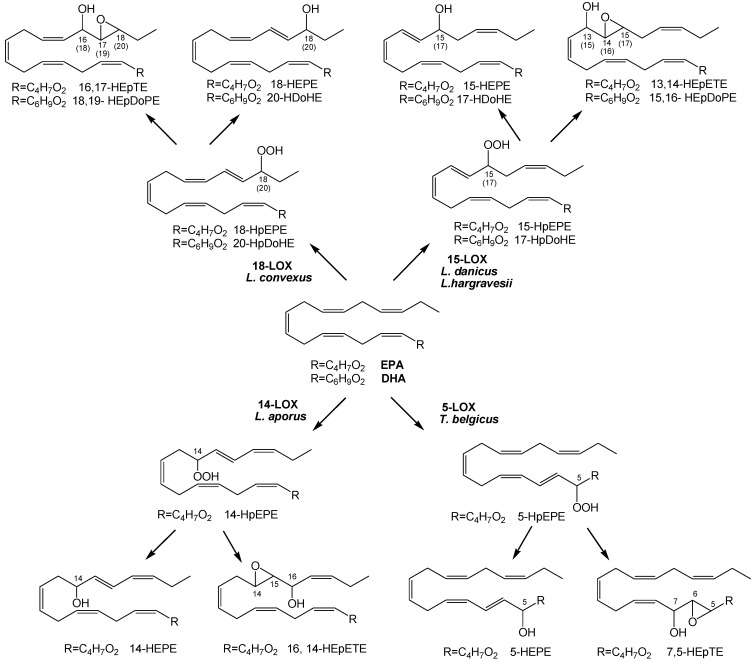
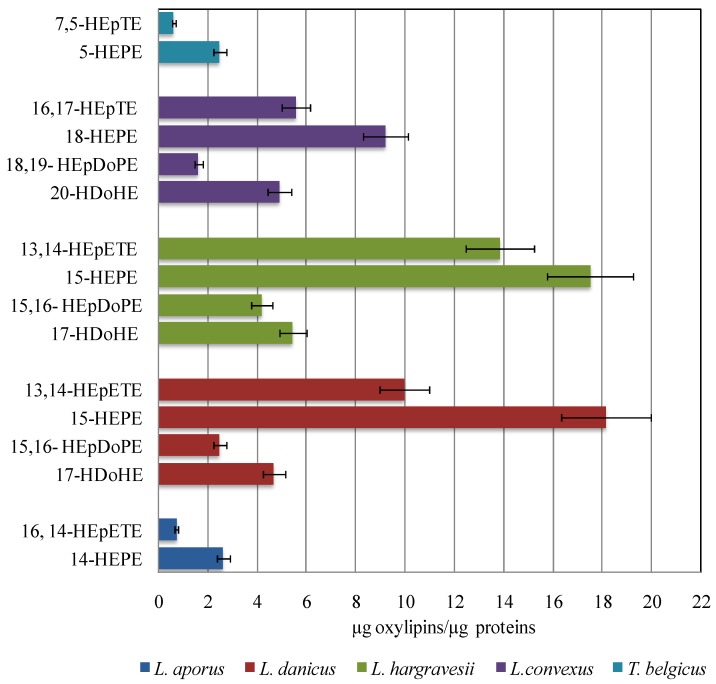
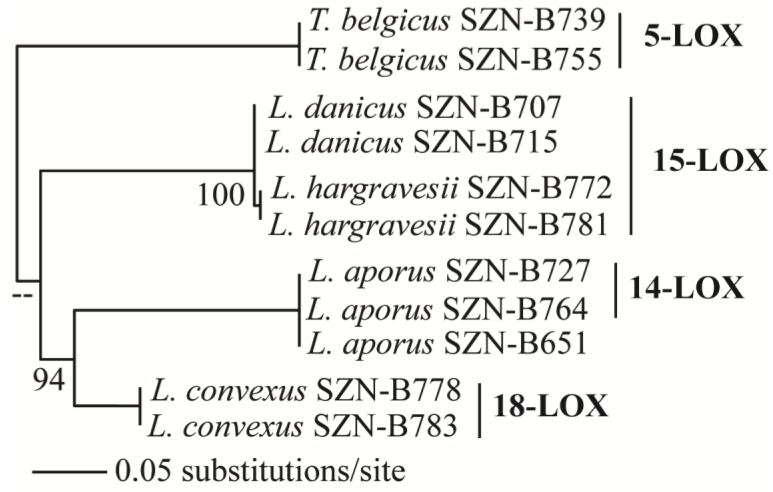
Marine planktonic organisms, such as diatoms, are prospective sources of novel bioactive metabolites. Oxygenated derivatives of fatty acids, generally referred to as oxylipins, in diatoms comprise a highly diverse and complex family of secondary metabolites. These molecules have recently been implicated in several biological processes including intra- and inter-cellular signaling as well as in defense against biotic stressors and grazers. Here, we analyze the production and diversity of C20 and C22 non-volatile oxylipins in five species of the family Leptocylindraceae, which constitute a basal clade in the diatom phylogeny. We report the presence of species-specific lipoxygenase activity and oxylipin patterns, providing the first demonstration of enzymatic production of docosahexaenoic acid derivatives in marine diatoms. The differences observed in lipoxygenase pathways among the species investigated broadly reflected the relationships observed with phylogenetic markers, thus providing functional support to the taxonomic diversity of the individual species.
海洋浮游生物,如硅藻,是新型生物活性代谢物的潜在来源。硅藻中脂肪酸的氧化衍生物,通常称为氧化脂质,构成了一个高度多样和复杂的次生代谢物家族。这些分子最近被认为参与了多种生物过程,包括细胞内和细胞间信号传导,以及对生物应激源和食草动物的防御。在这里,我们分析了细柱藻科五个物种中C20和C22非挥发性氧化脂质的产生和多样性,这些物种构成了硅藻系统发育中的一个基部类群。我们报告了物种特异性脂氧合酶活性和氧化脂质模式的存在,首次证明了海洋硅藻中二十二碳六烯酸衍生物的酶促产生。在所研究的物种中观察到的脂氧合酶途径的差异大致反映了与系统发育标记物观察到的关系,从而为各个物种的分类多样性提供了功能支持。