Arciniegas Milena P, Kim Mee R, De Graaf Joost, Brescia Rosaria, Marras Sergio, Miszta Karol, Dijkstra Marjolein, van Roij René, Manna Liberato
Istituto Italiano di Tecnologia (IIT) , via Morego 30, IT-16163 Genova, Italy.
Nano Lett. 2014 Feb 12;14(2):1056-63. doi: 10.1021/nl404732m. Epub 2014 Jan 28.
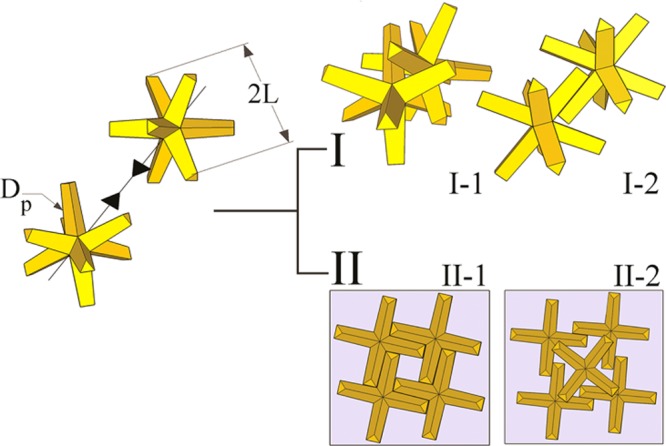
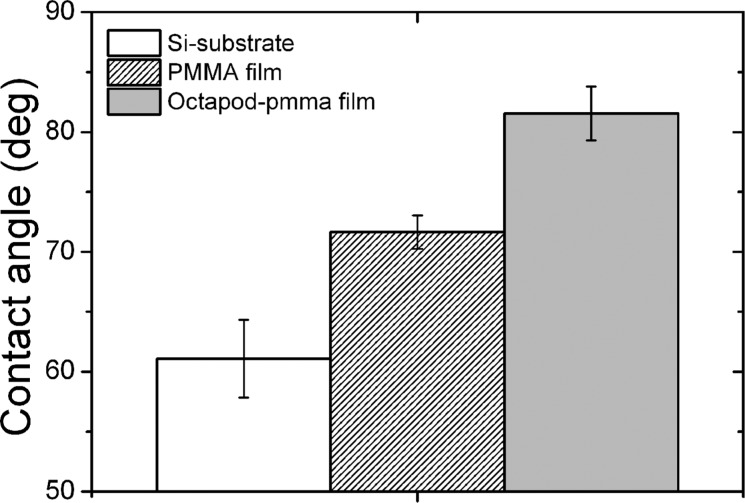
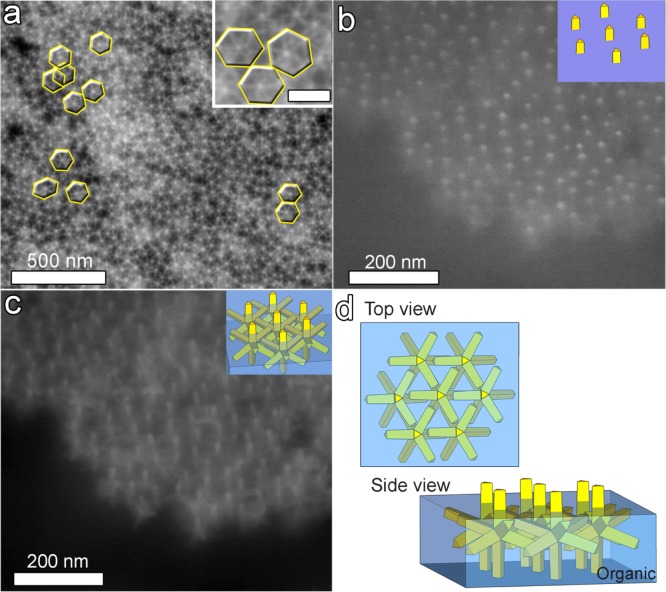
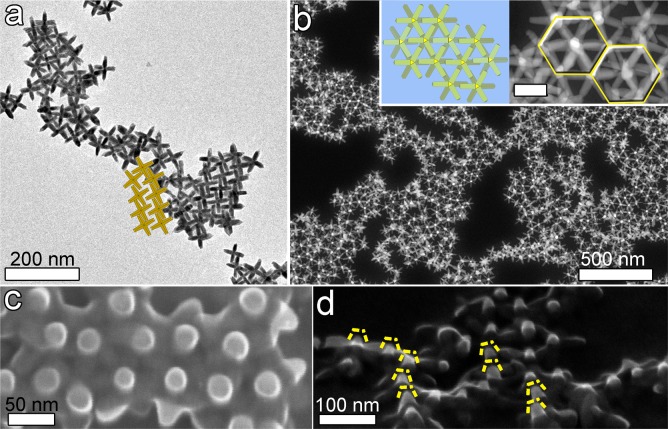
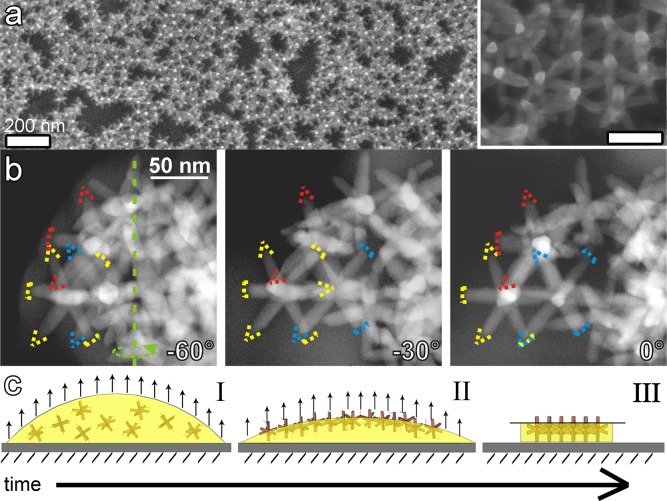
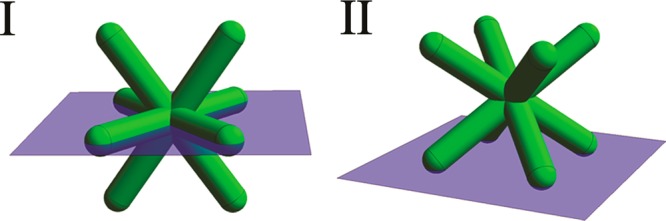
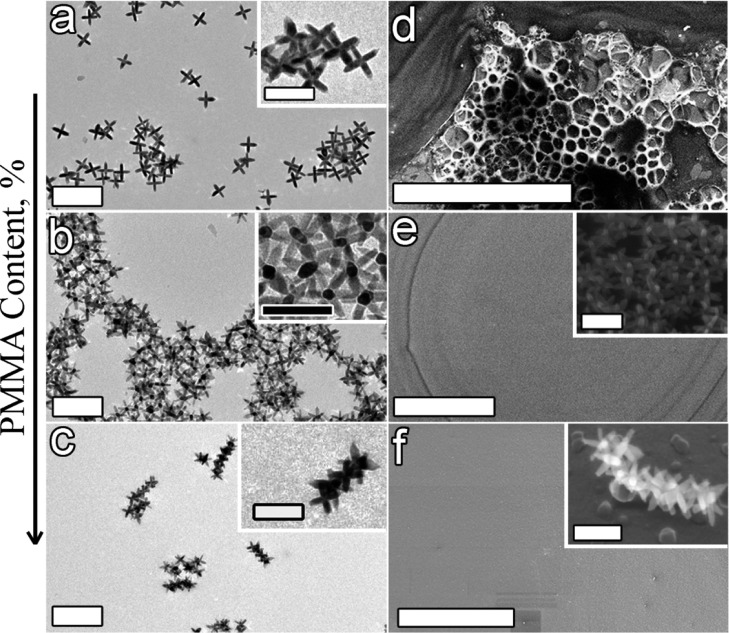
Nanoparticles with unconventional shapes may exhibit different types of assembly architectures that depend critically on the environmental conditions under which they are formed. Here, we demonstrate how the presence of polymer (polymethyl methacrylate, PMMA) molecules in a solution, in which CdSe(core)/CdS(pods) octapods are initially dispersed, affects the octapod-polymer organization upon solvent evaporation. We show that a fast drop-drying process can induce a remarkable two-dimensional (2D) self-assembly of octapods at the polymer/air interface. In the resulting structure, each octapod is oriented like a "ballerina", that is, only one pod sticks out of the polymer film and is perpendicular to the polymer-air interface, while the opposite pod (with respect to the octapod's center) is fully immersed in the film and points toward the substrate, like a ballerina performing a grand battement. In some areas, a hexagonal-like pattern is formed by the ballerinas in which the six nonvertical pods, which are all embedded in the film, maintain a pod-pod parallel configuration with respect to neighboring particles. We hypothesize that the mechanism responsible for such a self-assembly is based on a fast adsorption of the octapods from bulk solution to the droplet/air interface during the early stages of solvent evaporation. At this interface, the octapods maintain enough rotational freedom to organize mutually in a pod-pod parallel configuration between neighboring octapods. As the solvent evaporates, the octapods form a ballerina-rich octapod-polymer composite in which the octapods are in close contact with the substrate. Finally, we found that the resulting octapod-polymer composite is less hydrophilic than the polymer-only film.
具有非常规形状的纳米颗粒可能会展现出不同类型的组装结构,这在很大程度上取决于其形成时的环境条件。在此,我们展示了在最初分散有CdSe(核)/CdS(壳)八足体的溶液中聚合物(聚甲基丙烯酸甲酯,PMMA)分子的存在如何在溶剂蒸发时影响八足体 - 聚合物的组织形式。我们表明,快速滴干过程能够在聚合物/空气界面诱导八足体形成显著的二维(2D)自组装。在所得结构中,每个八足体的取向如同“芭蕾舞女”,即只有一个壳伸出聚合物薄膜并垂直于聚合物 - 空气界面,而相对的壳(相对于八足体中心)则完全浸没在薄膜中并指向基底,就像芭蕾舞女做一个大踢腿动作。在某些区域,“芭蕾舞女”形成了类似六边形的图案,其中所有嵌入薄膜中的六个非垂直壳相对于相邻颗粒保持壳 - 壳平行构型。我们推测这种自组装的机制基于在溶剂蒸发早期八足体从本体溶液快速吸附到液滴/空气界面。在这个界面,八足体保持足够的旋转自由度以在相邻八足体之间以壳 - 壳平行构型相互组织排列。随着溶剂蒸发,八足体形成富含“芭蕾舞女”的八足体 - 聚合物复合材料,其中八足体与基底紧密接触。最后,我们发现所得的八足体 - 聚合物复合材料比仅含聚合物的薄膜亲水性更低。