Subramanian Meenakshi, Kini Radhika, Madasu Manasa, Ohta Akiko, Nowak Michael, Exley Mark, Sitkovsky Michail, Ohta Akio
New England Inflammation and Tissue Protection Institute, Northeastern University, Boston, MA, USA.
Eur J Immunol. 2014 Apr;44(4):1119-29. doi: 10.1002/eji.201343866. Epub 2014 Feb 19.
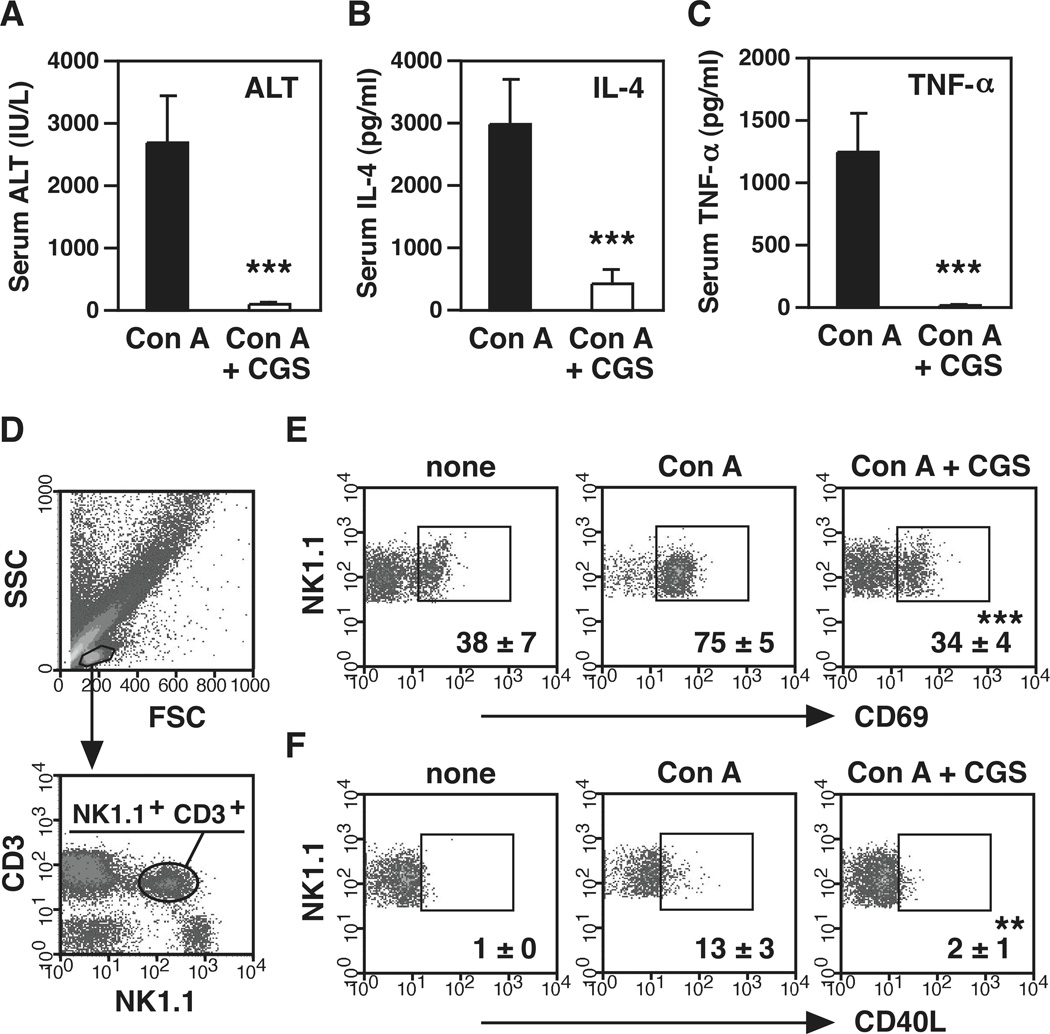
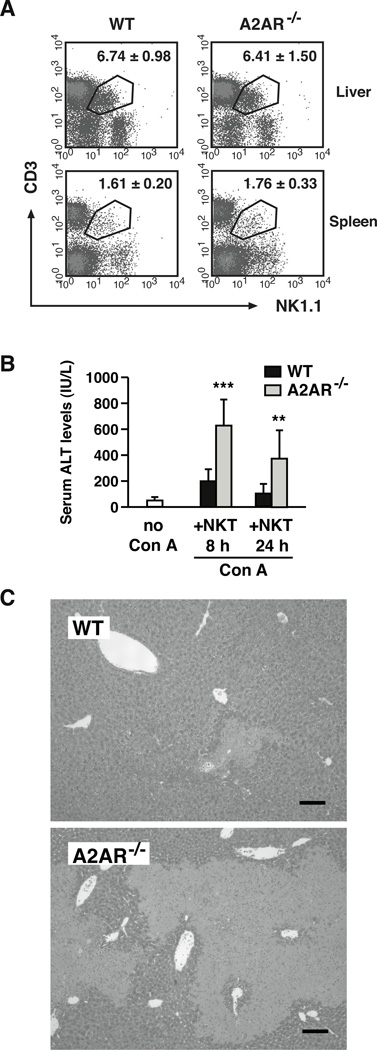
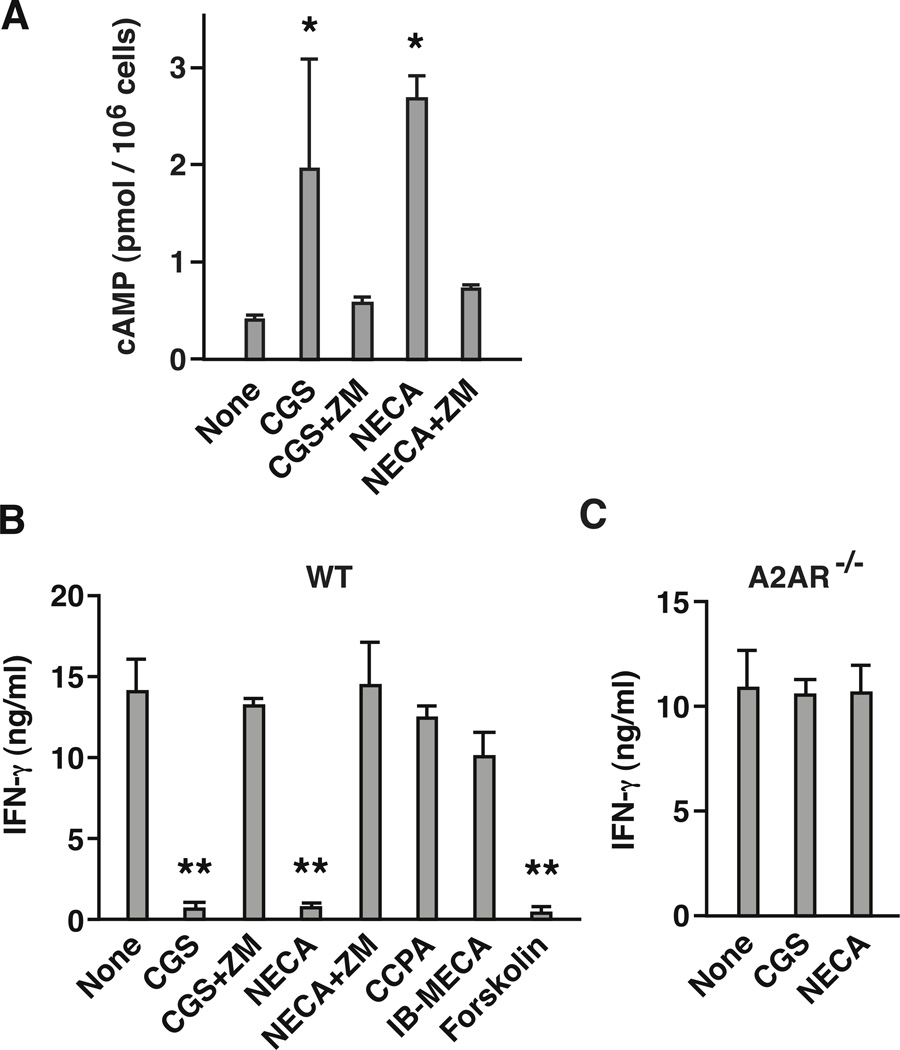
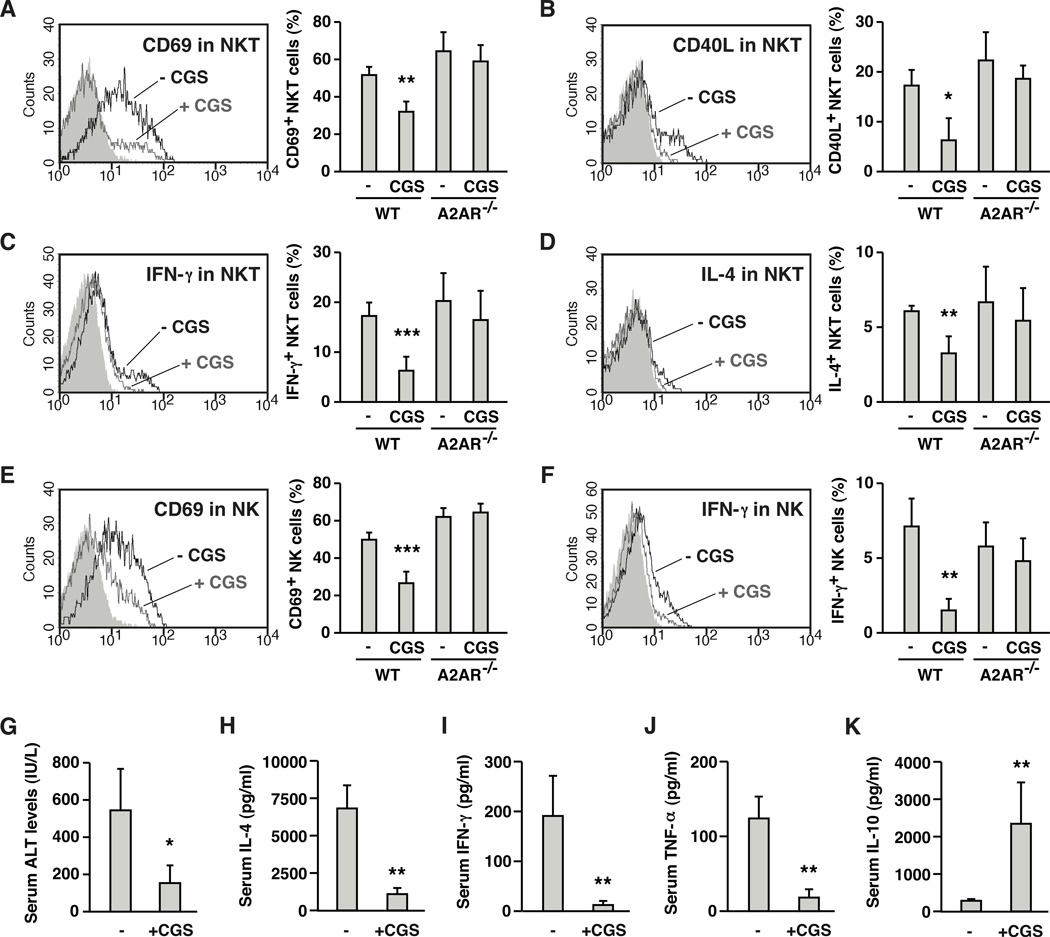
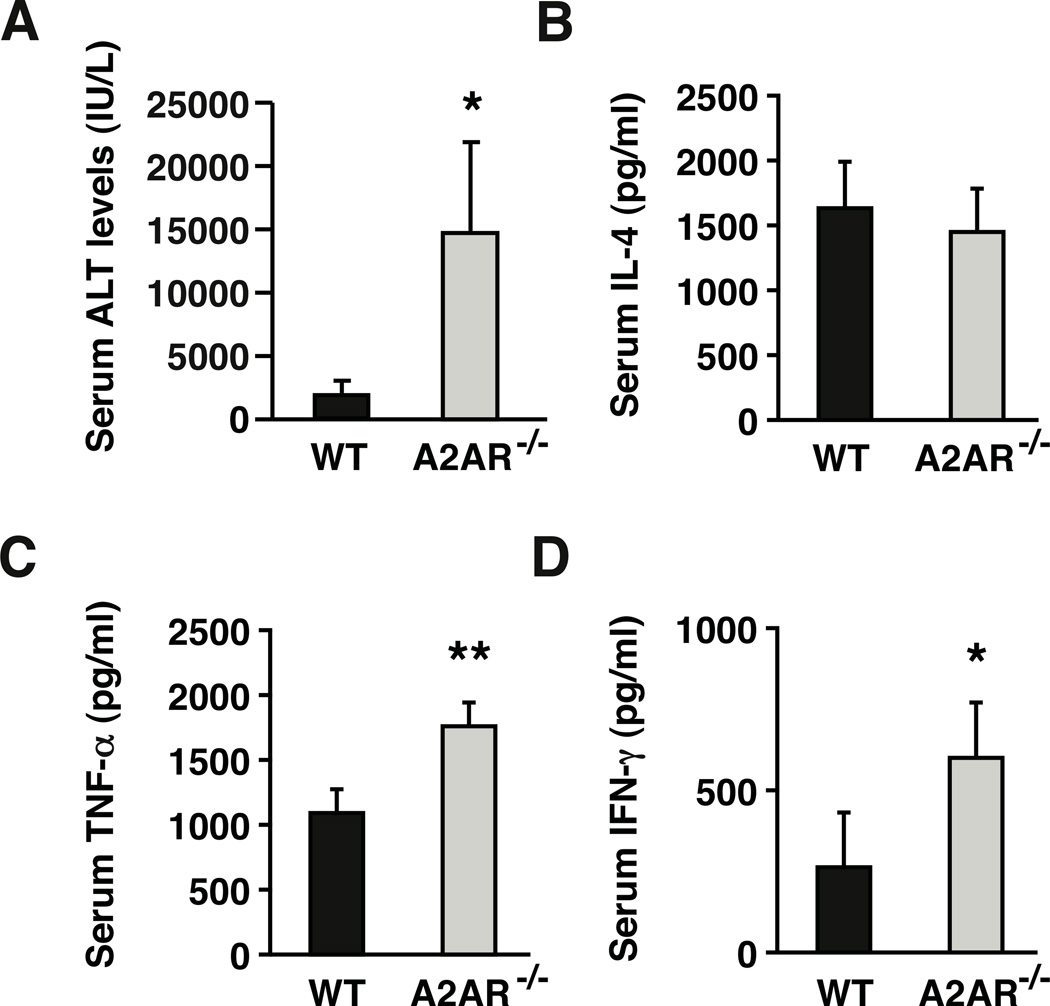
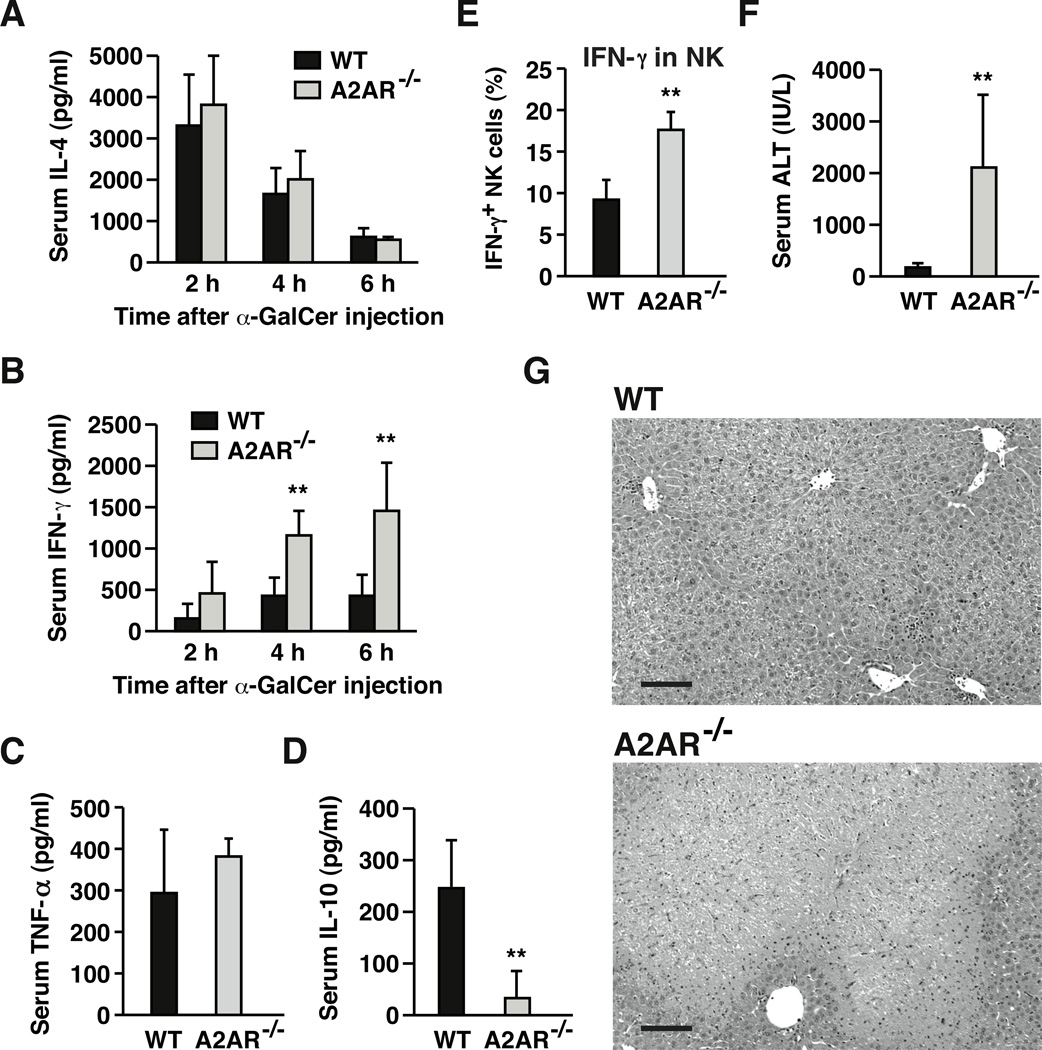
Extracellular adenosine regulates inflammatory responses via the A2A adenosine receptor (A2AR). A2AR deficiency results in much exaggerated acute hepatitis, indicating nonredundancy of adenosine-A2AR pathway in inhibiting immune activation. To identify a critical target of immunoregulatory effect of extracellular adenosine, we focused on NKT cells, which play an indispensable role in hepatitis. An A2AR agonist abolished NKT-cell-dependent induction of acute hepatitis by concanavalin A (Con A) or α-galactosylceramide in mice, corresponding to downregulation of activation markers and cytokines in NKT cells and of NK-cell co-activation. These results show that A2AR signaling can downregulate NKT-cell activation and suppress NKT-cell-triggered inflammatory responses. Next, we hypothesized that NKT cells might be under physiological control of the adenosine-A2AR pathway. Indeed, both Con A and α-galactosylceramide induced more severe hepatitis in A2AR-deficient mice than in WT controls. Transfer of A2AR-deficient NKT cells into A2AR-expressing recipients resulted in exaggeration of Con A-induced liver damage, suggesting that NKT-cell activation is controlled by endogenous adenosine via A2AR, and this physiological regulatory mechanism of NKT cells is critical in the control of tissue-damaging inflammation. The current study suggests the possibility to manipulate NKT-cell activity in inflammatory disorders through intervention to the adenosine-A2AR pathway.
细胞外腺苷通过A2A腺苷受体(A2AR)调节炎症反应。A2AR缺乏会导致急性肝炎严重得多,这表明腺苷-A2AR途径在抑制免疫激活方面具有不可替代的作用。为了确定细胞外腺苷免疫调节作用的关键靶点,我们将重点放在了在肝炎中起不可或缺作用的NKT细胞上。A2AR激动剂消除了小鼠中伴刀豆球蛋白A(Con A)或α-半乳糖神经酰胺诱导的NKT细胞依赖性急性肝炎,这与NKT细胞中激活标志物和细胞因子以及NK细胞共激活的下调相对应。这些结果表明,A2AR信号传导可下调NKT细胞活化并抑制NKT细胞触发的炎症反应。接下来,我们假设NKT细胞可能受腺苷-A2AR途径的生理控制。实际上,与野生型对照相比,Con A和α-半乳糖神经酰胺在A2AR缺陷小鼠中均诱导了更严重的肝炎。将A2AR缺陷的NKT细胞转移到表达A2AR的受体中导致Con A诱导的肝损伤加剧,这表明NKT细胞活化受内源性腺苷通过A2AR的控制,并且NKT细胞的这种生理调节机制在控制组织损伤性炎症中至关重要。当前的研究表明,通过干预腺苷-A2AR途径,有可能在炎症性疾病中操纵NKT细胞活性。