Department of Epidemiology, Faculty of Public Health, Universidade de São Paulo, São Paulo, Avendia Dr. Arnaldo 715, 01246-904, SP, Brazil ; Institute of Tropical Medicine, Universidade de São Paulo, São Paulo, Brazil.
Department of Epidemiology, Faculty of Public Health, Universidade de São Paulo, São Paulo, Avendia Dr. Arnaldo 715, 01246-904, SP, Brazil.
J Trop Med. 2013;2013:305198. doi: 10.1155/2013/305198. Epub 2013 Dec 17.
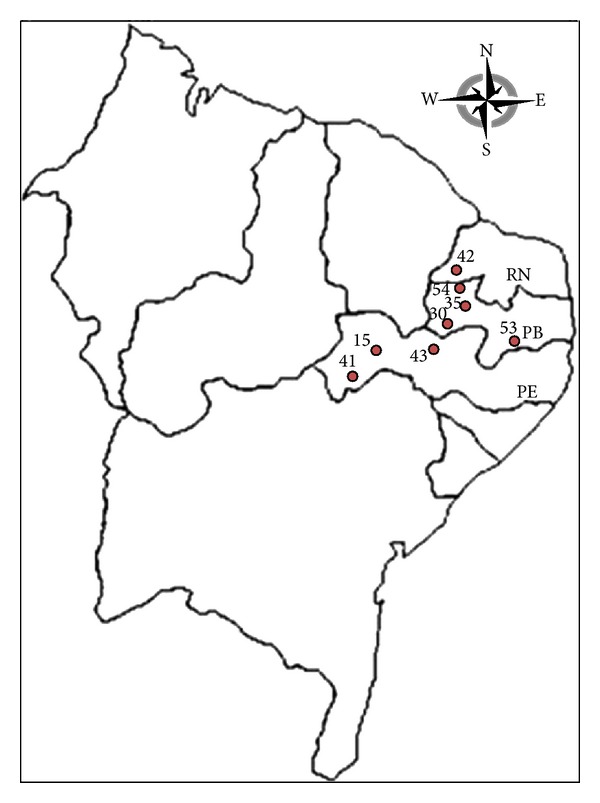
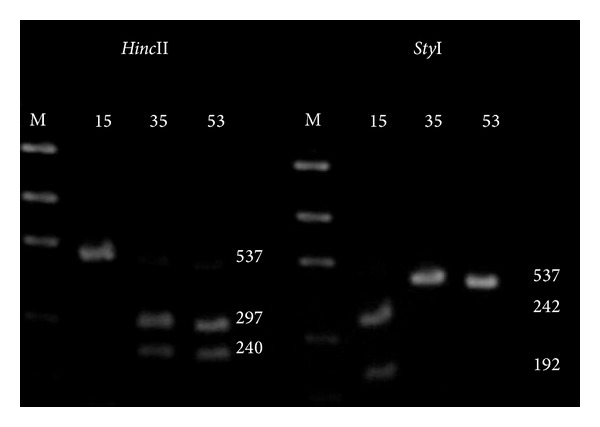
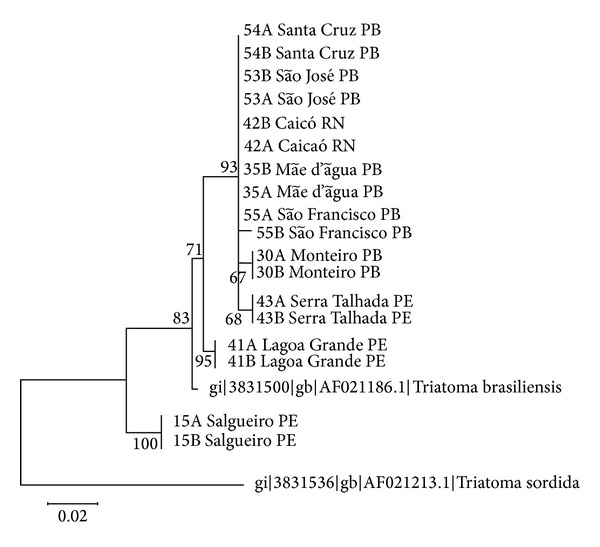
Triatoma brasiliensis sensu lato (s.l.), the main vector of Chagas disease in northeastern Brazil, is a species complex comprising four species, one with two subspecies (T. brasiliensis brasiliensis, T. brasiliensis macromelasoma, T. juazeirensis, T. sherlocki, and T. melanica), and each taxon displaying distinct ecological requirements. In order to evaluate the genetic relationships among nine T. brasiliensis s.l. populations from northeastern Brazil, we analyzed their mitochondrial cytochrome c oxidase subunit 1 sequences and suggested a PCR-RFLP assay to distinguish between T. b. macromelasoma and T. b. brasiliensis subspecies. All the specimens were morphologically identified as T. b. brasiliensis. The resulting phylogenies identified two major clades that are congruent with the geographical populations studied. Based on collection sites and in accordance with type-location, one clade was identified as the subspecies T. b. macromelasoma. The second clade grouped T. b. brasiliensis populations. Restriction endonuclease sites were observed in the sequences and used in PCR-RFLP assays, producing distinct fingerprints for T. b. macromelasoma and T. b. brasiliensis populations. The results suggest that these are different species and that gene flow occurs only among T. b. brasiliensis populations, possibly associated with human activity in the area.
长角血蜱亚种复合体(s.l.),即巴西东北部恰加斯病的主要传播媒介,是一个包含四个物种的物种复合体,其中一个具有两个亚种(T. brasiliensis brasiliensis、T. brasiliensis macromelasoma、T. juazeirensis、T. sherlocki 和 T. melanica),每个分类群都有不同的生态需求。为了评估巴西东北部的 9 个长角血蜱亚种复合体种群之间的遗传关系,我们分析了它们的线粒体细胞色素 c 氧化酶亚基 1 序列,并提出了一种 PCR-RFLP 分析方法来区分 T. b. macromelasoma 和 T. b. brasiliensis 亚种。所有标本的形态学鉴定均为 T. b. brasiliensis。所得系统发育树确定了两个主要分支,与所研究的地理种群一致。根据采集地点和类型位置,一个分支被鉴定为亚种 T. b. macromelasoma。第二个分支将 T. b. brasiliensis 种群分组。在序列中观察到了限制酶切位点,并用于 PCR-RFLP 分析,为 T. b. macromelasoma 和 T. b. brasiliensis 种群产生了不同的指纹图谱。结果表明,这些是不同的物种,并且基因流仅发生在 T. b. brasiliensis 种群之间,可能与该地区的人类活动有关。