Department of Biological Sciences, Fordham University Bronx, NY, USA.
Department of Forest and Conservation Sciences, University of British Columbia Vancouver, BC, Canada.
Evol Appl. 2014 Jan;7(1):123-39. doi: 10.1111/eva.12112. Epub 2013 Oct 14.
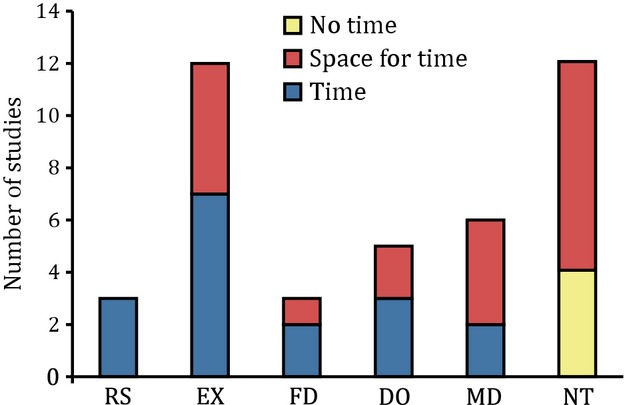
As climate change progresses, we are observing widespread changes in phenotypes in many plant populations. Whether these phenotypic changes are directly caused by climate change, and whether they result from phenotypic plasticity or evolution, are active areas of investigation. Here, we review terrestrial plant studies addressing these questions. Plastic and evolutionary responses to climate change are clearly occurring. Of the 38 studies that met our criteria for inclusion, all found plastic or evolutionary responses, with 26 studies showing both. These responses, however, may be insufficient to keep pace with climate change, as indicated by eight of 12 studies that examined this directly. There is also mixed evidence for whether evolutionary responses are adaptive, and whether they are directly caused by contemporary climatic changes. We discuss factors that will likely influence the extent of plastic and evolutionary responses, including patterns of environmental changes, species' life history characteristics including generation time and breeding system, and degree and direction of gene flow. Future studies with standardized methodologies, especially those that use direct approaches assessing responses to climate change over time, and sharing of data through public databases, will facilitate better predictions of the capacity for plant populations to respond to rapid climate change.
随着气候变化的推进,我们观察到许多植物种群的表型发生了广泛变化。这些表型变化是否直接由气候变化引起,以及它们是否是由表型可塑性还是进化引起的,是当前研究的热点。在这里,我们回顾了探讨这些问题的陆地植物研究。气候变化引起的可塑性和进化响应是明确存在的。在符合我们纳入标准的 38 项研究中,所有研究都发现了植物对气候变化的可塑性或进化响应,其中 26 项研究同时发现了这两种响应。然而,正如直接研究这一问题的 12 项研究中的 8 项所表明的那样,这些响应可能不足以跟上气候变化的步伐。对于进化响应是否具有适应性,以及它们是否直接由当前的气候变化引起,也存在混合证据。我们讨论了可能影响植物种群可塑性和进化响应程度的因素,包括环境变化模式、物种的生活史特征(包括世代时间和繁殖系统)以及基因流的程度和方向。未来的研究需要采用标准化的方法,特别是那些使用直接方法来评估随时间变化的对气候变化的响应的研究,以及通过公共数据库共享数据,这将有助于更好地预测植物种群对快速气候变化的响应能力。