Department of Biomedical Engineering, National Cerebral and Cardiovascular Center Research Institute, Osaka, Japan ; Core Research Evolutional Science and Technology (CREST), Japan Science and Technology Agency, Tokyo, Japan.
Nanotechnology Innovation Station, National Institute for Materials Science, Ibaraki, Japan.
PLoS One. 2014 Jan 14;9(1):e85132. doi: 10.1371/journal.pone.0085132. eCollection 2014.
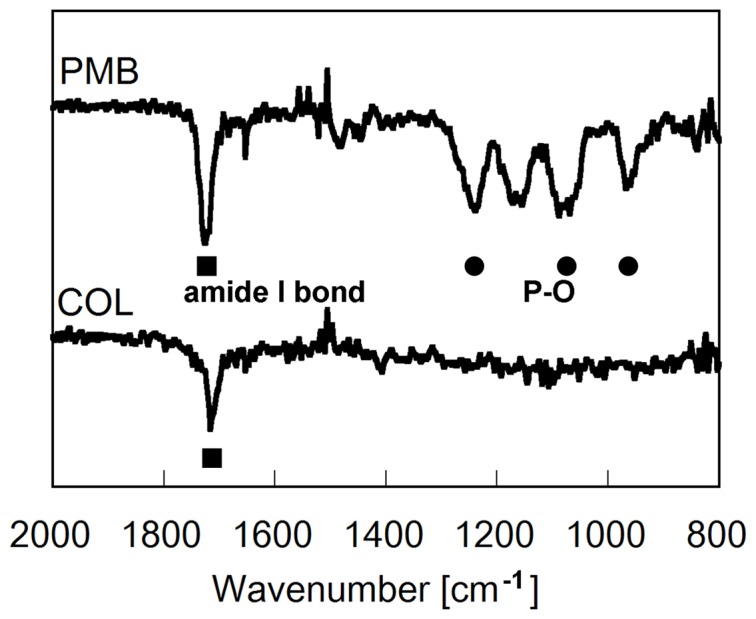
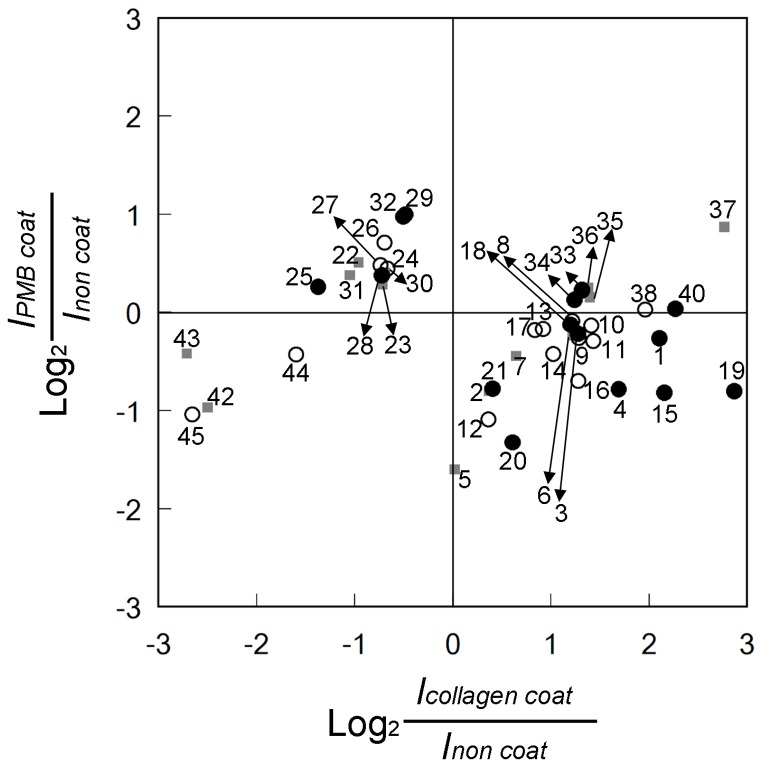
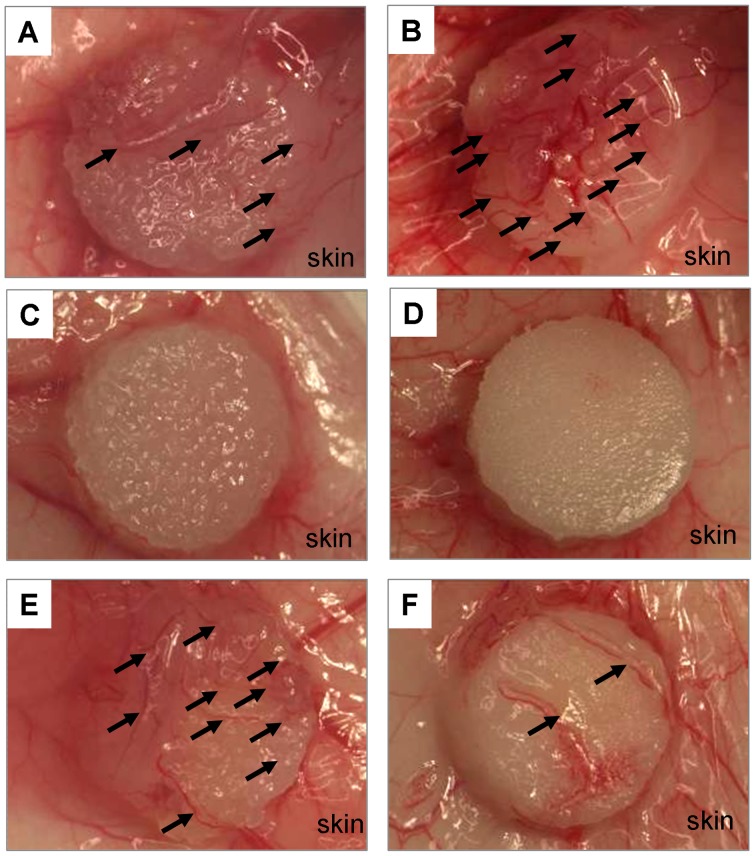
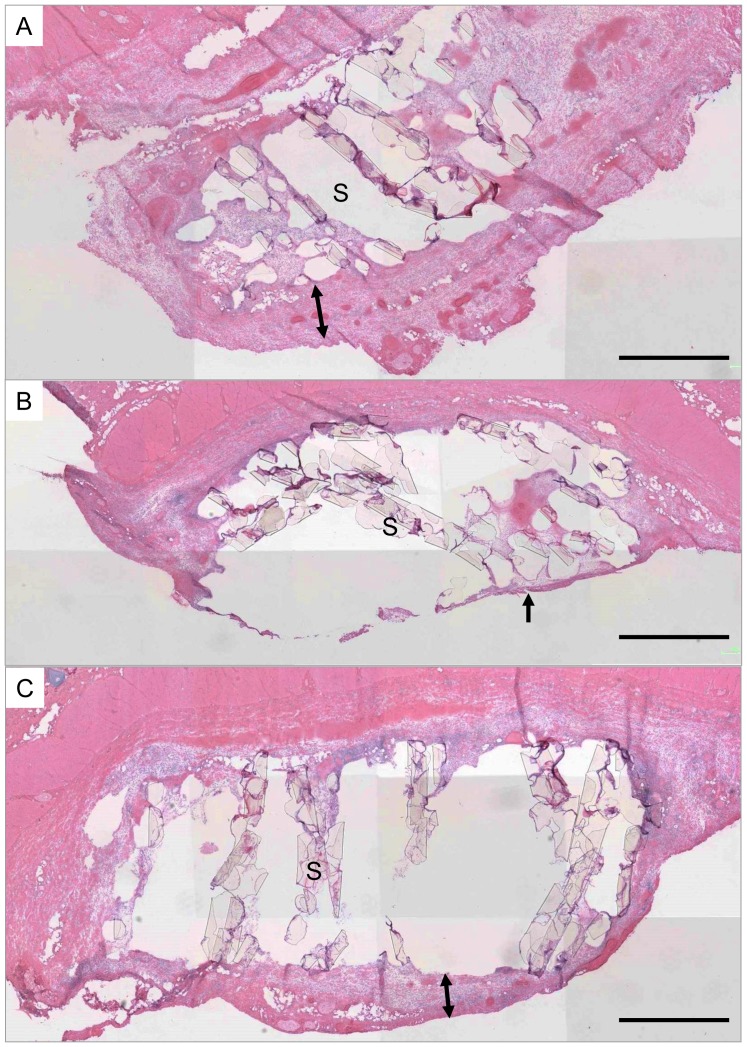
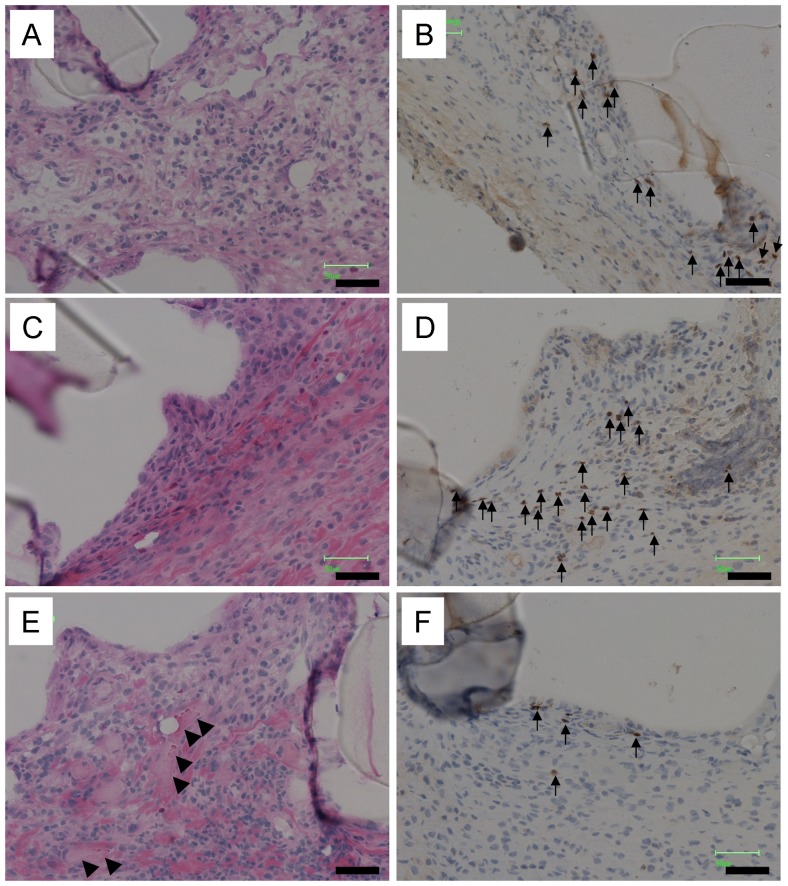
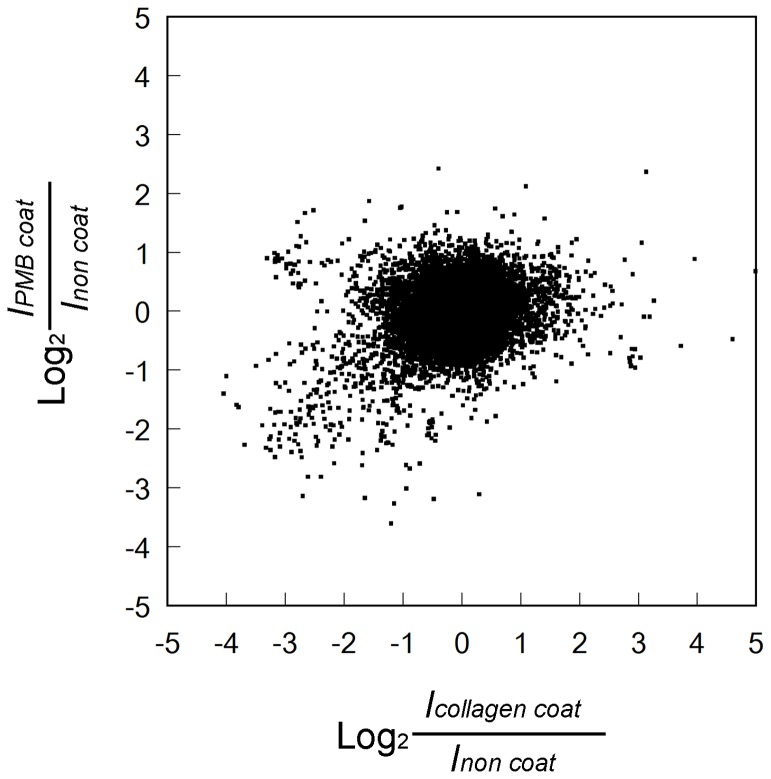
To design scaffolds for tissue regeneration, details of the host body reaction to the scaffolds must be studied. Host body reactions have been investigated mainly by immunohistological observations for a long time. Despite of recent dramatic development in genetic analysis technologies, genetically comprehensive changes in host body reactions are hardly studied. There is no information about host body reactions that can predict successful tissue regeneration in the future. In the present study, porous polyethylene scaffolds were coated with bioactive collagen or bio-inert poly(2-methacryloyloxyethyl phosphorylcholine-co-n-butyl methacrylate) (PMB) and were implanted subcutaneously and compared the host body reaction to those substrates by normalizing the result using control non-coat polyethylene scaffold. The comprehensive analyses of early host body reactions to the scaffolds were carried out using a DNA microarray assay. Within numerous genes which were expressed differently among these scaffolds, particular genes related to inflammation, wound healing, and angiogenesis were focused upon. Interleukin (IL)-1β and IL-10 are important cytokines in tissue responses to biomaterials because IL-1β promotes both inflammation and wound healing and IL-10 suppresses both of them. IL-1β was up-regulated in the collagen-coated scaffold. Collagen-specifically up-regulated genes contained both M1- and M2-macrophage-related genes. Marked vessel formation in the collagen-coated scaffold was occurred in accordance with the up-regulation of many angiogenesis-inducible factors. The DNA microarray assay provided global information regarding the host body reaction. Interestingly, several up-regulated genes were detected even on the very bio-inert PMB-coated surfaces and those genes include inflammation-suppressive and wound healing-suppressive IL-10, suggesting that not only active tissue response but also the inert response may relates to these genetic regulations.
为了设计用于组织再生的支架,必须研究宿主对支架的反应的细节。长期以来,宿主反应主要通过免疫组织化学观察来研究。尽管最近基因分析技术有了显著发展,但宿主反应的遗传综合变化几乎没有得到研究。关于可以预测未来组织再生成功的宿主反应的信息还没有。在本研究中,将多孔聚乙烯支架涂覆有生物活性胶原或生物惰性聚(2-甲基丙烯酰氧基乙基磷酸胆碱-co-n-丁基甲基丙烯酰)(PMB),并分别植入皮下,通过用对照非涂覆聚乙烯支架对结果进行归一化,比较了这些支架的宿主反应。使用 DNA 微阵列分析对支架的早期宿主反应进行了综合分析。在这些支架之间表达不同的众多基因中,特别关注了与炎症、伤口愈合和血管生成相关的特定基因。白细胞介素(IL)-1β和 IL-10 是生物材料组织反应中的重要细胞因子,因为 IL-1β促进炎症和伤口愈合,而 IL-10 抑制两者。IL-1β在胶原涂层支架中上调。胶原特异性上调的基因包含 M1-和 M2-巨噬细胞相关基因。在胶原涂层支架中发生了明显的血管形成,这与许多血管生成诱导因子的上调相一致。DNA 微阵列分析提供了宿主反应的全局信息。有趣的是,甚至在非常惰性的 PMB 涂层表面上也检测到了几个上调的基因,这些基因包括炎症抑制和伤口愈合抑制的 IL-10,这表明不仅是主动的组织反应,还有惰性反应也可能与这些基因调节有关。