Lin Ching-Nan, Sun Wei-Sheng W, Lu Hui-Yin, Ng Swee-Chuan, Liao Ying-Shu, Syu Wan-Jr
Institute of Microbiology and Immunology, National Yang-Ming University, Taipei, Taiwan, Republic of China.
Institute of Biochemistry and Molecular Biology, National Yang-Ming University, Taipei, Taiwan, Republic of China ; Taiwan International Graduate Program in Molecular Medicine, Academia Sinica, Taipei, Taiwan, Republic of China.
PLoS One. 2014 Jan 13;9(1):e85354. doi: 10.1371/journal.pone.0085354. eCollection 2014.
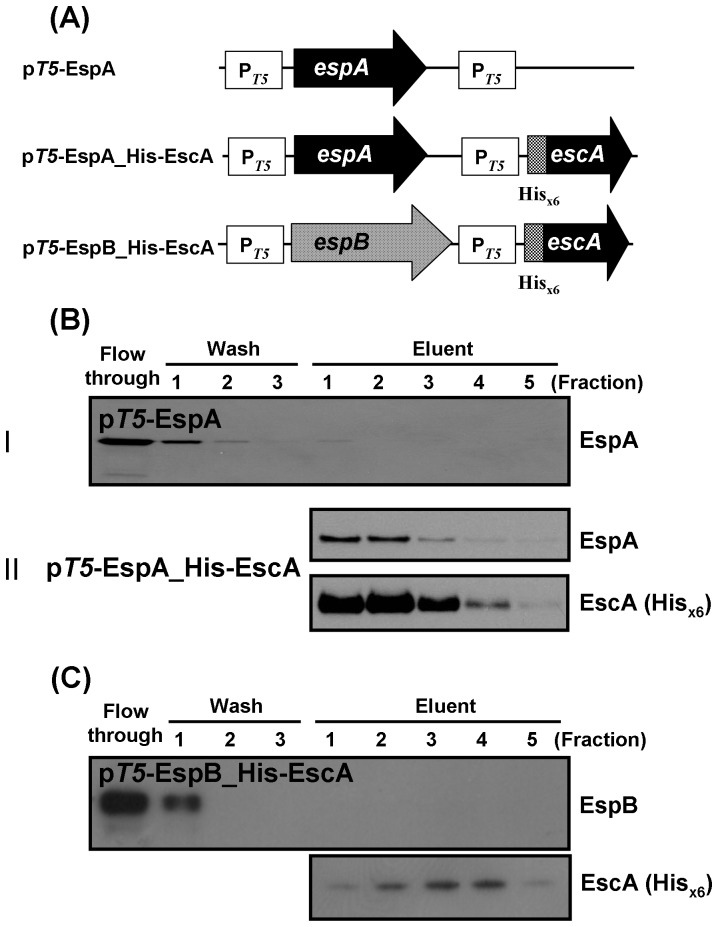
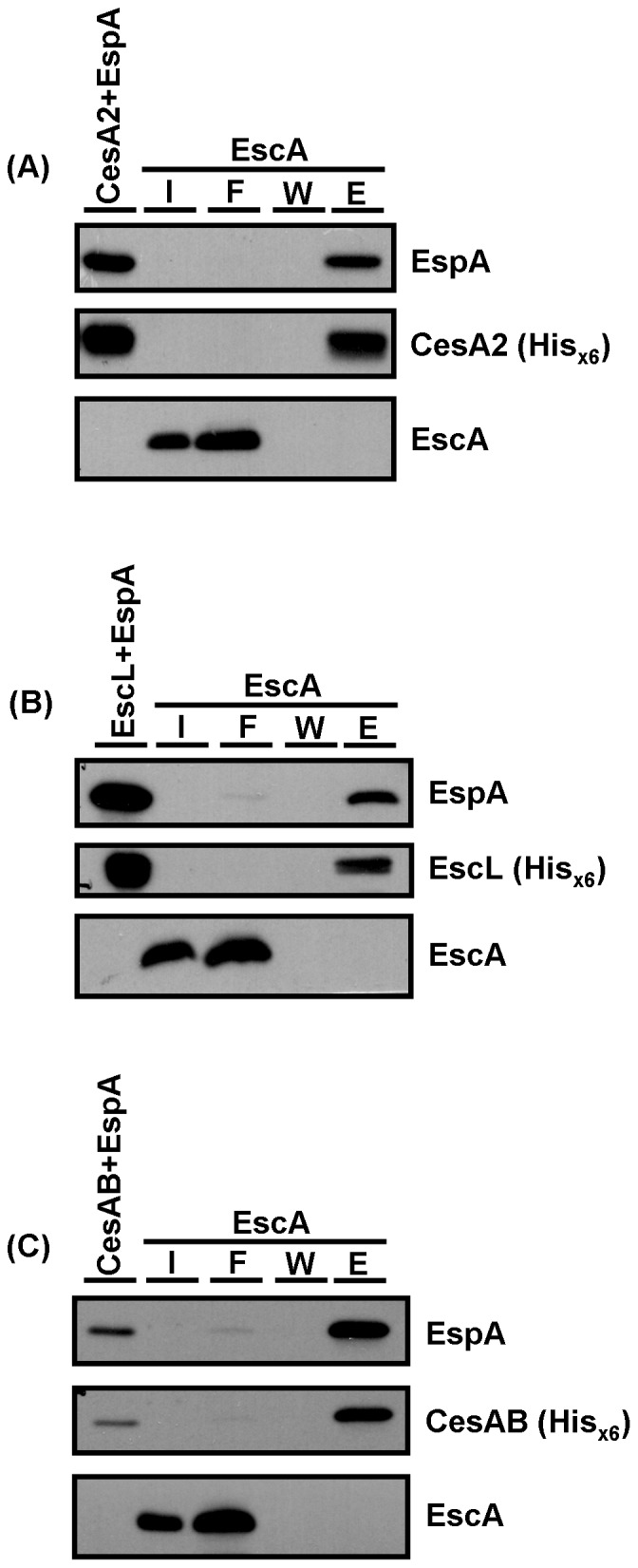
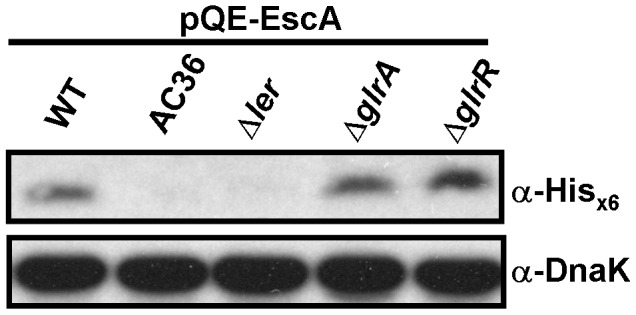
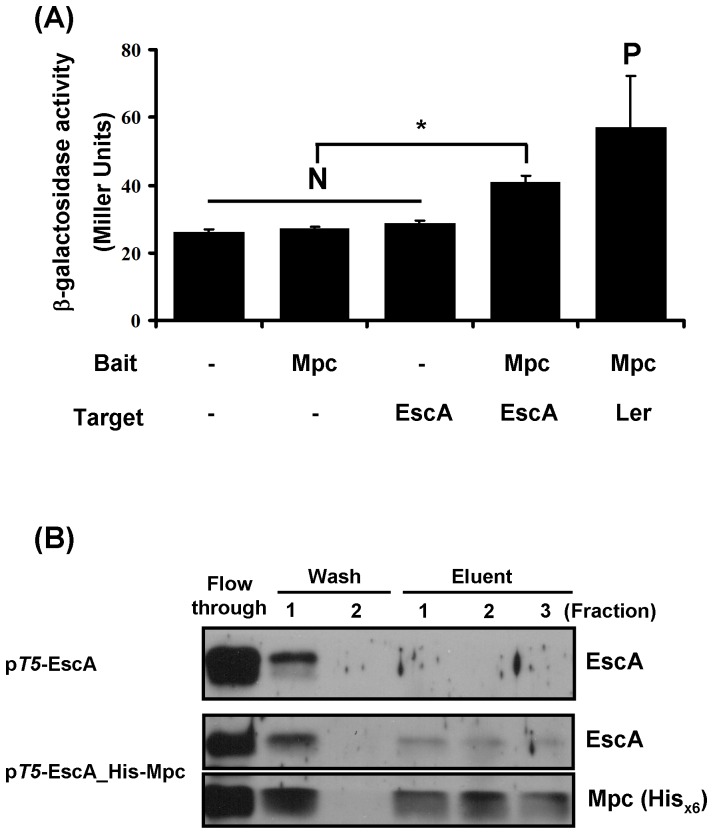
Infections caused by enterohemorrhagic Escherichia coli (EHEC) can lead to diarrhea with abdominal cramps and sometimes are complicated by severe hemolytic uremic syndrome. EHEC secretes effector proteins into host cells through a type III secretion system that is composed of proteins encoded by a chromosomal island, locus for the enterocyte effacement (LEE). EspA is the major component of the filamentous structure connecting the bacteria and the host's cells. Synthesis and secretion of EspA must be carefully controlled since the protein is prone to polymerize. CesAB, CesA2, and EscL have been identified as being able to interact with EspA. Furthermore, the intracellular level of EspA declines when cesAB, cesA2, and escL are individually deleted. Here, we report a LEE gene named l0033, which also affects the intracellular level of EspA. We renamed l0033 as escA since its counterpart in enteropathogenic E. coli has been recently described. Similar to CesAB, EscL, and CesA2, EscA interacts with EspA and enhances the protein stability of EspA. However, EscA is also able to interact with inner membrane-associated EscL, CesA2, and EscN, but not with cytoplasmic CesAB. In terms of gene organizations, escA locates in LEE3. Expression of EscA is faithfully regulated via Mpc, the first gene product of LEE3. Since Mpc is tightly regulated to low level, we suggest that EscA is highly synchronized and critical to the process of escorting EspA to its final destination.
肠出血性大肠杆菌(EHEC)引起的感染可导致伴有腹部绞痛的腹泻,有时还会并发严重的溶血尿毒综合征。EHEC通过III型分泌系统将效应蛋白分泌到宿主细胞中,该系统由一个染色体岛(肠细胞脱落位点,LEE)编码的蛋白质组成。EspA是连接细菌和宿主细胞的丝状结构的主要成分。由于该蛋白易于聚合,因此EspA的合成和分泌必须受到严格控制。CesAB、CesA2和EscL已被确定能够与EspA相互作用。此外,当cesAB、cesA2和escL分别缺失时,EspA的细胞内水平会下降。在此,我们报告了一个名为l0033的LEE基因,它也会影响EspA的细胞内水平。我们将l0033重新命名为escA,因为其在肠致病性大肠杆菌中的对应物最近已被描述。与CesAB、EscL和CesA2类似,EscA与EspA相互作用并增强EspA的蛋白质稳定性。然而,EscA还能够与内膜相关的EscL、CesA2和EscN相互作用,但不能与细胞质中的CesAB相互作用。在基因组织方面,escA位于LEE3中。EscA的表达通过LEE3的第一个基因产物Mpc得到精确调控。由于Mpc受到严格调控处于低水平,我们认为EscA高度同步且对于将EspA护送至其最终目的地的过程至关重要。