State Key Laboratory of Systematic and Evolutionary Botany, Institute of Botany, Chinese Academy of Sciences, Beijing, China ; University of Chinese Academy of Sciences, Beijing, China.
State Key Laboratory of Systematic and Evolutionary Botany, Institute of Botany, Chinese Academy of Sciences, Beijing, China.
PLoS One. 2014 Jan 14;9(1):e85534. doi: 10.1371/journal.pone.0085534. eCollection 2014.
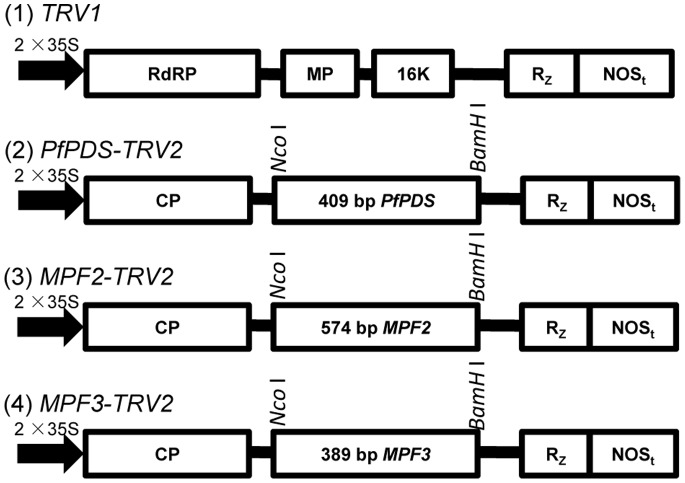
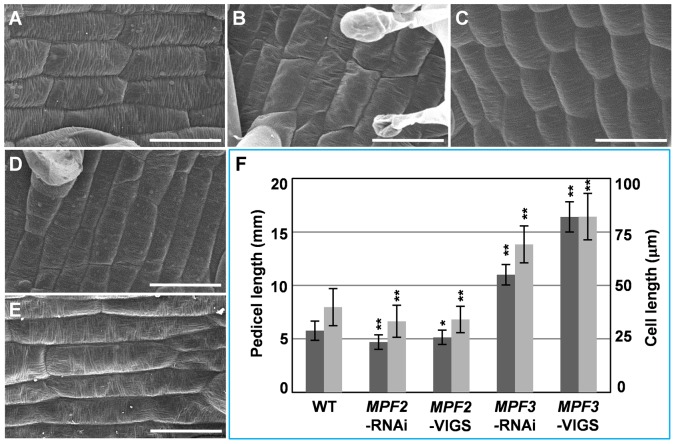
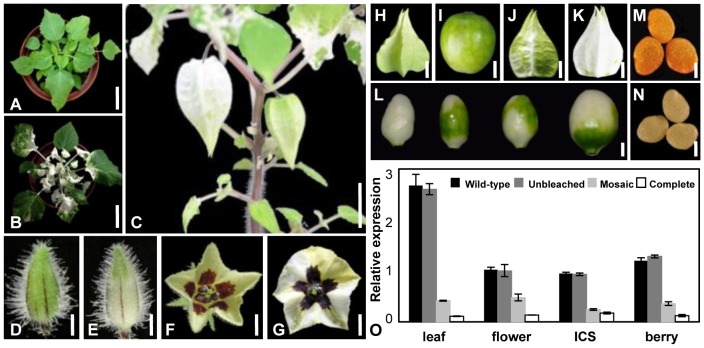
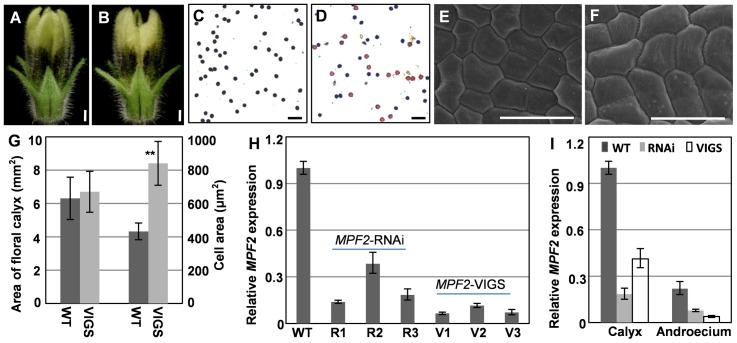
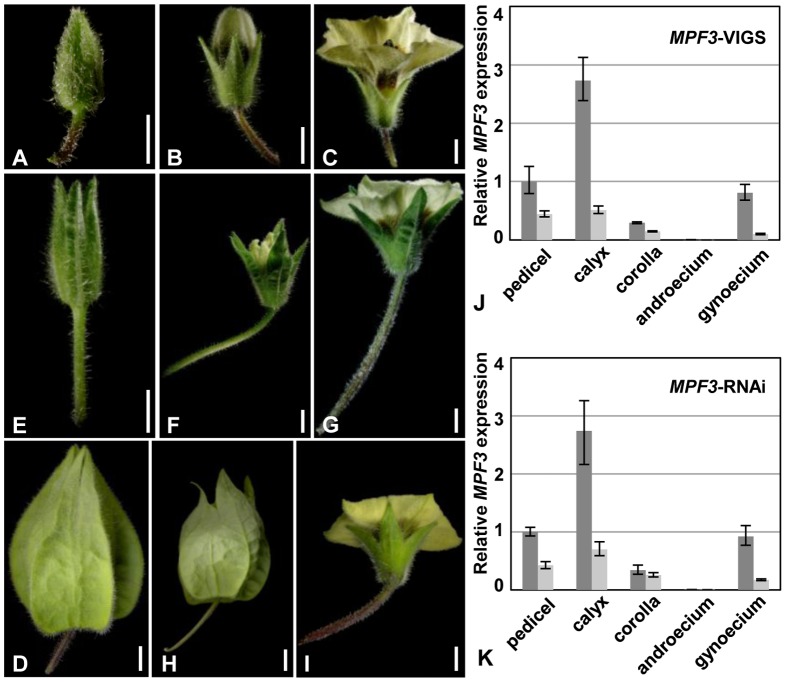
The fruit of Physalis has a berry and a novelty called inflated calyx syndrome (ICS, also named the 'Chinese lantern'). Elucidation of the underlying developmental mechanisms of fruit diversity demands an efficient gene functional inference platform. Here, we tested the application of the tobacco rattle virus (TRV)-mediated gene-silencing system in Physalis floridana. First, we characterized the putative gene of a phytoene desaturase in P. floridana (PfPDS). Infecting the leaves of the Physalis seedlings with the PfPDS-TRV vector resulted in a bleached plant, including the developing leaves, floral organs, ICS, berry, and seed. These results indicated that a local VIGS treatment can efficiently induce a systemic mutated phenotype. qRT-PCR analyses revealed that the bleaching extent correlated to the mRNA reduction of the endogenous PfPDS. Detailed comparisons of multiple infiltration and growth protocols allowed us to determine the optimal methodologies for VIGS manipulation in Physalis. We subsequently utilized this optimized VIGS methodology to downregulate the expression of two MADS-box genes, MPF2 and MPF3, and compared the resulting effects with gene-downregulation mediated by RNA interference (RNAi) methods. The VIGS-mediated gene knockdown plants were found to resemble the mutated phenotypes of floral calyx, fruiting calyx and pollen maturation of the RNAi transgenic plants for both MPF2 and MPF3. Moreover, the two MADS-box genes were appeared to have a novel role in the pedicel development in P. floridana. The major advantage of VIGS-based gene knockdown lies in practical aspects of saving time and easy manipulation as compared to the RNAi. Despite the lack of heritability and mosaic mutation phenotypes observed in some organs, the TRV-mediated gene silencing system provides an alternative efficient way to infer gene function in various developmental processes in Physalis, thus facilitating understanding of the genetic basis of the evolution and development of the morphological diversities within the Solanaceae.
酸浆果实呈浆果状,有一个新颖的特征,即泡状花萼综合征(ICS,也称为“中国灯笼”)。阐明果实多样性的潜在发育机制需要一个高效的基因功能推断平台。在这里,我们测试了烟草脆裂病毒(TRV)介导的基因沉默系统在酸浆(Physalis floridana)中的应用。首先,我们对酸浆中的一个类胡萝卜素脱饱和酶基因(PfPDS)进行了特征描述。将 PfPDS-TRV 载体感染酸浆幼苗的叶片,导致白化植株,包括发育中的叶片、花器官、ICS、浆果和种子。这些结果表明局部 VIGS 处理可以有效地诱导系统性突变表型。qRT-PCR 分析表明,白化程度与内源 PfPDS 的 mRNA 减少程度相关。对多种渗透和生长方案的详细比较使我们能够确定 VIGS 在酸浆中的最佳操作方法。随后,我们利用这种优化的 VIGS 方法下调了两个 MADS 框基因(MPF2 和 MPF3)的表达,并将其与 RNA 干扰(RNAi)方法介导的基因下调的结果进行了比较。发现 VIGS 介导的基因敲低植物的花萼、果萼和花粉成熟的表型与 MPF2 和 MPF3 的 RNAi 转基因植物的突变表型相似。此外,这两个 MADS 框基因似乎在酸浆花梗发育中具有新的作用。与 RNAi 相比,基于 VIGS 的基因敲低的主要优势在于在节省时间和易于操作方面的实用性。尽管在一些器官中观察到缺乏遗传性和镶嵌突变表型,但 TRV 介导的基因沉默系统为推断酸浆中各种发育过程中的基因功能提供了一种替代的有效方法,从而有助于理解茄科形态多样性的遗传基础和进化发展。