Institute of Physiology, University of Maribor, Faculty of Medicine, Maribor, Slovenia.
Department of laboratory diagnostics, University Clinical Center Maribor, Maribor, Slovenia.
PLoS One. 2014 Jan 16;9(1):e86297. doi: 10.1371/journal.pone.0086297. eCollection 2014.
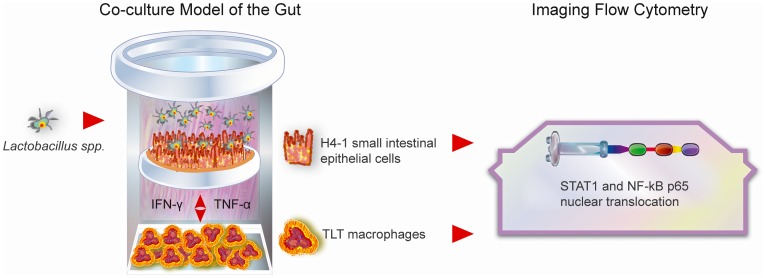
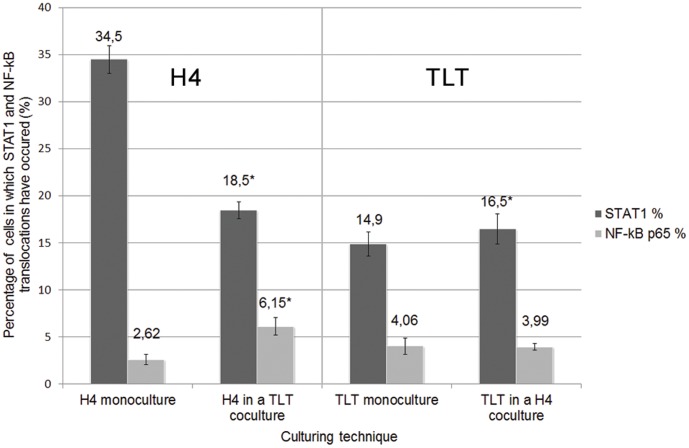
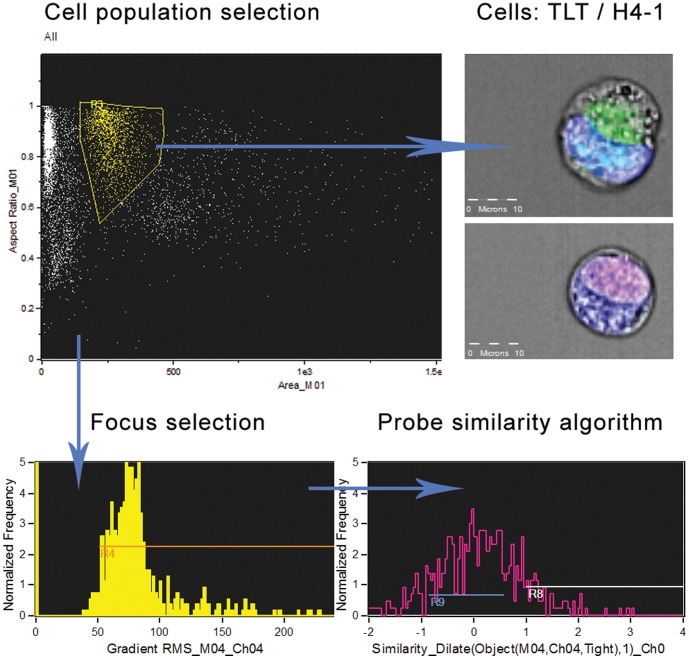
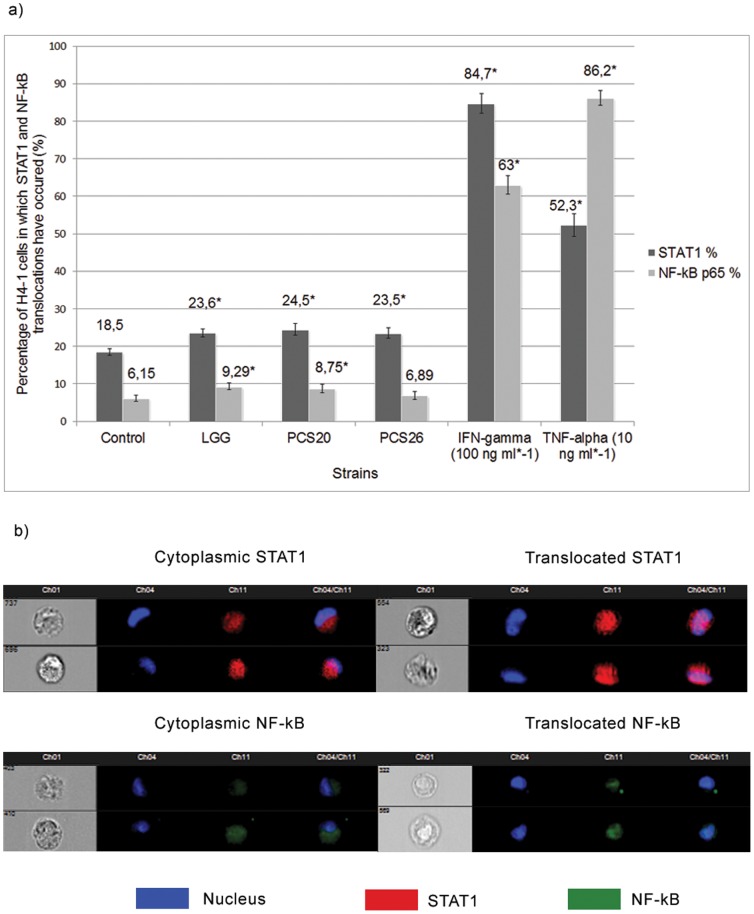
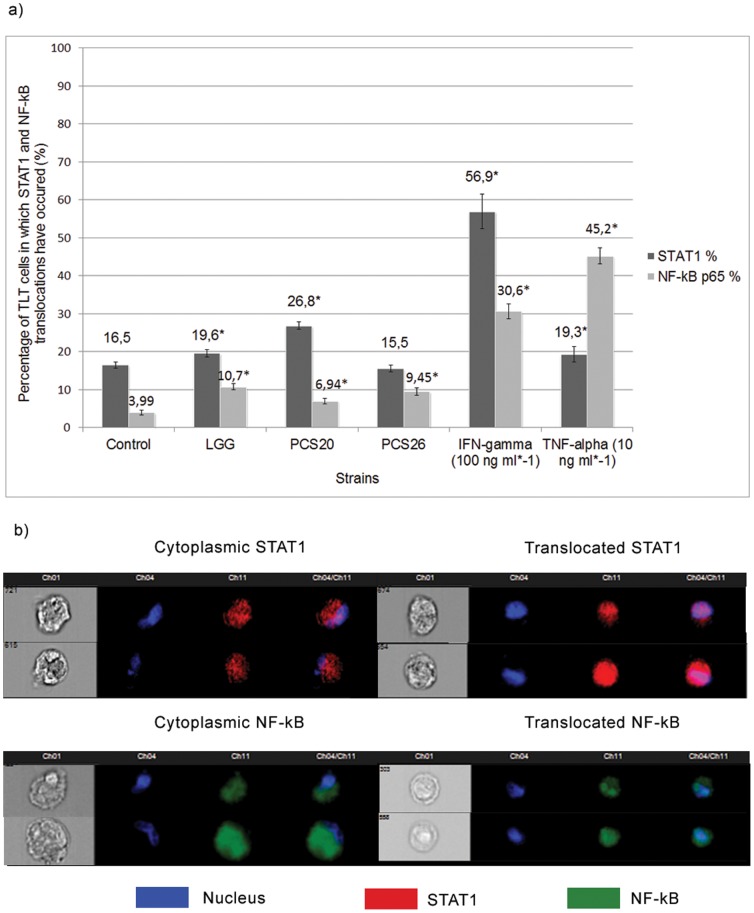
The early establishment of a complete microbiome has been shown to play an integral part in the development and maintenance of an intact intestine and its immune system, although much remains unknown about the specific mechanisms of immune modulation in newborns. In our study we show in a co-culture model of the undeveloped small intestine that members of Lactobacillus spp. influence STAT1 and NF-kB p65 nuclear translocation in both intestinal epithelial cells as well as underlying macrophages. Moreover, by using imaging flow cytometry we were able to monitor each individual cell and create a framework of the percentage of cells in which translocation occurred in challenged versus control cell populations. We also observed a significant difference in baseline translocation in intestinal cells when cultured alone versus those in a co-culture model, underpinning the importance of 3D models over monolayer set-ups in epithelial in vitro research. In conclusion, our work offers new insights into the potential routes by which the commensal microbiome primes the early immune system to fight pathogens, and shows how strain-specific these mechanisms really are.
早期建立完整的微生物群已被证明在完整肠道及其免疫系统的发育和维持中起着不可或缺的作用,尽管对于新生儿免疫调节的具体机制仍知之甚少。在我们的研究中,我们在未发育的小肠的共培养模型中表明,乳杆菌属的成员影响 STAT1 和 NF-κB p65 核易位,无论是在肠上皮细胞还是在下面的巨噬细胞中。此外,通过使用成像流式细胞术,我们能够监测每个单独的细胞,并为挑战细胞群体与对照细胞群体中发生易位的细胞百分比创建一个框架。我们还观察到,在单独培养的情况下与在共培养模型中培养的情况下,肠细胞的基线易位存在显著差异,这突显了 3D 模型在体外上皮研究中优于单层设置的重要性。总之,我们的工作为共生微生物群使早期免疫系统对抗病原体的潜在途径提供了新的见解,并展示了这些机制在菌株特异性方面的真正作用。