Department of Statistics and School of Natural Resources, University of Nebraska-Lincoln 234 Hardin Hall, 3310 Holdrege Street, Lincoln, Nebraska, 68583.
School of Natural Resources, University of Nebraska-Lincoln 416 Hardin Hall, 3310 Holdrege Street, Lincoln, Nebraska, 68583.
Ecol Evol. 2013 Dec;3(16):5225-36. doi: 10.1002/ece3.887. Epub 2013 Dec 2.
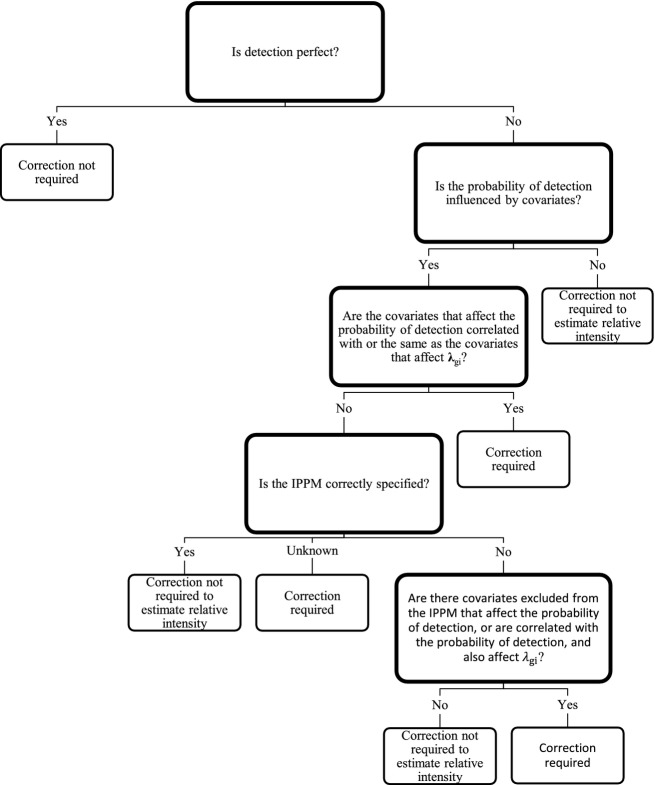
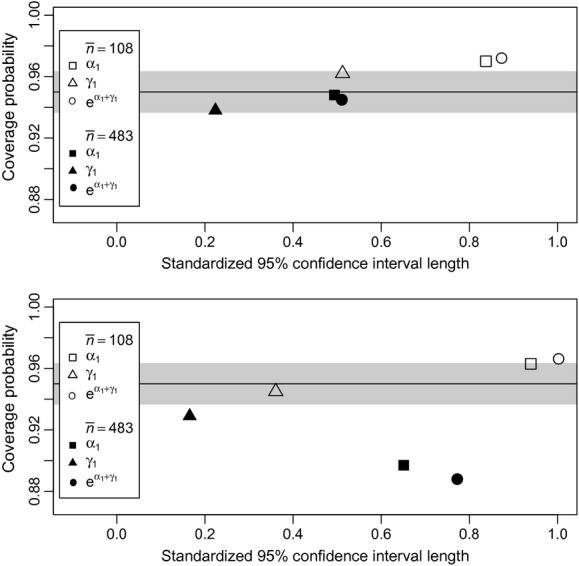
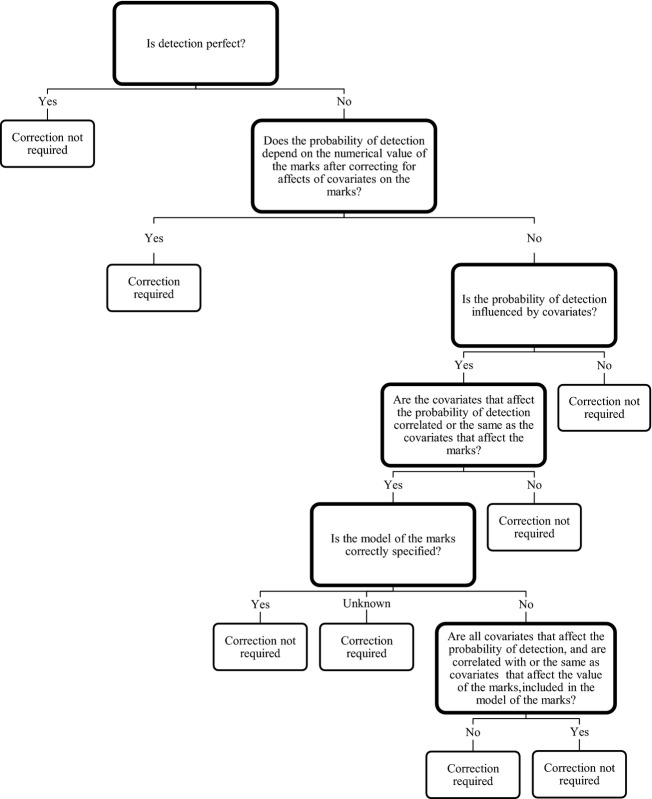
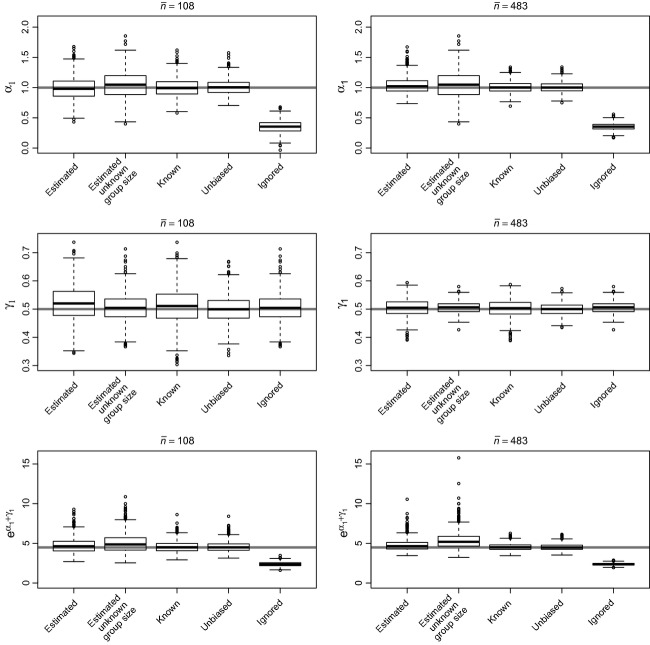
Species distribution models (SDM) are tools used to determine environmental features that influence the geographic distribution of species' abundance and have been used to analyze presence-only records. Analysis of presence-only records may require correction for nondetection sampling bias to yield reliable conclusions. In addition, individuals of some species of animals may be highly aggregated and standard SDMs ignore environmental features that may influence aggregation behavior.We contend that nondetection sampling bias can be treated as missing data. Statistical theory and corrective methods are well developed for missing data, but have been ignored in the literature on SDMs. We developed a marked inhomogeneous Poisson point process model that accounted for nondetection and aggregation behavior in animals and tested our methods on simulated data.Correcting for nondetection sampling bias requires estimates of the probability of detection which must be obtained from auxiliary data, as presence-only data do not contain information about the detection mechanism. Weighted likelihood methods can be used to correct for nondetection if estimates of the probability of detection are available. We used an inhomogeneous Poisson point process model to model group abundance, a zero-truncated generalized linear model to model group size, and combined these two models to describe the distribution of abundance. Our methods performed well on simulated data when nondetection was accounted for and poorly when detection was ignored.We recommend researchers consider the effects of nondetection sampling bias when modeling species distributions using presence-only data. If information about the detection process is available, we recommend researchers explore the effects of nondetection and, when warranted, correct the bias using our methods. We developed our methods to analyze opportunistic presence-only records of whooping cranes (Grus americana), but expect that our methods will be useful to ecologists analyzing opportunistic presence-only records of other species of animals.
物种分布模型(SDM)是用于确定影响物种丰度地理分布的环境特征的工具,已被用于分析仅有存在记录的数据。分析仅有存在记录的数据可能需要纠正未检测采样偏差,以得出可靠的结论。此外,某些动物物种的个体可能高度聚集,而标准的 SDM 忽略了可能影响聚集行为的环境特征。我们认为未检测采样偏差可以视为缺失数据。缺失数据的统计理论和校正方法已经得到了很好的发展,但在 SDM 文献中被忽视了。我们开发了一种标记非均匀泊松点过程模型,该模型考虑了动物的未检测和聚集行为,并在模拟数据上测试了我们的方法。纠正未检测采样偏差需要从辅助数据中获得检测概率的估计值,因为仅有存在数据不包含关于检测机制的信息。如果可以获得检测概率的估计值,则可以使用加权似然方法进行校正。我们使用非均匀泊松点过程模型来建模群体丰度,使用零截断广义线性模型来建模群体大小,并将这两个模型结合起来描述丰度的分布。当考虑到未检测时,我们的方法在模拟数据上表现良好,而当忽略检测时则表现不佳。我们建议研究人员在使用仅有存在数据建模物种分布时考虑未检测采样偏差的影响。如果有关于检测过程的信息,我们建议研究人员探索未检测的影响,并在有必要时使用我们的方法纠正偏差。我们开发了我们的方法来分析美洲鹤(Grus americana)的机会性仅有存在记录,但期望我们的方法将对分析其他动物物种的机会性仅有存在记录的生态学家有用。