Pathogenic Mechanisms Research Group, Microbiology, School of Natural Sciences, National University of Ireland Galway Galway, Ireland.
Front Cell Infect Microbiol. 2014 Jan 10;3:114. doi: 10.3389/fcimb.2013.00114. eCollection 2014.
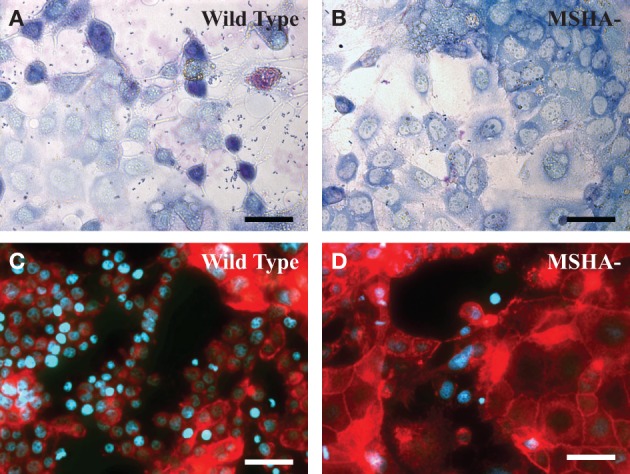
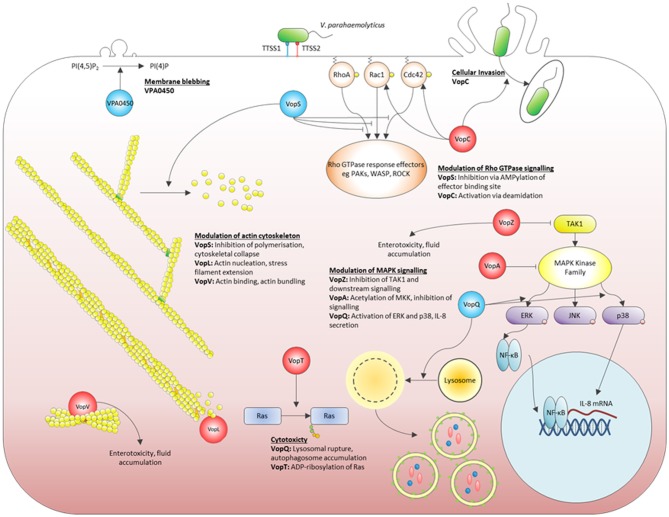
Vibrio parahaemolyticus elicits gastroenteritis by deploying Type III Secretion Systems (TTSS) to deliver effector proteins into epithelial cells of the human intestinal tract. The bacteria must adhere to the human cells to allow colonization and operation of the TTSS translocation apparatus bridging the bacterium and the host cell. This article first reviews recent advances in identifying the molecules responsible for intercellular adherence. V. parahaemolyticus possesses two TTSS, each of which delivers an exclusive set of effectors and mediates unique effects on the host cell. TTSS effectors primarily target and alter the activation status of host cell signaling proteins, thereby bringing about changes in the regulation of cellular behavior. TTSS1 is responsible for the cytotoxicity of V. parahaemolyticus, while TTSS2 is necessary for the enterotoxicity of the pathogen. Recent publications have elucidated the function of several TTSS effectors and their importance in the virulence of the bacterium. This review will explore the ability of the TTSS to manipulate activities of human intestinal cells and how this modification of cell function favors bacterial colonization and persistence of V. parahaemolyticus in the host.
副溶血性弧菌通过部署 III 型分泌系统 (TTSS) 将效应蛋白递送至人类肠道上皮细胞,引发肠胃炎。细菌必须黏附于人体细胞,以利于 TTSS 转位装置在细菌和宿主细胞之间建立连接,从而进行定植和运转。本文首先回顾了鉴定负责细胞间黏附的分子的最新进展。副溶血性弧菌拥有两套 TTSS,每一套都输送一组独特的效应蛋白,并对宿主细胞产生独特的影响。TTSS 效应蛋白主要靶向并改变宿主细胞信号蛋白的激活状态,从而引起细胞行为调控的变化。TTSS1 负责副溶血性弧菌的细胞毒性,而 TTSS2 则是病原体肠毒性所必需的。最近的出版物阐明了几种 TTSS 效应蛋白的功能及其在细菌毒力中的重要性。本综述将探讨 TTSS 操纵人类肠道细胞活动的能力,以及这种细胞功能的改变如何有利于细菌的定植和副溶血性弧菌在宿主中的持续存在。