Department of Chemistry, University of Pittsburgh , 219 Parkman Avenue, Pittsburgh, Pennsylvania 15260, United States.
Anal Chem. 2014 Feb 18;86(4):2090-8. doi: 10.1021/ac403607s. Epub 2014 Feb 6.
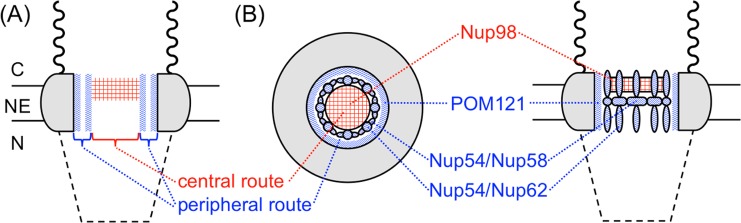
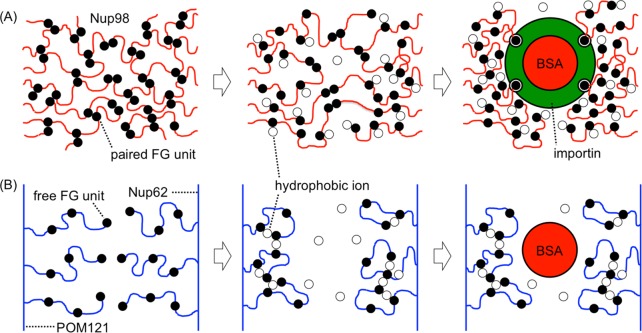
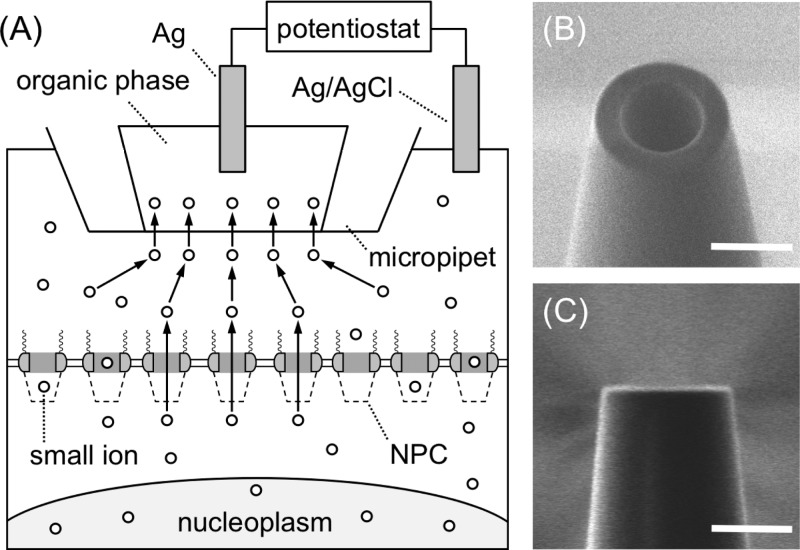
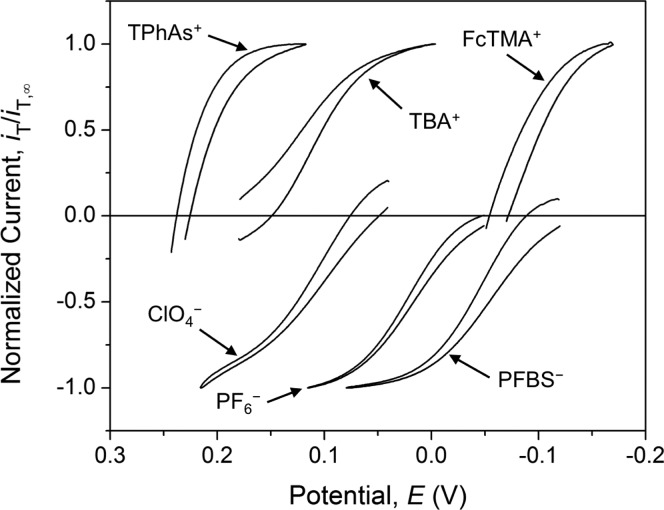
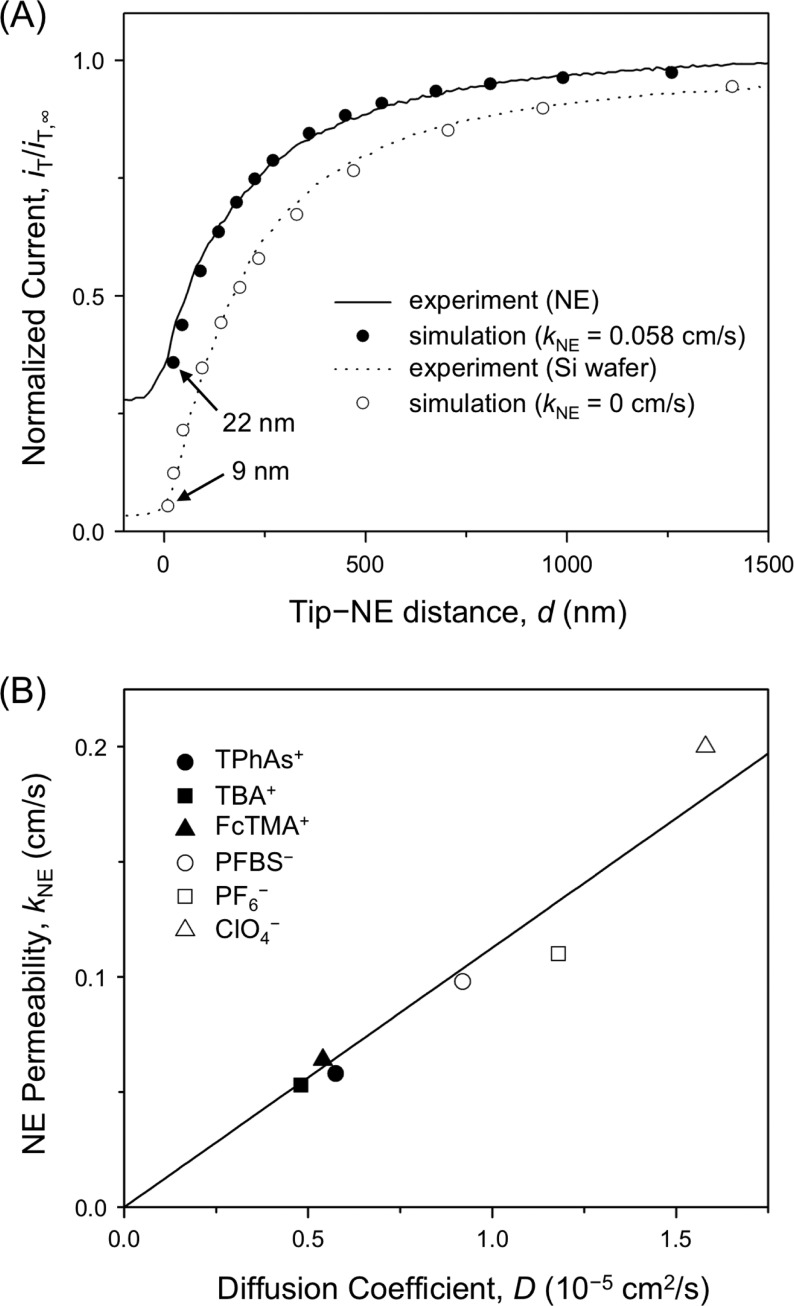
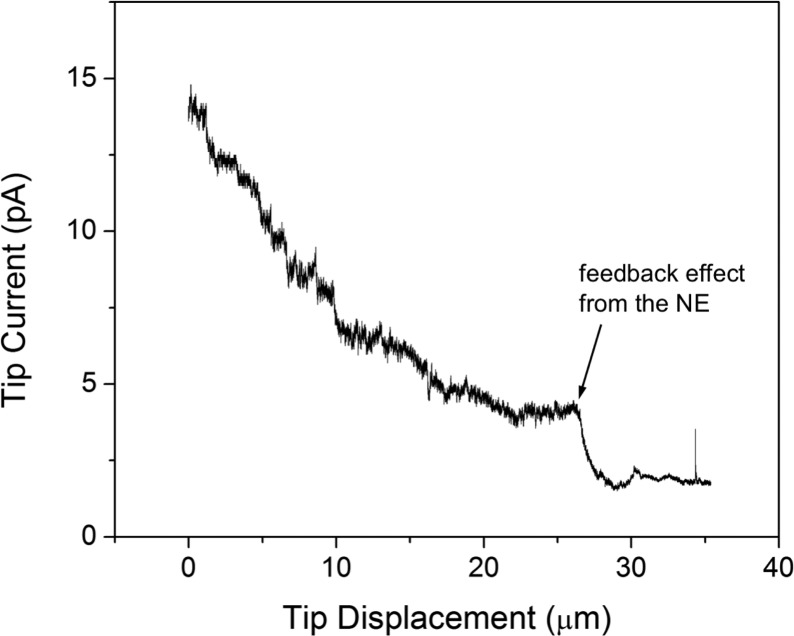
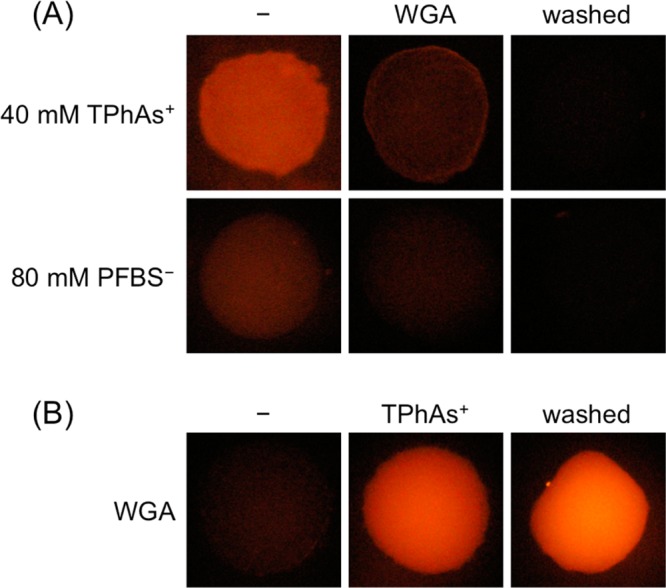
Efficient delivery of therapeutic macromolecules and nanomaterials into the nucleus is imperative for gene therapy and nanomedicine. Nucleocytoplasmic molecular transport, however, is tightly regulated by the nuclear pore complex (NPC) with the hydrophobic transport barriers based on phenylalanine and glycine repeats. Herein, we apply scanning electrochemical microscopy (SECM) to quantitatively study the permeability of the NPCs to small probe ions with a wide range of hydrophobicity as a measure of their hydrophobic interactions with the transport barriers. Amperometric detection of the redox-inactive probe ions is enabled by using the ion-selective SECM tips based on the micropipet- or nanopipet-supported interfaces between two immiscible electrolyte solutions. The remarkably high ion permeability of the NPCs is successfully measured by SECM and theoretically analyzed. This analysis demonstrates that the ion permeability of the NPCs is determined by the dimensions and density of the nanopores without a significant effect of the transport barriers on the transported ions. Importantly, the weak ion-barrier interactions become significant at sufficiently high concentrations of extremely hydrophobic ions, i.e., tetraphenylarsonium and perfluorobutylsulfonate, to permeabilize the NPCs to naturally impermeable macromolecules. Dependence of ion-induced permeabilization of the NPC on the pathway and mode of macromolecular transport is studied by using fluorescence microscopy to obtain deeper insights into the gating mechanism of the NPC as the basis of a new transport model.
高效地将治疗性大分子和纳米材料递送至细胞核对于基因治疗和纳米医学至关重要。然而,核质分子转运受到核孔复合物(NPC)的严格调控,其疏水转运屏障基于苯丙氨酸和甘氨酸重复序列。在此,我们应用扫描电化学显微镜(SECM)定量研究了 NPC 对具有广泛疏水性的小分子探针离子的通透性,作为其与转运屏障疏水相互作用的衡量标准。通过使用基于微管或纳米管支撑的两不相容电解质溶液界面的离子选择性 SECM 尖端,实现了氧化还原非活性探针离子的安培检测。通过 SECM 成功测量并通过理论分析证实了 NPC 的高离子通透性。该分析表明,NPC 的离子通透性取决于纳米孔的尺寸和密度,而转运屏障对转运离子的影响可以忽略不计。重要的是,当极其疏水的离子(如四苯砷和全氟丁基磺酸盐)的浓度足够高时,弱离子-屏障相互作用变得显著,从而使 NPC 对天然不可渗透的大分子具有通透性。通过荧光显微镜研究离子诱导的 NPC 通透性对大分子转运途径和模式的依赖性,以深入了解 NPC 的门控机制,作为新的转运模型的基础。