Division of Endocrinology, Department of Medicine, Mount Sinai Medical Center, New York, NY 10029; email:
Annu Rev Pathol. 2014;9:147-56. doi: 10.1146/annurev-pathol-012513-104713.
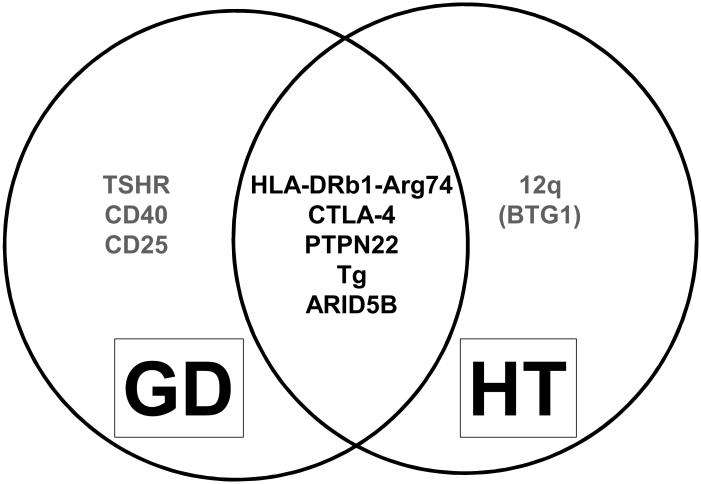
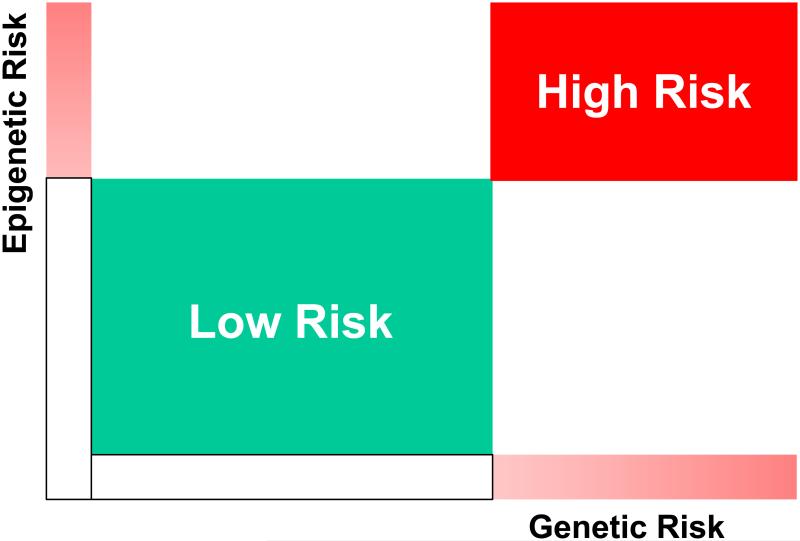
Recent advances in our understanding of genetic-epigenetic interactions have unraveled new mechanisms underlying the etiology of complex autoimmune diseases. Autoimmune thyroid diseases (AITDs) are highly prevalent, affecting 1% to 5% of the population. The major AITDs include Graves disease (GD) and Hashimoto's thyroiditis (HT); although these diseases contrast clinically, their pathogenesis involves shared immunogenetic mechanisms. Genetic data point to the involvement of both shared and unique genes. Among the shared susceptibility genes, HLA-DRβ1-Arg74 (human leukocyte antigen DR containing an arginine at position β74) confers the strongest risk. Recent genome-wide analyses have revealed new putative candidate genes. Epigenetic modulation is emerging as a major mechanism by which environmental factors interact with AITD susceptibility genes. Dissecting the genetic-epigenetic interactions underlying the pathogenesis of AITD is essential to uncover new therapeutic targets.
近年来,我们对遗传-表观遗传相互作用的理解取得了进展,揭示了复杂自身免疫性疾病发病机制的新机制。自身免疫性甲状腺疾病(AITD)发病率很高,影响 1%至 5%的人口。主要的 AITD 包括 Graves 病(GD)和桥本甲状腺炎(HT);尽管这些疾病在临床上有所不同,但它们的发病机制涉及共同的免疫遗传机制。遗传数据表明涉及共享和独特的基因。在共享的易感性基因中,HLA-DRβ1-Arg74(在位置β74 含有精氨酸的人类白细胞抗原 DR)赋予最强的风险。最近的全基因组分析揭示了新的潜在候选基因。表观遗传调节正在成为环境因素与 AITD 易感性基因相互作用的主要机制。剖析 AITD 发病机制背后的遗传-表观遗传相互作用对于揭示新的治疗靶点至关重要。