Nabeshima Toshitaka, Kim Hyoung-Chun
Department of Regional Pharmaceutical Care and Sciences, Graduate School of Pharmaceutical Sciences, Meijo University, Nagoya 468-8503, Japan. ; NPO, Japanese Drug Organization of Appropriate Use and Research, Nagoya 468-8503, Japan.
Neuropsychopharmacology & Toxicology Program, College of Pharmacy, Kangwon National University, Chuncheon 200-701, Korea.
Exp Neurobiol. 2013 Dec;22(4):235-43. doi: 10.5607/en.2013.22.4.235. Epub 2013 Dec 31.
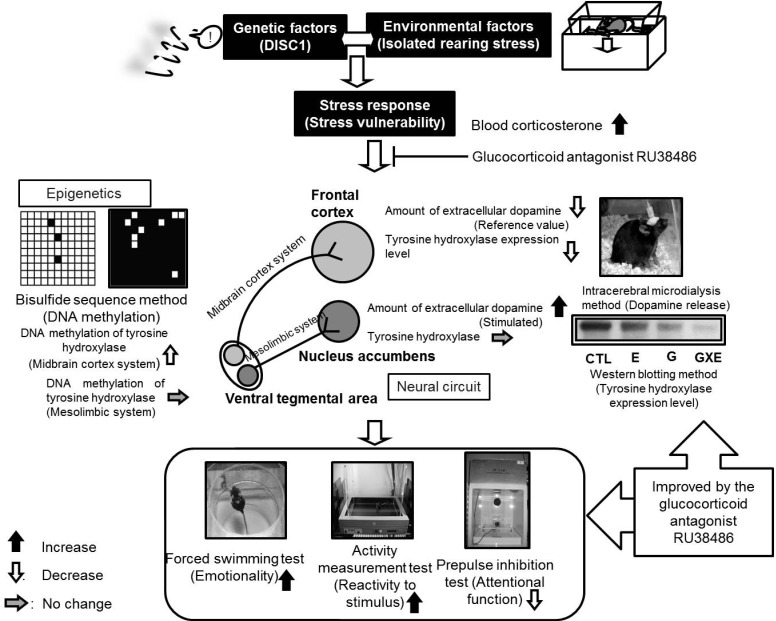
First, this article provides a brief overview of the previous hypotheses regarding depression and then focuses on involvement of genetic and environmental factors in development of depression. According to epidemiological research, 30~40% of occurrences of bipolar disorder involve a genetic factor. Therefore, environmental factors play a more important role in development of depression. Resilience and resistance to stress are common; therefore, although a certain extent of stress might be received during the embryonic or perinatal period, having a genetic predisposition to mental disorders does not imply that a mental disorder will develop. However, having a genetic predisposition to disorders does weaken resistance to stresses received during puberty, and without the ability to recover, a mental disorder is triggered. The importance of epigenetics in maintaining normal development and biology is reflected by the observation that development of many diseases occurs when the wrong type of epigenetic marks are introduced or are added at the wrong time or in the wrong place. Involvement of genetic and environmental factors in the onset of depression was investigated in relation to epigenetics. When mice with the disrupted in schizophrenia 1 (DISC1) abnormal gene received isolated rearing stress, depression-like abnormal behaviors and decreased gene expression of tyrosine hydroxylase in the frontal cortex by epigenetical suppression via DNA methylation were observed. Decrease of dopamine in the frontal cortex triggers behavioral disorders. Administration of a glucocorticoid receptor antagonist resulted in full recovery from neurological and behavioral disorders. These results suggest a new therapeutic approach to depression.
首先,本文简要概述了先前关于抑郁症的假说,然后重点关注遗传和环境因素在抑郁症发展中的作用。根据流行病学研究,30%至40%的双相情感障碍病例涉及遗传因素。因此,环境因素在抑郁症的发展中起着更重要的作用。恢复力和对压力的抵抗力是常见的;因此,尽管在胚胎期或围产期可能会受到一定程度的压力,但具有精神障碍的遗传易感性并不意味着一定会患上精神障碍。然而,具有疾病的遗传易感性确实会削弱青春期所受压力的抵抗力,并且如果没有恢复能力,就会引发精神障碍。表观遗传学在维持正常发育和生物学过程中的重要性体现在这样的观察结果中:当引入错误类型的表观遗传标记或在错误的时间或地点添加这些标记时,许多疾病就会发生。研究了遗传和环境因素与表观遗传学在抑郁症发病中的关系。当携带精神分裂症1号基因(DISC1)异常的小鼠受到隔离饲养压力时,通过DNA甲基化的表观遗传抑制作用,观察到类似抑郁的异常行为以及额叶皮质中酪氨酸羟化酶基因表达的降低。额叶皮质中多巴胺的减少会引发行为障碍。给予糖皮质激素受体拮抗剂可使神经和行为障碍完全恢复。这些结果提示了一种治疗抑郁症的新方法。