Department of Molecular Biology, Sejong University, Seoul 143-747, Korea.
Exp Neurobiol. 2013 Dec;22(4):315-21. doi: 10.5607/en.2013.22.4.315. Epub 2013 Dec 31.
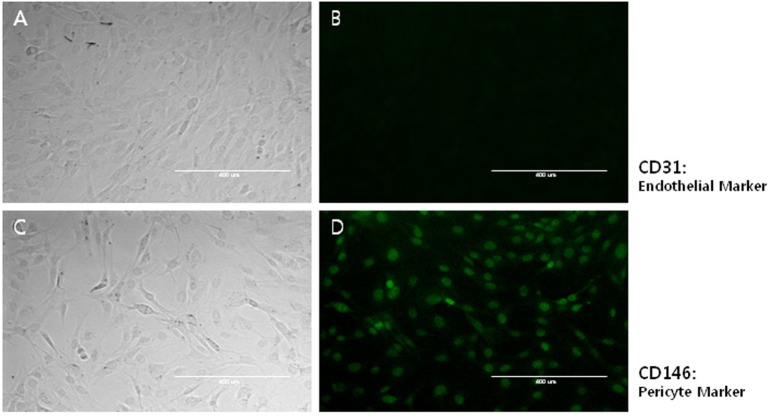
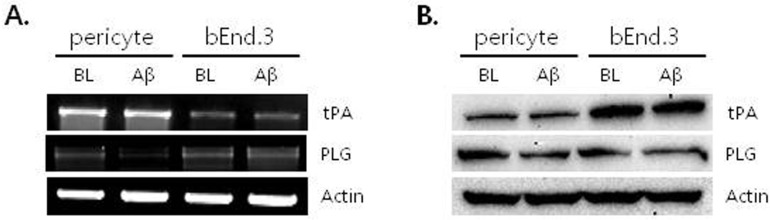
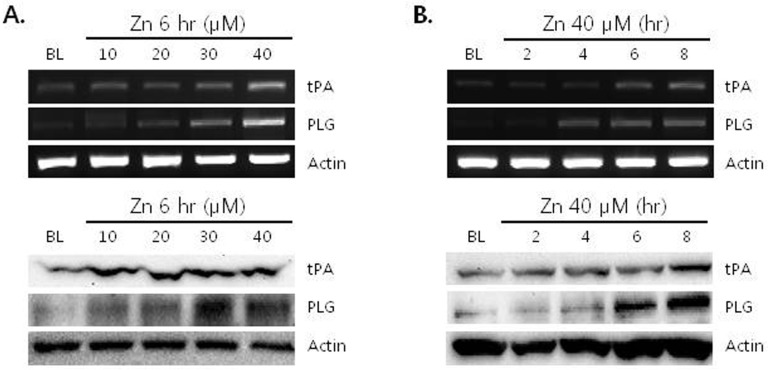
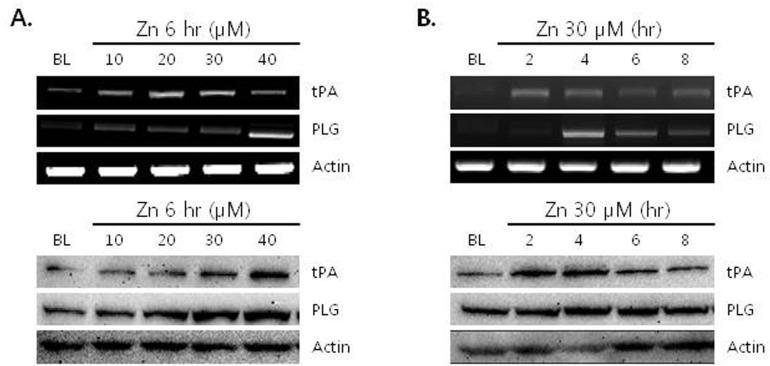
Cerebral amyloid angiopathy (CAA) is common in patients with Alzheimer's disease (AD) and may contribute to cerebral hemorrhage. We previously demonstrated that tissue plasminogen activator (tPA) and plasminogen (PLG) accumulated at the periphery of compact amyloid-cored plaques and in the walls of CAA-containing blood vessels in the brains of Tg2576 mice, a widely used AD mouse model. We had also observed that zinc-triggered tPA and PLG induction were observed in mouse cortical cultures. Because zinc also accumulates in amyloid plaques and blood vessel walls in AD brains, we examined whether zinc increases mRNA and protein levels of tPA and PLG in brain endothelial cells and pericytes. Four hours after the exposure of brain endothelial cells (bEnd.3) to 40 µM zinc, the mRNA and protein expressions of tPA and its substrate PLG were significantly increased. In the case of brain pericyte cultures, increases in tPA and PLG expression were also detected 2 hr after treatment. However, amyloid-β (Aβ)1-42 oligomers did not augment tPA and PLG expression in bEnd.3 cells and pericytes, suggesting that zinc but not Aβ induces tPA and PLG accumulation in CAA found in the AD brain.
脑淀粉样血管病(CAA)在阿尔茨海默病(AD)患者中很常见,可能导致脑出血。我们之前的研究表明,组织型纤溶酶原激活物(tPA)和纤溶酶原(PLG)在 Tg2576 小鼠(一种广泛使用的 AD 小鼠模型)大脑中致密淀粉样核心斑块的外周和含有 CAA 的血管壁中积聚。我们还观察到锌诱导的 tPA 和 PLG 在小鼠皮质培养物中被诱导。由于锌也在 AD 大脑中的淀粉样斑块和血管壁中积聚,我们检查了锌是否会增加脑内皮细胞和周细胞中 tPA 和 PLG 的 mRNA 和蛋白水平。脑内皮细胞(bEnd.3)暴露于 40µM 锌 4 小时后,tPA 和其底物 PLG 的 mRNA 和蛋白表达显著增加。在脑周细胞培养物的情况下,在处理后 2 小时也检测到 tPA 和 PLG 表达的增加。然而,淀粉样β(Aβ)1-42 寡聚物不会增加 bEnd.3 细胞和周细胞中的 tPA 和 PLG 表达,表明锌而不是 Aβ 诱导 AD 脑中 CAA 中 tPA 和 PLG 的积累。