Wang Junzhong, Wang Baoju, Huang Shunmei, Song Zhitao, Wu Jun, Zhang Ejuan, Zhu Zhenni, Zhu Bin, Yin Ying, Lin Yong, Xu Yang, Zheng Xin, Lu Mengji, Yang Dongliang
Department of Infectious Diseases, Union Hospital, Tongji Medical College, Huazhong University of Science and Technology, Wuhan, China.
Department of Microbiology, Tongji Medical College, Huazhong University of Science and Technology, Wuhan, China.
PLoS One. 2014 Jan 21;9(1):e85832. doi: 10.1371/journal.pone.0085832. eCollection 2014.
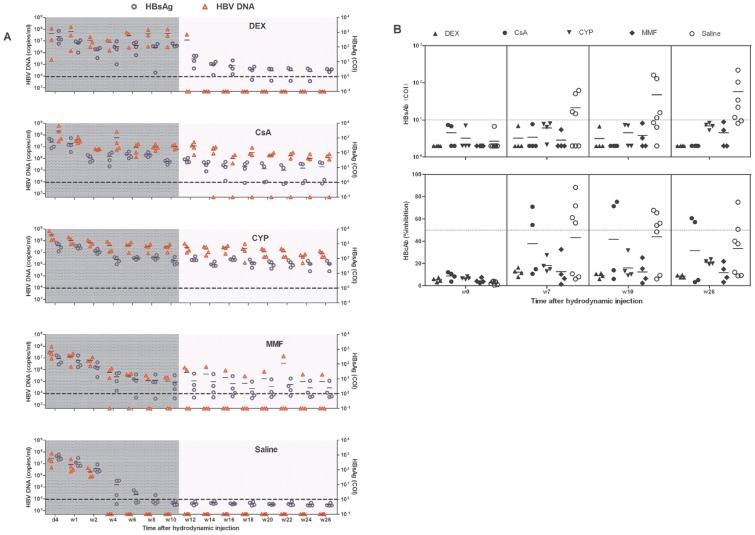
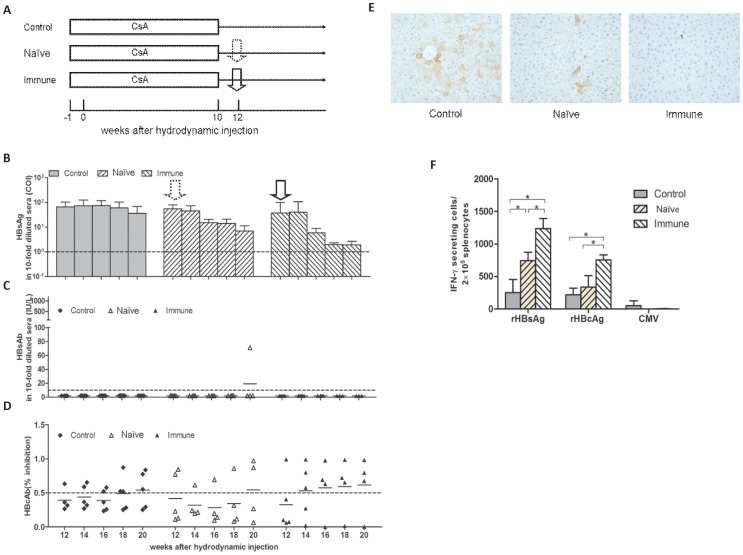
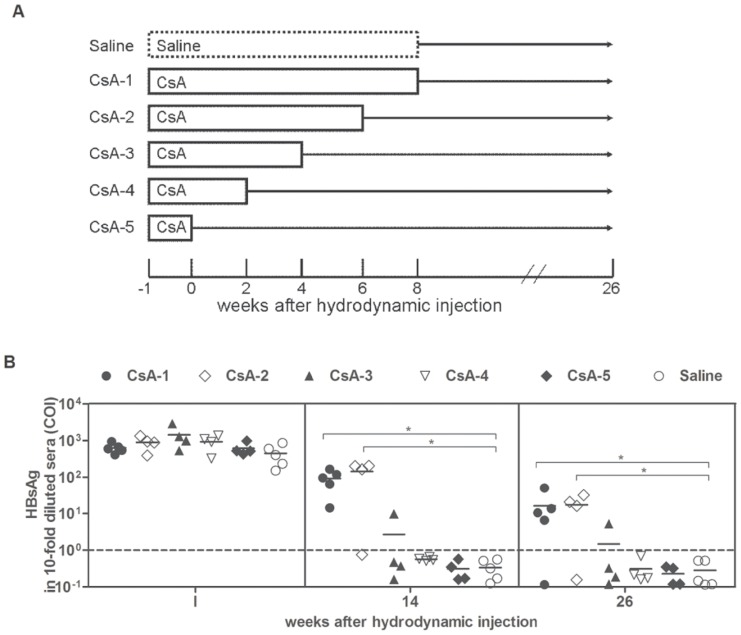
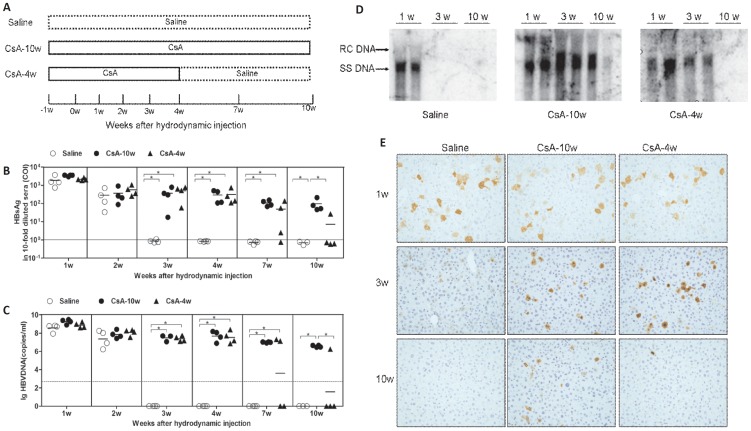
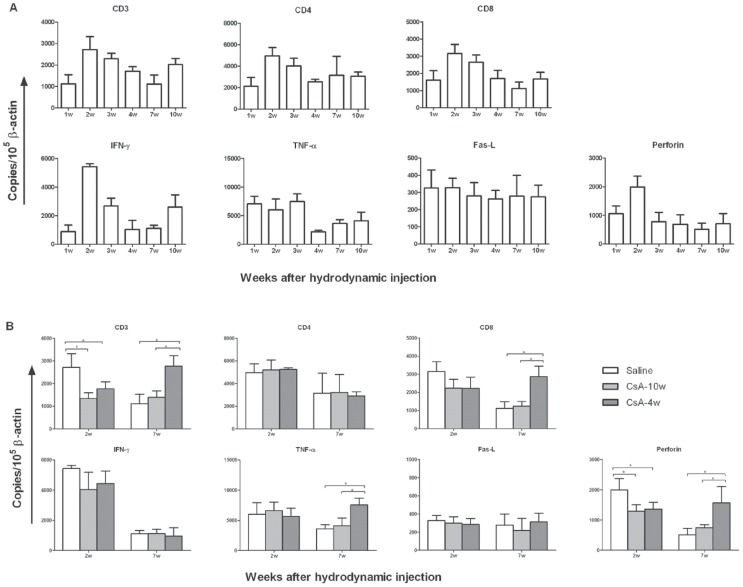
Hepatitis B virus (HBV) reactivation and recurrence are common in patients under immunosuppression and can be controlled by hepatitis B immunoglobulin, antivirals, and hepatitis B vaccine. However, the detailed analysis of HBV infection under immunosuppression is essential for the prophylaxis and therapy for HBV reactivation and recurrence. In this study, HBV replication and T cell responses were analyzed in a HBV-transfected mouse model under immunosuppressive therapy. During the treatment, HBV replication was at a high level in mice treated with dexamethasone, cyclosporine, and cyclophosphamide, whereas was terminated in mice treated with mycophenolate mofetil. After the withdrawal, HBV replication was at low or high levels in the dexamethasone-treated mice or in both cyclosporine- and cyclophosphamide-treated mice. The early withdrawal of cyclosporine allowed the recovery of suppressed T cell responses and led to subsequent HBV clearance, while the adoptive immune transfer to the mice with HBV persistence led to HBV suppression. Taken together, long-term HBV persistence under immunosuppression depends on the immunosuppressive drugs used and on the treatment duration and is mediated by the suppressed intrahepatic CD8 T cell response. These data may be helpful for individualized immunosuppressive therapy in patients with high risk of HBV reactivation and recurrence, and the mouse system is suitable for studying HBV reactivation and recurrence under immunosuppression.
乙型肝炎病毒(HBV)再激活和复发在免疫抑制患者中很常见,并且可以通过乙型肝炎免疫球蛋白、抗病毒药物和乙型肝炎疫苗来控制。然而,对免疫抑制状态下HBV感染进行详细分析对于预防和治疗HBV再激活和复发至关重要。在本研究中,我们在免疫抑制治疗的HBV转染小鼠模型中分析了HBV复制和T细胞反应。在治疗期间,用 dexamethasone、环孢素和环磷酰胺治疗的小鼠中HBV复制处于高水平,而在用霉酚酸酯治疗的小鼠中HBV复制终止。停药后,在接受dexamethasone治疗的小鼠中或在同时接受环孢素和环磷酰胺治疗的小鼠中,HBV复制处于低水平或高水平。早期停用环孢素可使受抑制的T细胞反应恢复,并导致随后的HBV清除,而将过继性免疫转移至持续存在HBV的小鼠可导致HBV受到抑制。综上所述,免疫抑制状态下HBV的长期持续存在取决于所使用的免疫抑制药物、治疗持续时间,并由肝内CD8 T细胞反应受抑制介导。这些数据可能有助于对具有HBV再激活和复发高风险的患者进行个体化免疫抑制治疗,并且该小鼠系统适用于研究免疫抑制状态下的HBV再激活和复发。