Zhang Yichi, Lu Lu, Jia Jianping, Jia Longfei, Geula Changiz, Pei Jinjing, Xu Zhiqing, Qin Wei, Liu Ruiqin, Li Dan, Pan Na
Department of Neurology, Xuan Wu Hospital, Capital Medical University, Beijing, China.
Department of Neurology, Xuan Wu Hospital, Capital Medical University, Beijing, China ; Beijing Key Laboratory of Geriatric Cognitive Disorders, Beijing, China ; Key Neurodegenerative Laboratory of Ministry of Education of the People's Republic of China, Beijing, China.
PLoS One. 2014 Jan 21;9(1):e85885. doi: 10.1371/journal.pone.0085885. eCollection 2014.
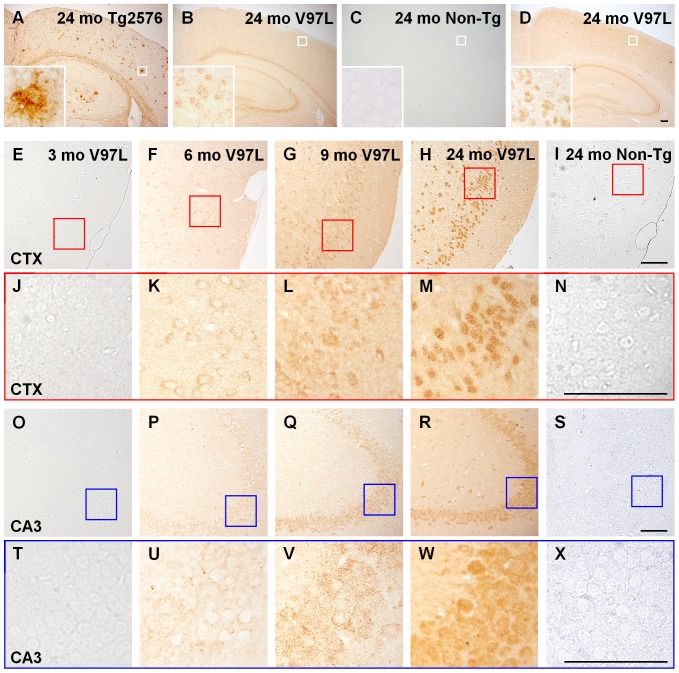
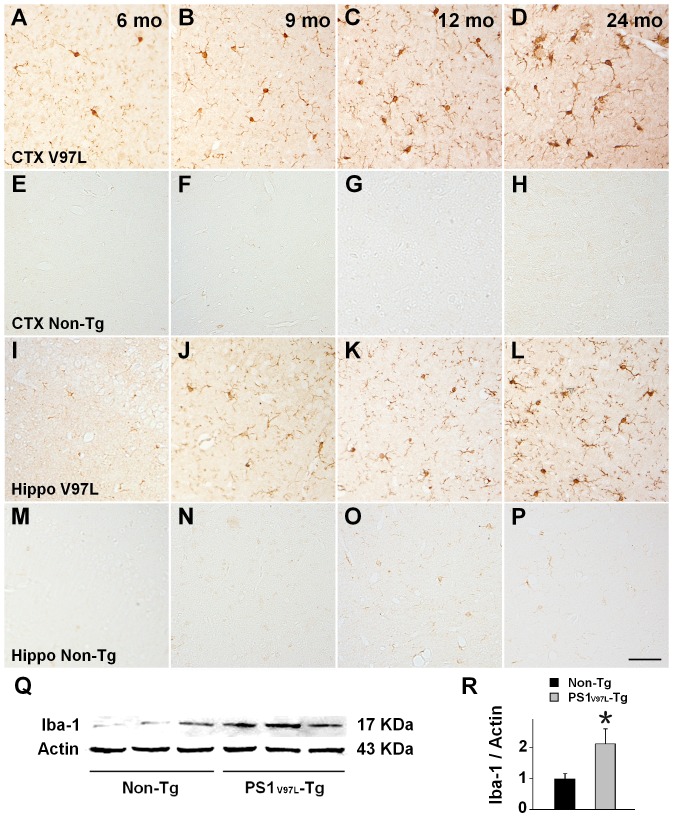
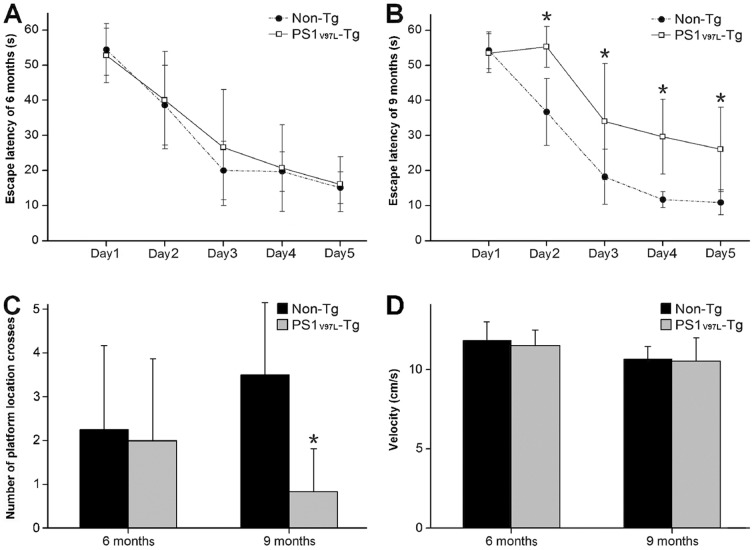
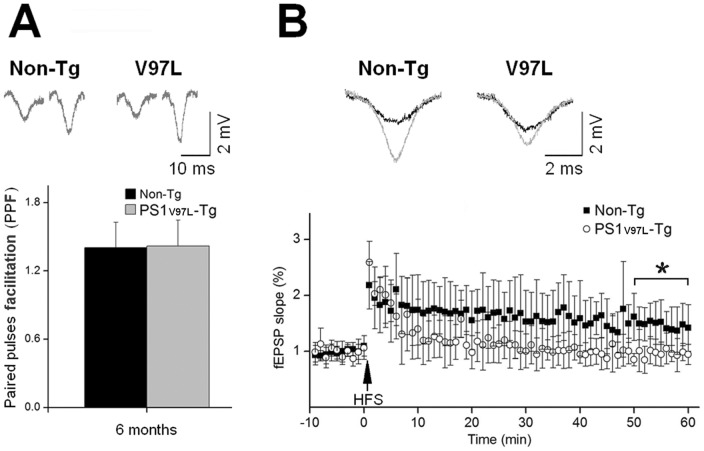
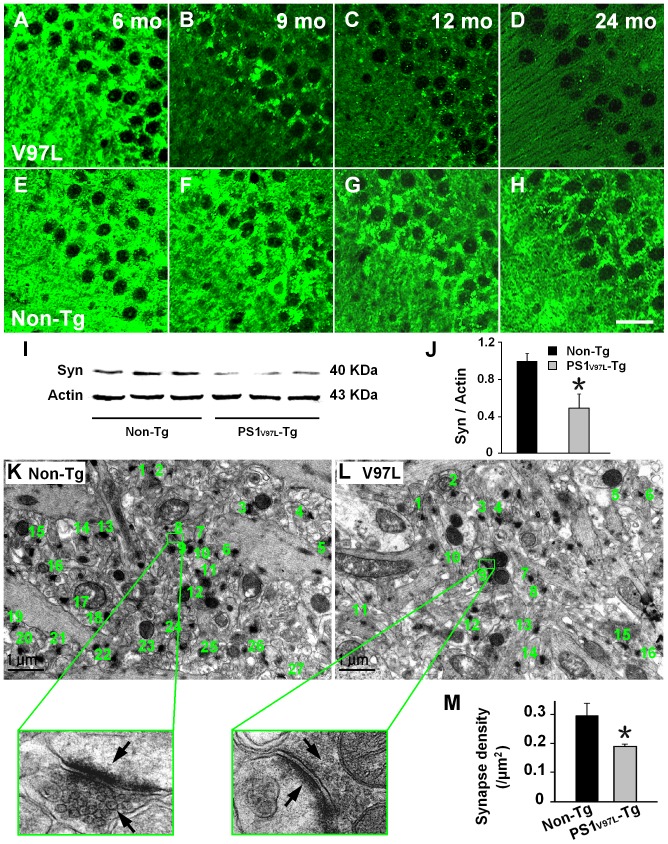
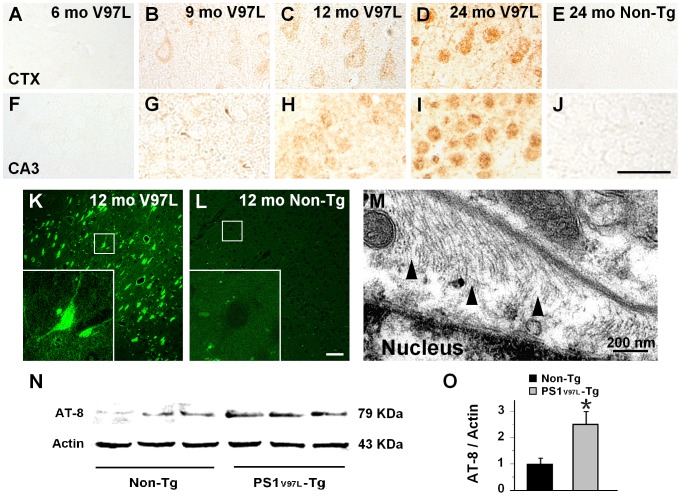
Transgenic mouse models are powerful tools in exploring the mechanisms of AD. Most current transgenic models of AD mimic the memory impairment and the main pathologic features, among which the formation of beta-amyloid (Aβ) plaques is considered a dominant pathologic event. Recently, Aβ oligomers have been identified as more neurotoxic than Aβ plaques. However, no ideal transgenic mouse model directly support Aβ oligomers as a neurotoxic species due to the puzzling effects of amyloid plaques in the more widely-used models. Here, we constructed a single-mutant transgenic (Tg) model harboring the PS1V97L mutation and used Non-Tg littermates as a control group. Employing the Morris water maze, electrophysiology, immunohistochemistry, biochemistry, and electron microscopy, we investigated behavioral changes and pathology progression in our single-mutant transgenic model. We discovered the pathological alteration of intraneuronal accumulation of Aβ oligomers without Aβ plaques in the PS1V97L-Tg mouse model, which might be the result of PS1 gene mutation. Following Aβ oligomers, we detected synaptic alteration, tau hyperphosphorylation and glial activation. This model supports an initial role for Aβ oligomers in the onset of AD and suggests that Aβ plaques may not be the only prerequisite. This model provides a useful tool for studying the role of Aβ oligomers in AD pathogenesis.
转基因小鼠模型是探索阿尔茨海默病(AD)发病机制的有力工具。目前大多数AD转基因模型模拟了记忆障碍和主要病理特征,其中β-淀粉样蛋白(Aβ)斑块的形成被认为是主要的病理事件。最近,已确定Aβ寡聚体比Aβ斑块具有更强的神经毒性。然而,由于在更广泛使用的模型中淀粉样斑块的影响令人困惑,尚无理想的转基因小鼠模型直接支持Aβ寡聚体作为神经毒性物质。在此,我们构建了一个携带PS1V97L突变的单突变转基因(Tg)模型,并使用非Tg同窝小鼠作为对照组。利用莫里斯水迷宫、电生理学、免疫组织化学、生物化学和电子显微镜技术,我们研究了单突变转基因模型中的行为变化和病理进展。我们发现在PS1V97L-Tg小鼠模型中存在Aβ寡聚体在神经元内积累的病理改变,而无Aβ斑块,这可能是PS1基因突变的结果。继Aβ寡聚体之后,我们检测到突触改变、tau蛋白过度磷酸化和神经胶质细胞激活。该模型支持Aβ寡聚体在AD发病初期起作用,并表明Aβ斑块可能不是唯一的先决条件。该模型为研究Aβ寡聚体在AD发病机制中的作用提供了一个有用的工具。