Comstock Sarah S, Hortos Kari, Kovan Bruce, McCaskey Sarah, Pathak Dorothy R, Fenton Jenifer I
Department of Food Science and Human Nutrition, Michigan State University, East Lansing, Michigan, United States of America.
College of Osteopathic Medicine, Michigan State University, East Lansing, Michigan, United States of America.
PLoS One. 2014 Jan 17;9(1):e85939. doi: 10.1371/journal.pone.0085939. eCollection 2014.
Obesity increases the risk of colon cancer. It is also known that most colorectal cancers develop from adenomatous polyps. However, the effects of obesity and adipokines on colonic polyp formation are unknown.
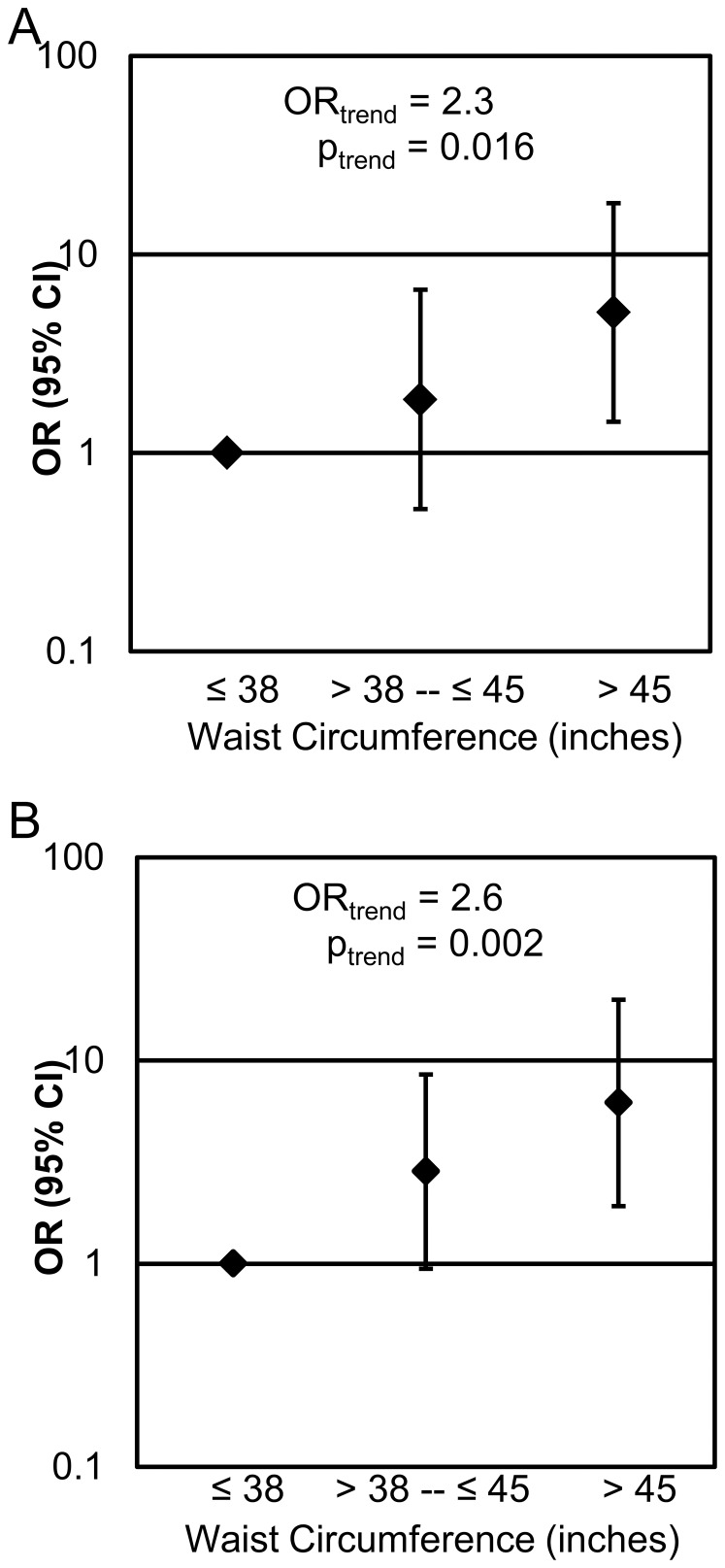
To determine if BMI, waist circumference or adipokines are associated with colon polyps in males, 126 asymptomatic men (48-65 yr) were recruited at time of colonoscopy, and anthropometric measures as well as blood were collected. Odds ratios were determined using polytomous logistic regression for polyp number (0 or ≥3) and polyp type (no polyp, hyperplastic polyp, tubular adenoma).
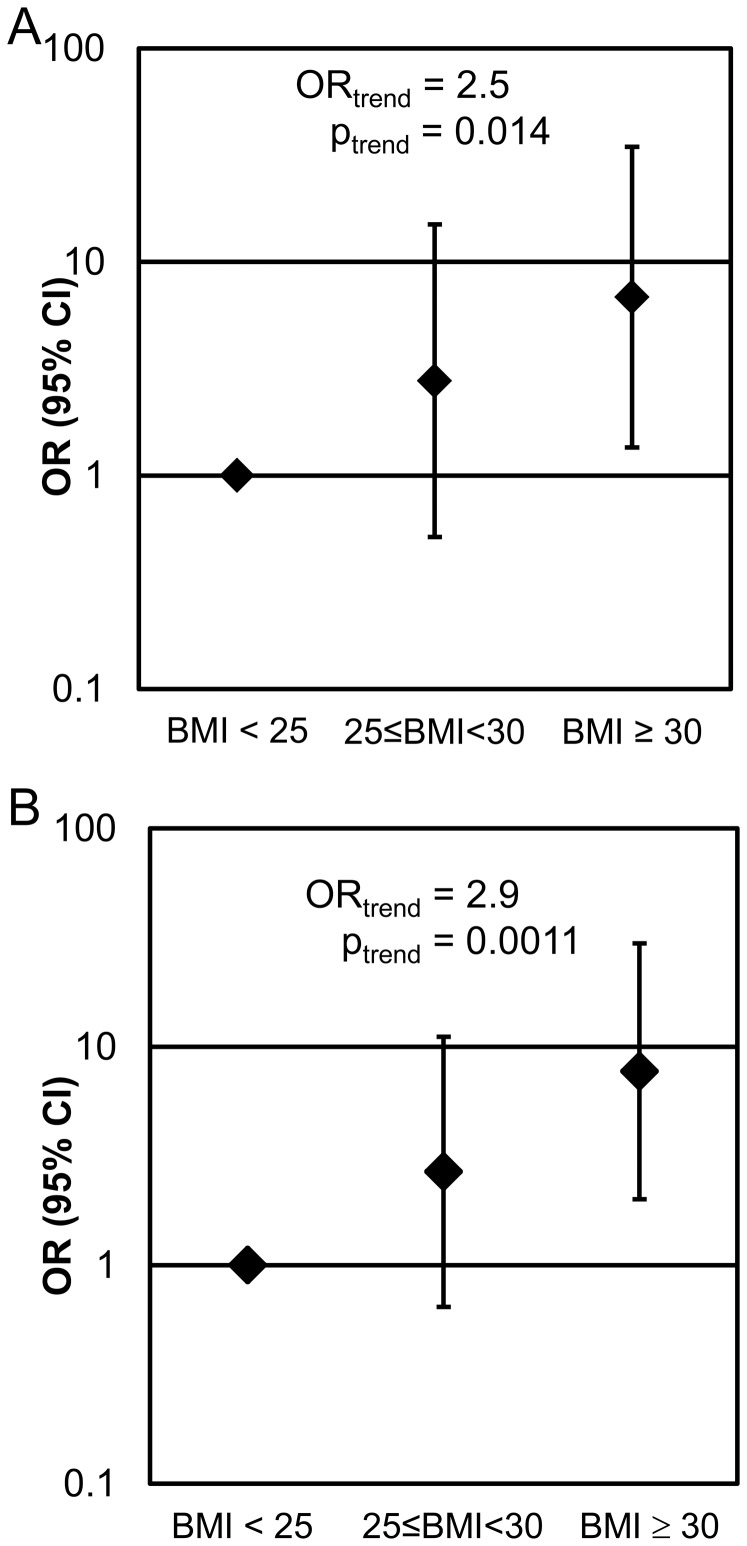
41% of the men in our study were obese (BMI ≥30). The odds of an obese individual having ≥3 polyps was 6.5 (CI: 1.3-33.0) times greater than those of a lean (BMI<25) individual. Additionally, relative to lean individuals, obese individuals were 7.8 (CI: 2.0-30.8) times more likely to have a tubular adenoma than no polyp. As BMI category increased, participants were 2.9 (CI: 1.5-5.4) times more likely to have a tubular adenoma than no polyps. Serum leptin, IP-10 and TNF-α were significantly associated with tubular adenoma presence. Serum leptin and IP-10 were significantly associated with increased likelihood of ≥3 polyps, and TNF-α showed a trend (p = 0.09).
Obese men are more likely to have at least three polyps and adenomas. This cross-sectional study provides evidence that colonoscopy should be recommended for obese, white males.
肥胖会增加患结肠癌的风险。众所周知,大多数结直肠癌由腺瘤性息肉发展而来。然而,肥胖和脂肪因子对结肠息肉形成的影响尚不清楚。
为了确定体重指数(BMI)、腰围或脂肪因子是否与男性结肠息肉有关,在结肠镜检查时招募了126名无症状男性(48 - 65岁),并收集了人体测量指标和血液样本。使用多分类逻辑回归确定息肉数量(0个或≥3个)和息肉类型(无息肉、增生性息肉、管状腺瘤)的比值比。
我们研究中的男性有41%肥胖(BMI≥30)。肥胖个体有≥3个息肉的几率比瘦人(BMI<25)高6.5(95%置信区间:1.3 - 33.0)倍。此外,相对于瘦人,肥胖个体患管状腺瘤而非无息肉的可能性高7.8(95%置信区间:2.0 - 30.8)倍。随着BMI类别增加,参与者患管状腺瘤而非无息肉的可能性高2.9(95%置信区间:1.5 - 5.4)倍。血清瘦素、IP - 10和肿瘤坏死因子-α(TNF-α)与管状腺瘤的存在显著相关。血清瘦素和IP - 10与≥3个息肉的可能性增加显著相关,TNF-α呈趋势性(p = 0.09)。
肥胖男性更有可能至少有三个息肉和腺瘤。这项横断面研究提供了证据,表明应建议肥胖的白人男性进行结肠镜检查。