Wang Enfeng, Zhang Chunyang, Polavaram Navatha, Liu Fengming, Wu Gang, Schroeder Mark A, Lau Julie S, Mukhopadhyay Debabrata, Jiang Shi-Wen, O'Neill Brian Patrick, Datta Kaustubh, Li Jinping
Department of Biochemistry and Molecular Biology, Mayo Clinic Cancer Center, Rochester, Minnesota, United States of America.
Department of Neuro-Surgery, the First Affiliated Hospital of Baotou Medical College, Baotou, China.
PLoS One. 2014 Jan 23;9(1):e86102. doi: 10.1371/journal.pone.0086102. eCollection 2014.
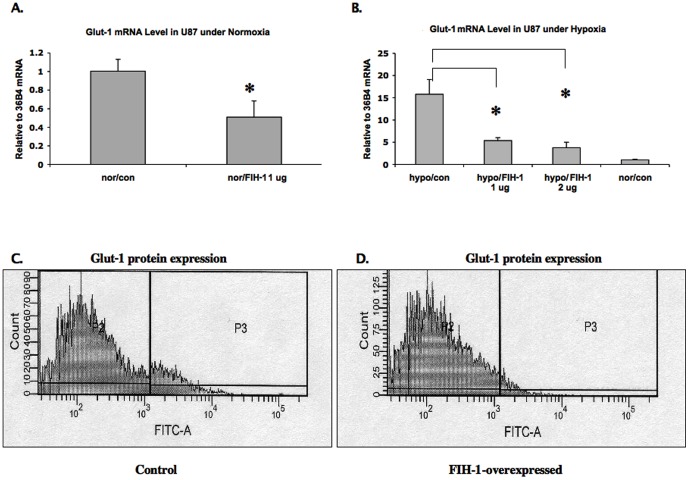
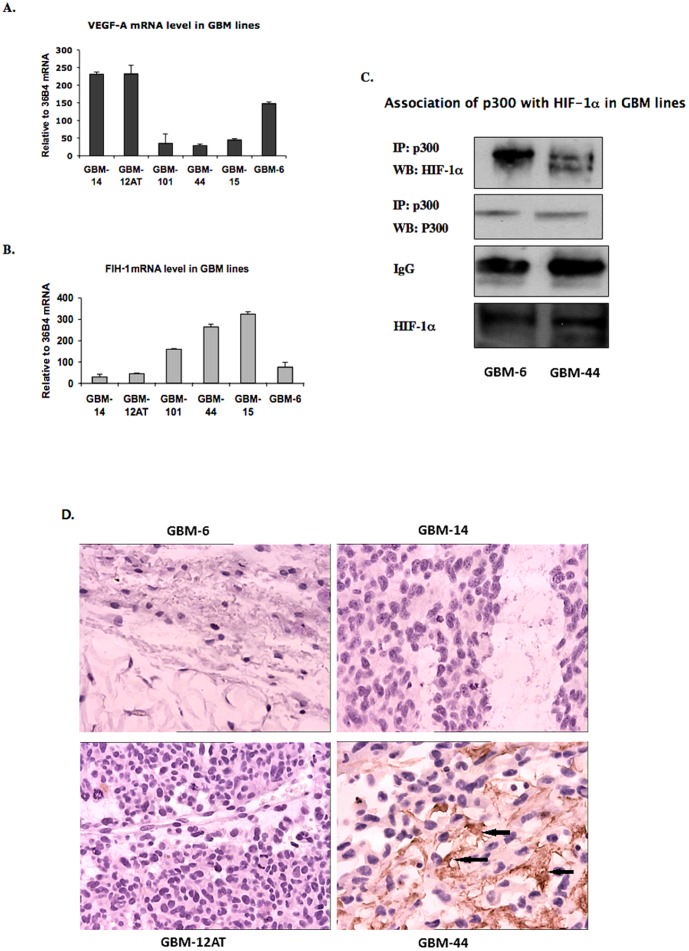
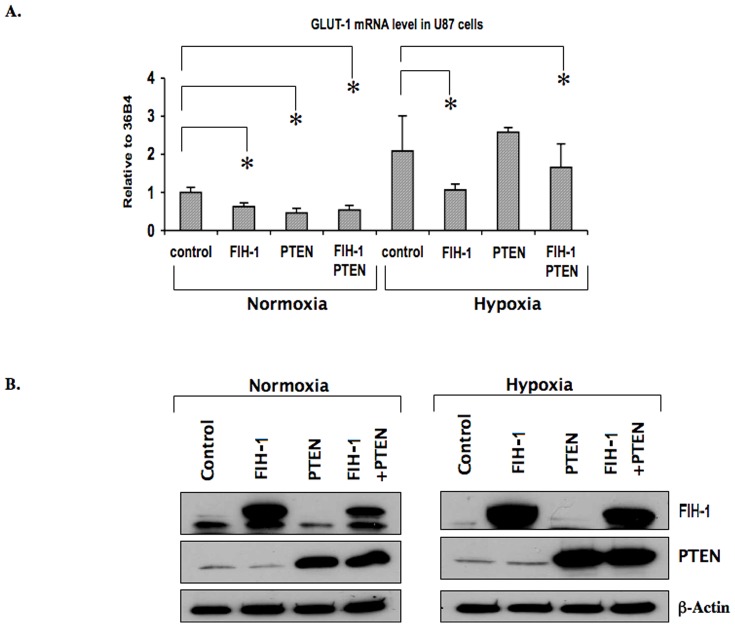
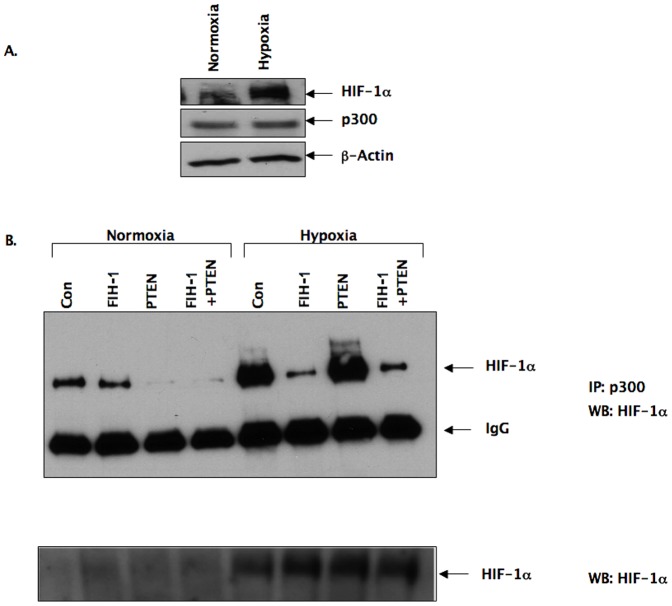
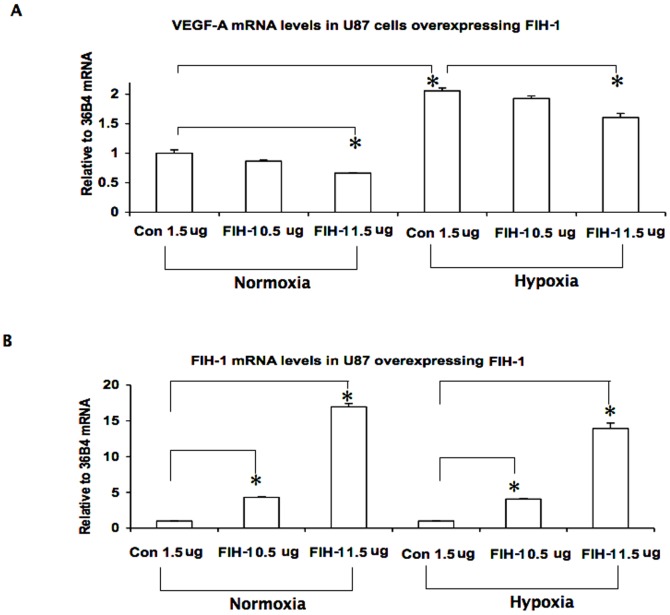
Glioblastoma multiforme (GBM) accounts for about 38% of primary brain tumors in the United States. GBM is characterized by extensive angiogenesis induced by vascular growth factors and cytokines. The transcription of these growth factors and cytokines is regulated by the Hypoxia-Inducible-Factor-1(HIF-1), which is a key regulator mediating the cellular response to hypoxia. It is known that Factor Inhibiting HIF-1, or FIH-1, is also involved in the cellular response to hypoxia and has the capability to physically interact with HIF-1 and block its transcriptional activity under normoxic conditions. Delineation of the regulatory role of FIH-1 will help us to better understand the molecular mechanism responsible for tumor growth and progression and may lead to the design of new therapies targeting cellular pathways in response to hypoxia. Previous studies have shown that the chromosomal region of 10q24 containing the FIH-1 gene is often deleted in GBM, suggesting a role for the FIH-1 in GBM tumorigenesis and progression. In the current study, we found that FIH-1 is able to inhibit HIF-mediated transcription of GLUT1 and VEGF-A, even under hypoxic conditions in human glioblastoma cells. FIH-1 has been found to be more potent in inhibiting HIF function than PTEN. This observation points to the possibility that deletion of 10q23-24 and loss or decreased expression of FIH-1 gene may lead to a constitutive activation of HIF-1 activity, an alteration of HIF-1 targets such as GLUT-1 and VEGF-A, and may contribute to the survival of cancer cells in hypoxia and the development of hypervascularization observed in GBM. Therefore FIH-1 can be potential therapeutic target for the treatment of GBM patients with poor prognosis.
多形性胶质母细胞瘤(GBM)约占美国原发性脑肿瘤的38%。GBM的特征是由血管生长因子和细胞因子诱导的广泛血管生成。这些生长因子和细胞因子的转录受缺氧诱导因子-1(HIF-1)调控,HIF-1是介导细胞对缺氧反应的关键调节因子。已知抑制HIF-1因子(FIH-1)也参与细胞对缺氧的反应,并且在常氧条件下能够与HIF-1发生物理相互作用并阻断其转录活性。阐明FIH-1的调节作用将有助于我们更好地理解肿瘤生长和进展的分子机制,并可能导致针对缺氧反应细胞途径的新疗法设计。先前的研究表明,包含FIH-1基因的10q24染色体区域在GBM中经常缺失,提示FIH-1在GBM肿瘤发生和进展中起作用。在本研究中,我们发现即使在人胶质母细胞瘤细胞的缺氧条件下,FIH-1也能够抑制HIF介导的葡萄糖转运蛋白1(GLUT1)和血管内皮生长因子A(VEGF-A)的转录。已发现FIH-1在抑制HIF功能方面比磷酸酶和张力蛋白同源物(PTEN)更有效。这一观察结果表明,10q23 - 24缺失以及FIH-1基因的丢失或表达降低可能导致HIF-1活性的组成性激活、HIF-1靶标如GLUT-1和VEGF-A的改变,并可能有助于癌细胞在缺氧环境中的存活以及GBM中观察到的血管过度增生的发展。因此,FIH-1可能是治疗预后不良的GBM患者的潜在治疗靶点。