Havixbeck Jeffrey J, Rieger Aja M, Wong Michael E, Wilkie Michael P, Barreda Daniel R
Department of Biological Sciences, University of Alberta, Edmonton, Alberta, Canada.
Department of Biology, Wilfrid Laurier University, Waterloo, Ontario, Canada.
PLoS One. 2014 Jan 20;9(1):e86255. doi: 10.1371/journal.pone.0086255. eCollection 2014.
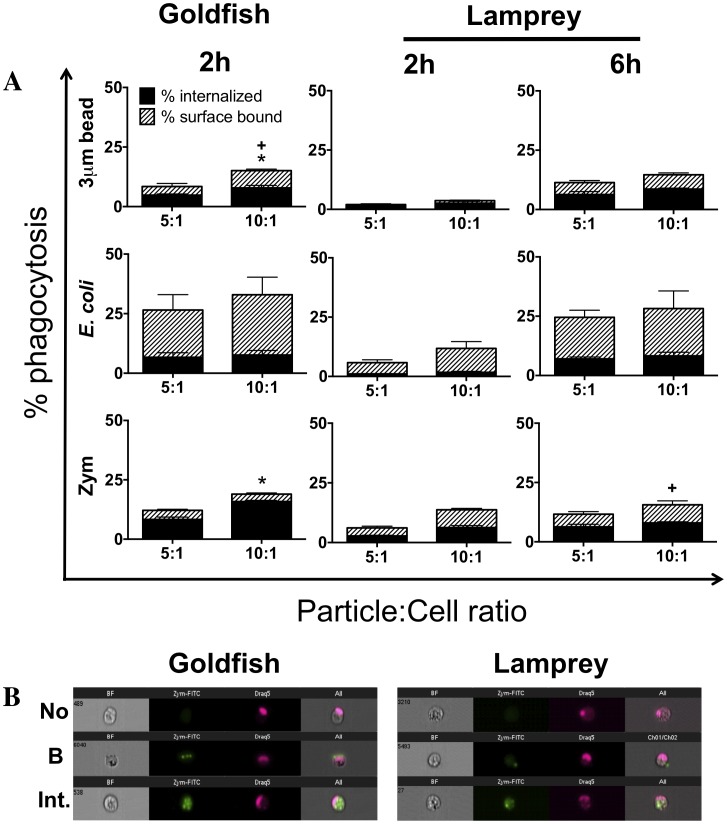
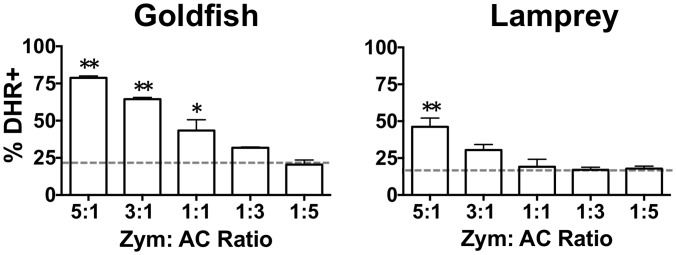
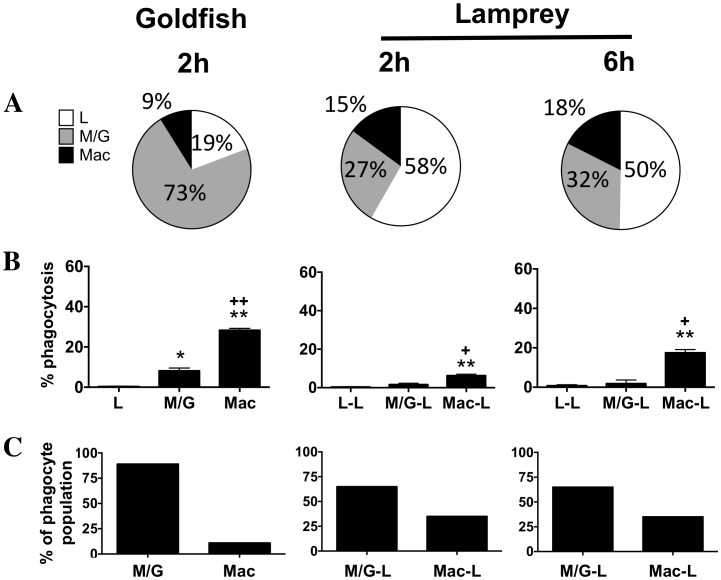
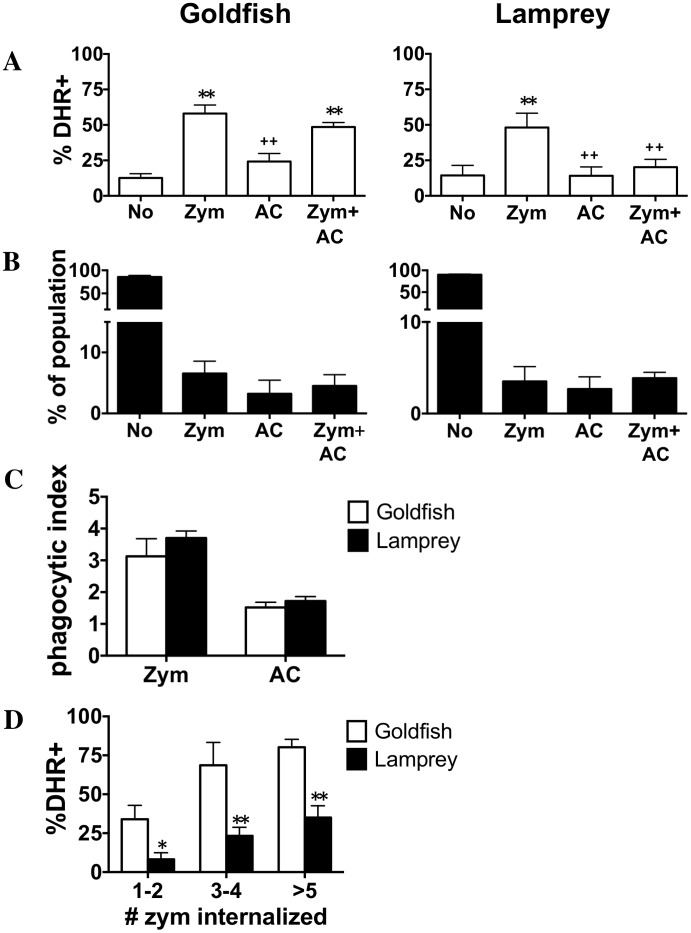
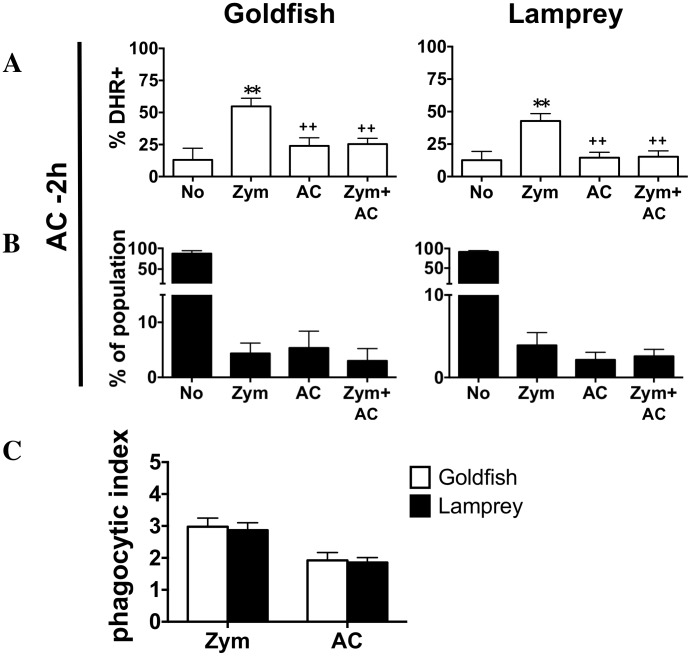
In higher vertebrates, phagocytosis plays a critical role in development and immunity, based on the internalization and removal of apoptotic cells and invading pathogens, respectively. Previous studies describe the effective uptake of these particles by lower vertebrate and invertebrate phagocytes, and identify important molecular players that contribute to this internalization. However, it remains unclear if individual phagocytes mediate internalization processes in these ancient organisms, and how this impacts the balance of pro-inflammatory and homeostatic events within their infection sites. Herein we show that individual phagocytes of the jawless vertebrate Petromyzon marinus (sea lamprey), like those of teleost fish and mice, display the capacity for divergent pro-inflammatory and homeostatic responses following internalization of zymosan and apoptotic cells, respectively. Professional phagocytes (macrophages, monocytes, neutrophils) were the primary contributors to the internalization of pro-inflammatory particles among goldfish (C. auratus) and lamprey (P. marinus) hematopoietic leukocytes. However, goldfish showed a greater ability for zymosan phagocytosis when compared to their jawless counterparts. Coupled to this increase was a significantly lower sensitivity of goldfish phagocytes to homeostatic signals derived from apoptotic cell internalization. Together, this translated into a significantly greater capacity for induction of antimicrobial respiratory burst responses compared to lamprey phagocytes, but also a decreased efficacy in apoptotic cell-driven leukocyte homeostatic mechanisms that attenuate this pro-inflammatory process. Overall, our results show the long-standing evolutionary contribution of intrinsic phagocyte mechanisms for the control of inflammation, and illustrate one effective evolutionary strategy for increased responsiveness against invading pathogens. In addition, they highlight the need for development of complementary regulatory mechanisms of inflammation to ensure continued maintenance of host integrity amidst increasing challenges from invading pathogens.
在高等脊椎动物中,吞噬作用分别基于对凋亡细胞的内化和清除以及对入侵病原体的摄取,在发育和免疫过程中发挥着关键作用。先前的研究描述了低等脊椎动物和无脊椎动物吞噬细胞对这些颗粒的有效摄取,并确定了促成这种内化的重要分子参与者。然而,尚不清楚单个吞噬细胞是否介导这些古老生物体中的内化过程,以及这如何影响其感染部位促炎和稳态事件的平衡。在此我们表明,无颌脊椎动物海七鳃鳗(Petromyzon marinus)的单个吞噬细胞,与硬骨鱼和小鼠的吞噬细胞一样,在分别内化酵母聚糖和凋亡细胞后,表现出不同的促炎和稳态反应能力。在金鱼(C. auratus)和七鳃鳗(P. marinus)造血白细胞中,专业吞噬细胞(巨噬细胞、单核细胞、中性粒细胞)是促炎颗粒内化的主要贡献者。然而,与无颌的同类相比,金鱼对酵母聚糖的吞噬能力更强。与此增加相关的是,金鱼吞噬细胞对凋亡细胞内化产生的稳态信号的敏感性显著降低。总体而言,这转化为与七鳃鳗吞噬细胞相比,诱导抗菌呼吸爆发反应的能力显著更强,但在凋亡细胞驱动的白细胞稳态机制中降低了减弱这种促炎过程的功效。我们的结果总体上显示了内在吞噬细胞机制对炎症控制的长期进化贡献,并说明了一种针对入侵病原体增强反应性的有效进化策略。此外,它们强调了开发炎症互补调节机制的必要性,以确保在面对来自入侵病原体的不断增加的挑战时,宿主完整性得以持续维持。