Rehder Dieter
Chemistry Department, University of Hamburg, D-20146, Hamburg, Germany,
Met Ions Life Sci. 2013;13:139-69. doi: 10.1007/978-94-007-7500-8_5.
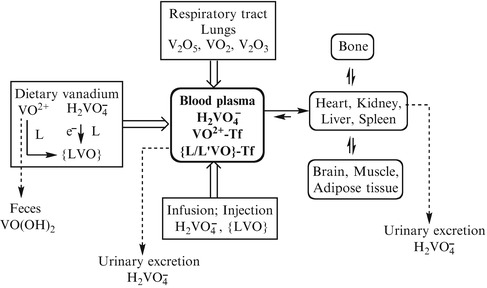
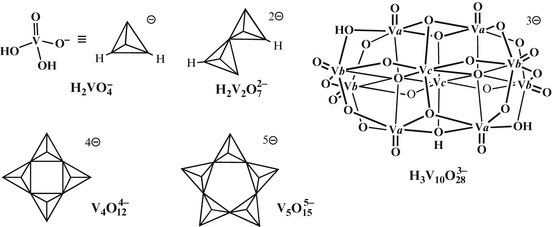
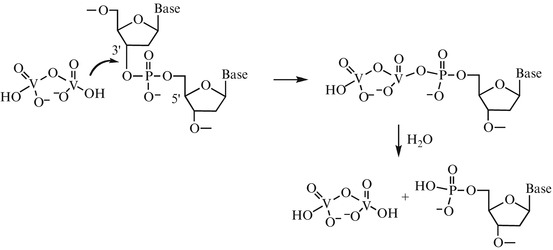
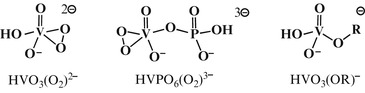
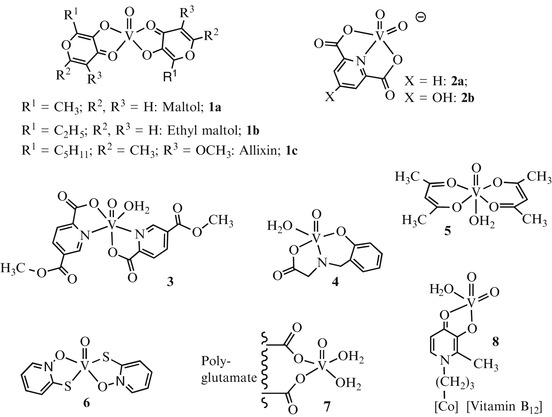
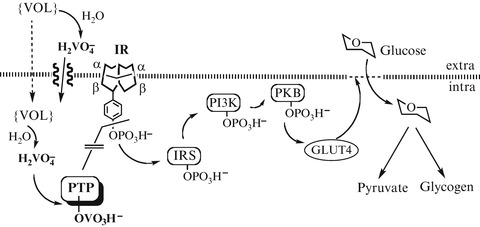
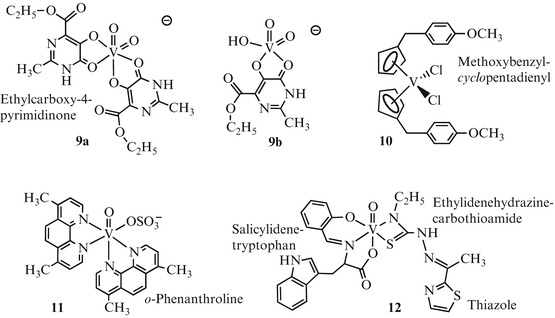
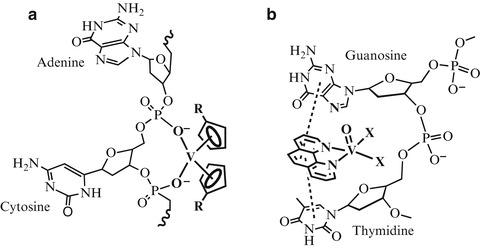
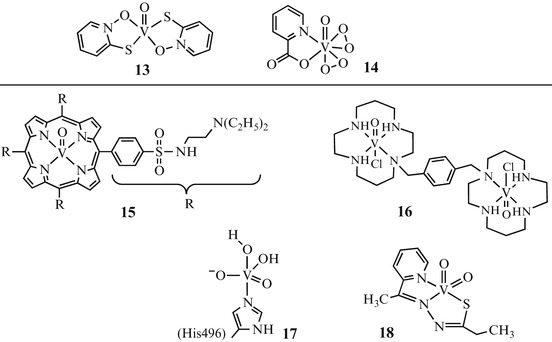
Vanadium is the 21st most abundant element in the Earth's crust and the 2nd-to-most abundant transition metal in sea water. The element is ubiquitous also in freshwater and nutrients. The average body load of a human individual amounts to 1 mg. The omnipresence of vanadium hampers checks directed towards its essentiality. However, since vanadate can be considered a close blueprint of phosphate with respect to its built-up, vanadate likely takes over a regulatory function in metabolic processes depending on phosphate. At common concentrations, vanadium is non-toxic. The main source for potentially toxic effects caused by vanadium is exposure to high loads of vanadium oxides in the breathing air of vanadium processing industrial enterprises. Vanadium can enter the body via the lungs or, more commonly, the stomach. Most of the dietary vanadium is excreted. The amount of vanadium resorbed in the gastrointestinal tract is a function of its oxidation state (V(V) or V(IV)) and the coordination environment. Vanadium compounds that enter the blood stream are subjected to speciation. The predominant vanadium species in blood are vanadate and vanadyl bound to transferrin. From the blood stream, vanadium becomes distributed to the body tissues and bones. Bones act as storage pool for vanadate. The aqueous chemistry of vanadium(V) at concentration <10 μM is dominated by vanadate. At higher concentrations, oligovanadates come in, decavanadate in particular, which is thermodynamically stable in the pH range 2.3-6.3, and can further be stabilized at higher pH by interaction with proteins.The similarity between vanadate and phosphate accounts for the interplay between vanadate and phosphate-dependent enzymes: phosphatases can be inhibited, kinases activated. As far as medicinal applications of vanadium compounds are concerned, vanadium's mode of action appears to be related to the phosphate-vanadate antagonism, to the direct interaction of vanadium compounds or fragments thereof with DNA, and to vanadium's contribution to a balanced tissue level of reactive oxygen species. So far vanadium compounds have not yet found approval for medicinal applications. The antidiabetic (insulin-enhancing) effect, however, of a singular vanadium complex, bis(ethylmaltolato)oxidovanadium(IV) (BEOV), has revealed encouraging results in phase IIa clinical tests. In addition, in vitro studies with cell cultures and parasites, as well as in vivo studies with animals, have revealed a broad potential spectrum for the application of vanadium coordination compounds in the treatment of cardiac and neuronal disorders, malignant tumors, viral and bacterial infections (such as influenza, HIV, and tuberculosis), and tropical diseases caused by parasites, e.g., Chagas' disease, leishmaniasis, and amoebiasis.
钒是地壳中第21丰富的元素,是海水中第二丰富的过渡金属。该元素在淡水和营养物质中也普遍存在。人体的平均钒含量为1毫克。钒的无处不在妨碍了对其必需性的研究。然而,由于钒酸盐在结构上可被视为磷酸盐的近似蓝本,钒酸盐可能在依赖磷酸盐的代谢过程中发挥调节作用。在常见浓度下,钒是无毒的。钒造成潜在毒性影响的主要来源是钒加工工业企业工作环境中高负荷的钒氧化物。钒可通过肺部进入人体,更常见的是通过胃部进入。大部分膳食中的钒会被排出。胃肠道吸收的钒量是其氧化态(V(V)或V(IV))和配位环境的函数。进入血流的钒化合物会发生形态变化。血液中主要的钒形态是与转铁蛋白结合的钒酸盐和氧钒根。钒从血流中分布到身体组织和骨骼。骨骼是钒酸盐的储存库。浓度<10μM时,钒(V)的水相化学以钒酸盐为主。在较高浓度下,会出现低聚钒酸盐,特别是十钒酸盐,它在pH值2.3 - 6.3范围内热力学稳定,并且在更高pH值下可通过与蛋白质相互作用进一步稳定。钒酸盐和磷酸盐之间的相似性解释了钒酸盐与依赖磷酸盐的酶之间的相互作用:磷酸酶可被抑制,激酶被激活。就钒化合物的医学应用而言,钒的作用方式似乎与磷酸盐 - 钒酸盐拮抗作用、钒化合物或其片段与DNA的直接相互作用以及钒对组织中活性氧物种平衡水平的贡献有关。到目前为止,钒化合物尚未获得医学应用的批准。然而,一种单一的钒配合物双(乙基麦芽酚)氧钒(IV)(BEOV)的抗糖尿病(增强胰岛素)作用在IIa期临床试验中显示出令人鼓舞的结果。此外,细胞培养和寄生虫的体外研究以及动物的体内研究表明,钒配位化合物在治疗心脏和神经疾病、恶性肿瘤、病毒和细菌感染(如流感、HIV和结核病)以及由寄生虫引起的热带疾病(如恰加斯病、利什曼病和阿米巴病)方面具有广泛的潜在应用前景。