Rusielewicz Tomasz, Nam Jennifer, Damanakis Evangelos, John Gareth R, Raine Cedric S, Melendez-Vasquez Carmen V
Department of Biological Sciences, Hunter College, New York, New York; The Graduate Center, Molecular Cellular and Developmental Biology, The City University of New York, New York.
Glia. 2014 Apr;62(4):580-91. doi: 10.1002/glia.22627. Epub 2014 Jan 28.
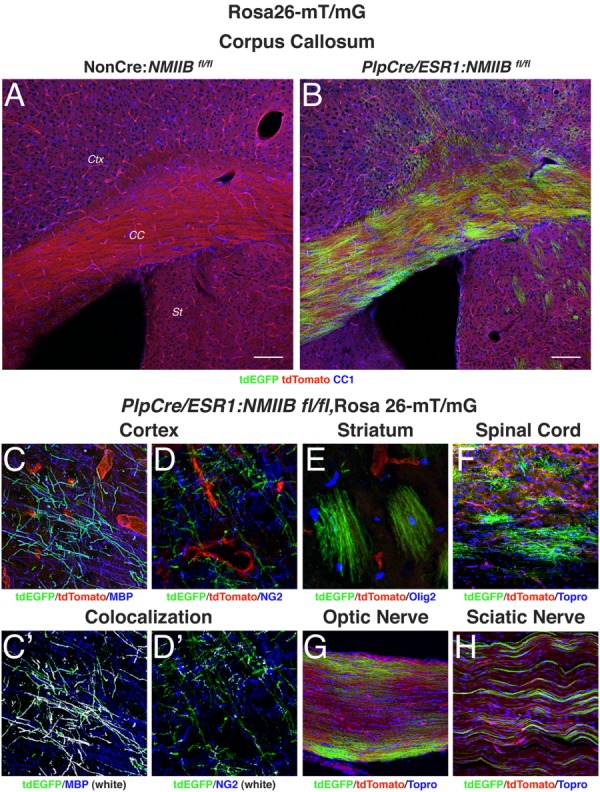
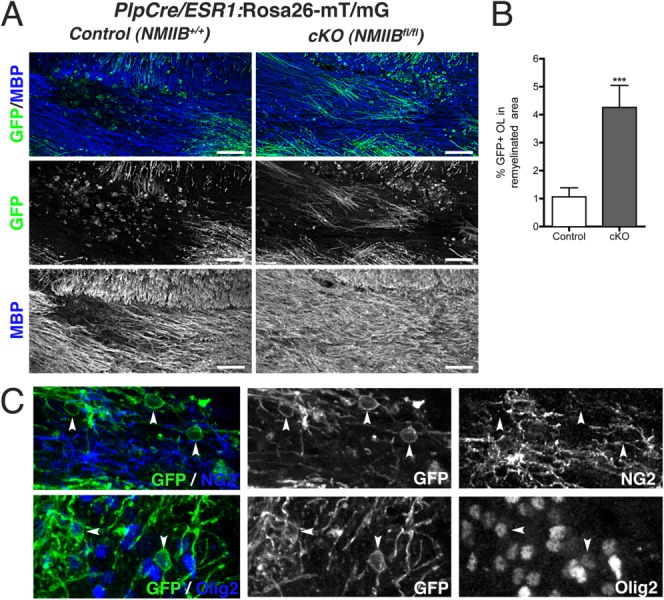
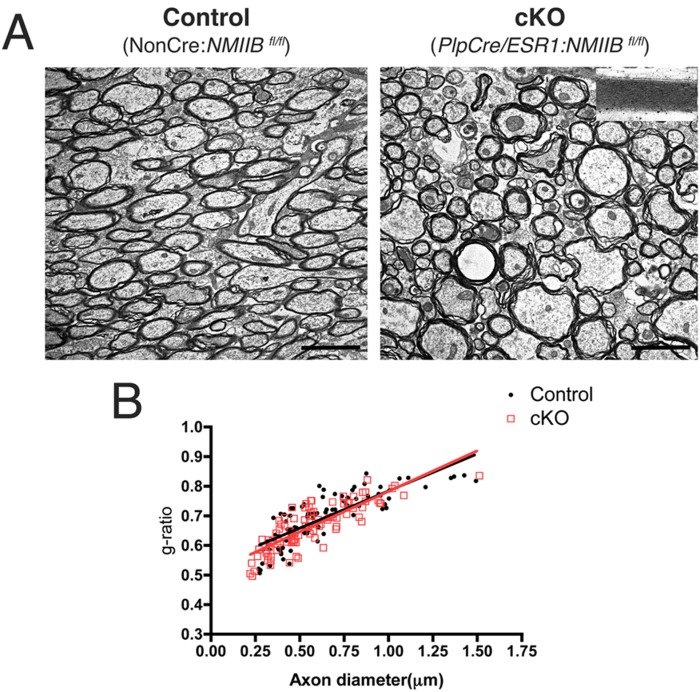
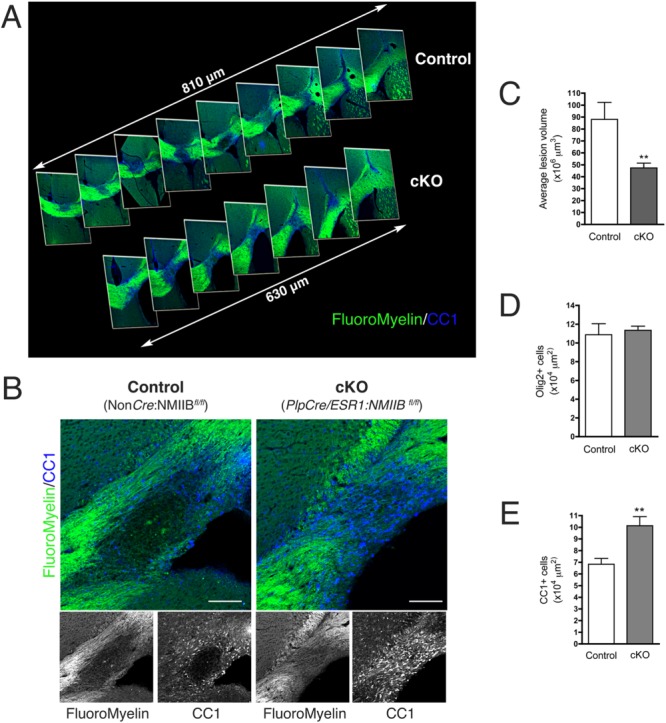
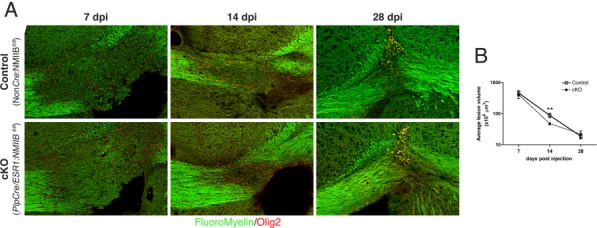
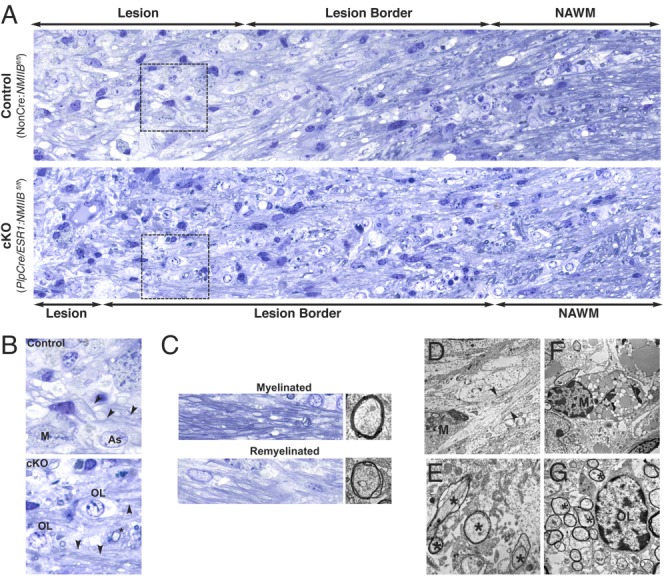
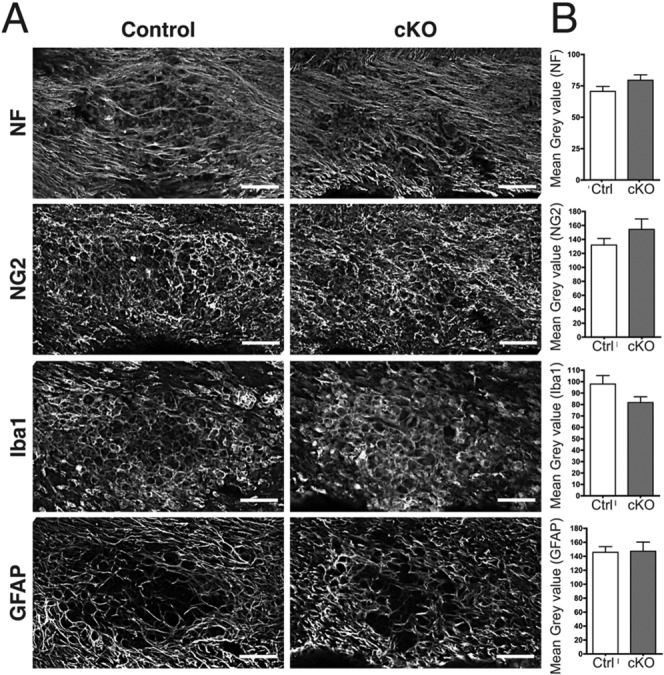
The oligodendrocyte (OL), the myelinating cell of the central nervous system, undergoes dramatic changes in the organization of its cytoskeleton as it differentiates from a precursor (oligodendrocyte precursor cells) to a myelin-forming cell. These changes include an increase in its branching cell processes, a phenomenon necessary for OL to myelinate multiple axon segments. We have previously shown that levels and activity of non-muscle myosin II (NMII), a regulator of cytoskeletal contractility, decrease as a function of differentiation and that inhibition of NMII increases branching and myelination of OL in coculture with neurons. We have also found that mixed glial cell cultures derived from NMIIB knockout mice display an increase in mature myelin basic protein-expressing OL compared with wild-type cultures. We have now extended our studies to investigate the role of NMIIB ablation on myelin repair following focal demyelination by lysolecithin. To this end, we generated an oligodendrocyte-specific inducible knockout model using a Plp-driven promoter in combination with a temporally activated CRE-ER fusion protein. Our data indicate that conditional ablation of NMII in adult mouse brain, expedites lesion resolution and remyelination by Plp+ oligodendrocyte-lineage cells when compared with that observed in control brains. Taken together, these data validate the function of NMII as that of a negative regulator of OL myelination in vivo and provide a novel target for promoting myelin repair in conditions such as multiple sclerosis.
少突胶质细胞(OL)是中枢神经系统的髓鞘形成细胞,在从少突胶质细胞前体细胞分化为髓鞘形成细胞的过程中,其细胞骨架组织会发生显著变化。这些变化包括其分支细胞突起增加,这是OL对多个轴突节段进行髓鞘化所必需的现象。我们之前已经表明,作为细胞骨架收缩调节因子的非肌肉肌球蛋白II(NMII)的水平和活性会随着分化而降低,并且抑制NMII会增加与神经元共培养时OL的分支和髓鞘化。我们还发现,与野生型培养物相比,源自NMIIB基因敲除小鼠的混合胶质细胞培养物中表达成熟髓鞘碱性蛋白的OL有所增加。我们现在扩展了研究,以调查NMIIB基因缺失在溶血卵磷脂局灶性脱髓鞘后髓鞘修复中的作用。为此,我们使用Plp驱动的启动子与时间激活的CRE-ER融合蛋白相结合,构建了一个少突胶质细胞特异性诱导敲除模型。我们的数据表明,与对照脑相比,成年小鼠脑中NMII的条件性缺失可加速Plp+少突胶质细胞谱系细胞的损伤修复和髓鞘再生。综上所述,这些数据证实了NMII在体内作为OL髓鞘化负调节因子的功能,并为在多发性硬化症等疾病中促进髓鞘修复提供了一个新靶点。