Department of Clinical Dentistry, University of Tromsø, Tromsø
Department of Psychology, University of Tromsø, Tromsø
Psychol Res Behav Manag. 2014 Jan 15;7:19-29. doi: 10.2147/PRBM.S54947. eCollection 2014.
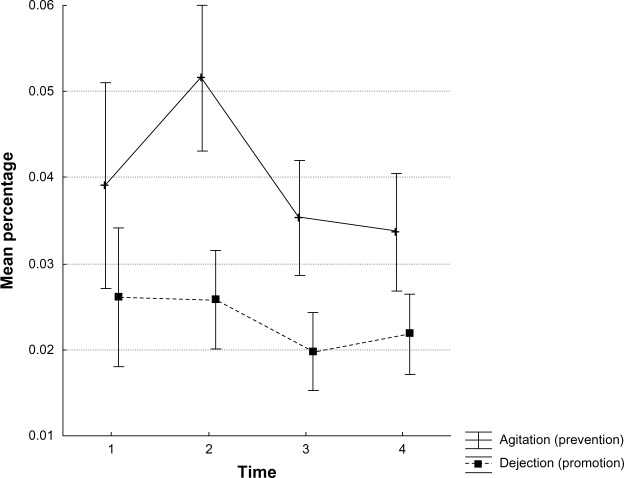
The present study describes a novel approach to the identification of the motivational processes in text data extracted from an Internet support group (ISG) for smoking cessation. Based on the previous findings that a "prevention" focus might be more relevant for maintaining behavior change, it was hypothesized that 1) language use (ie, the use of emotional words) signaling a "promotion" focus would be dominant in the initiating stages of the ISG, and 2) that the proportion of words signaling a prevention focus would increase over time. The data were collected from the ISG site, spanning 4 years of forum activity. The data were analyzed using the Linguistic Inquiry and Word Count application. The first hypothesis - of promotion focus dominance in the initiating stages - was not supported during year 1. However, for all the other years measured, the data showed that a prevention failure was more dominant compared with a promotion failure. The results indicate that content analysis could be used to investigate motivational and language-driven processes in ISGs. Understanding the interplay between self-regulation, lifestyle change, and modern communication channels could be of vital importance in providing the public with better health care services and interventions.
本研究描述了一种从戒烟互联网支持小组(ISG)中提取的文本数据中识别动机过程的新方法。基于先前的研究发现,“预防”焦点可能更有助于维持行为改变,因此假设 1)信号“促进”焦点的语言使用(即使用情感词)在 ISG 的启动阶段占主导地位,并且 2)表示预防焦点的词的比例会随着时间的推移而增加。数据来自 ISG 网站,涵盖了 4 年的论坛活动。使用语言探究和词汇计数应用程序对数据进行了分析。第一个假设——启动阶段的促进焦点主导地位——在第 1 年没有得到支持。然而,对于所有其他测量的年份,数据表明,与促进失败相比,预防失败更为普遍。结果表明,内容分析可用于调查 ISG 中的动机和语言驱动过程。了解自我调节、生活方式改变和现代通信渠道之间的相互作用,对于为公众提供更好的医疗保健服务和干预措施至关重要。