Prause Michala, Christensen Dan Ploug, Billestrup Nils, Mandrup-Poulsen Thomas
Endocrinology Research Section, Department of Biomedical Sciences, University of Copenhagen, Copenhagen, Denmark.
Section of Cellular and Metabolic Research, Department of Biomedical Sciences, University of Copenhagen, Copenhagen, Denmark.
PLoS One. 2014 Jan 24;9(1):e87067. doi: 10.1371/journal.pone.0087067. eCollection 2014.
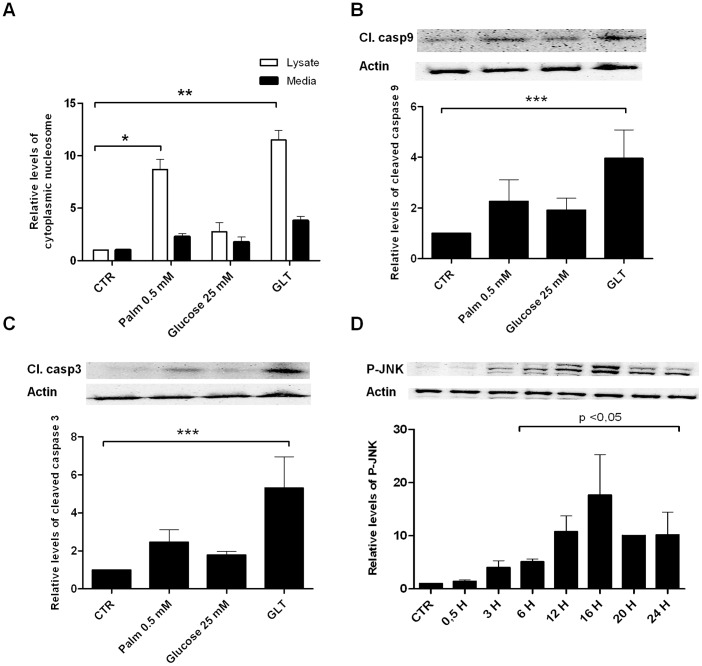
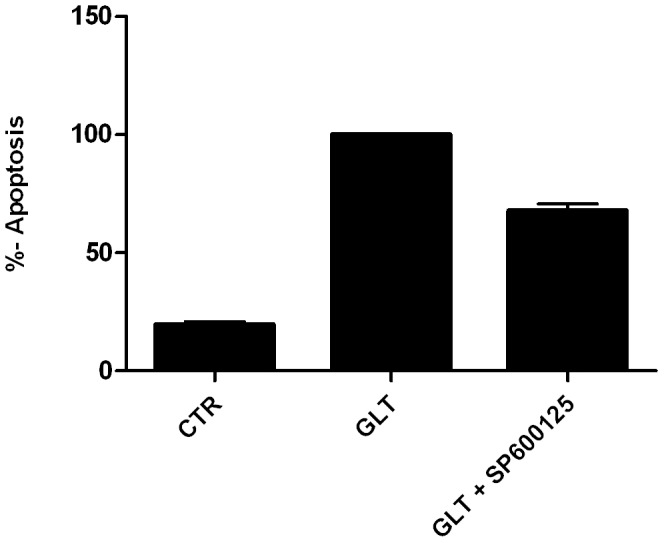
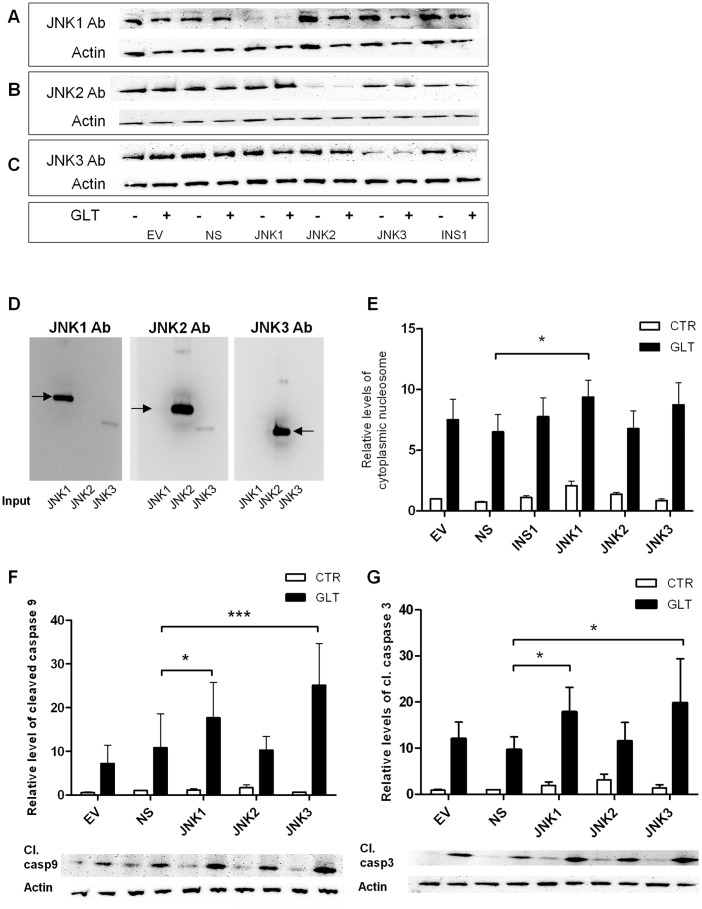
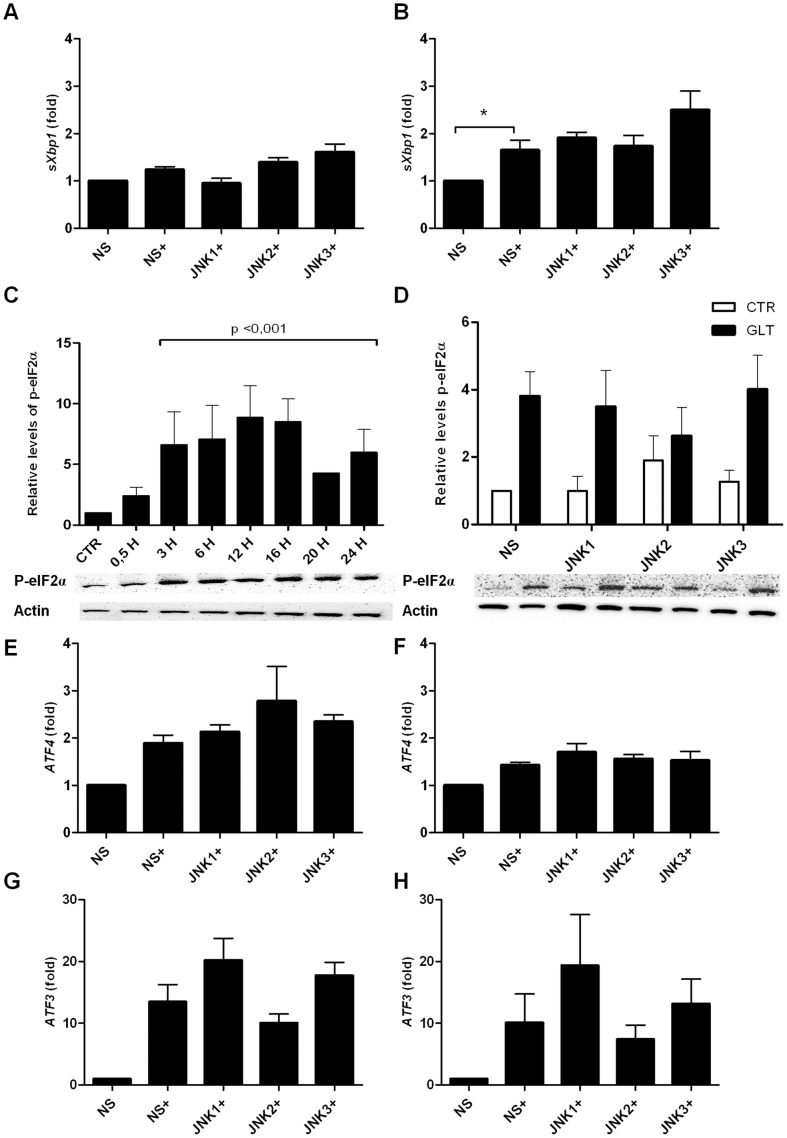
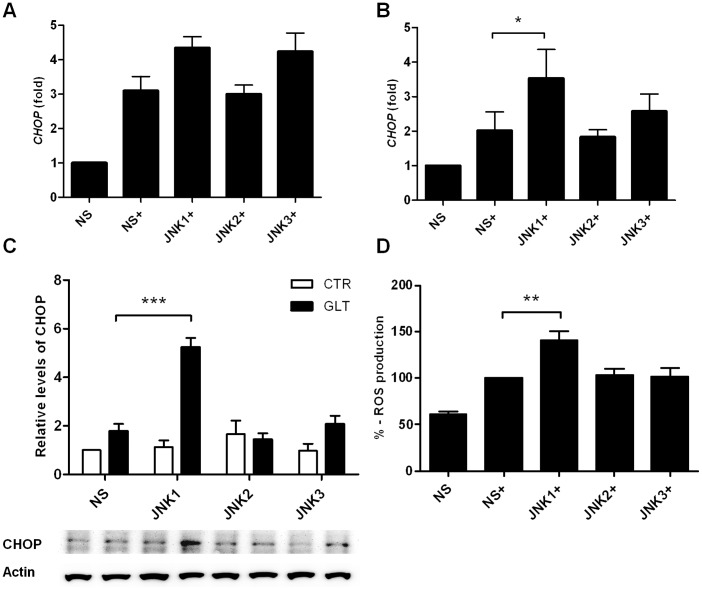
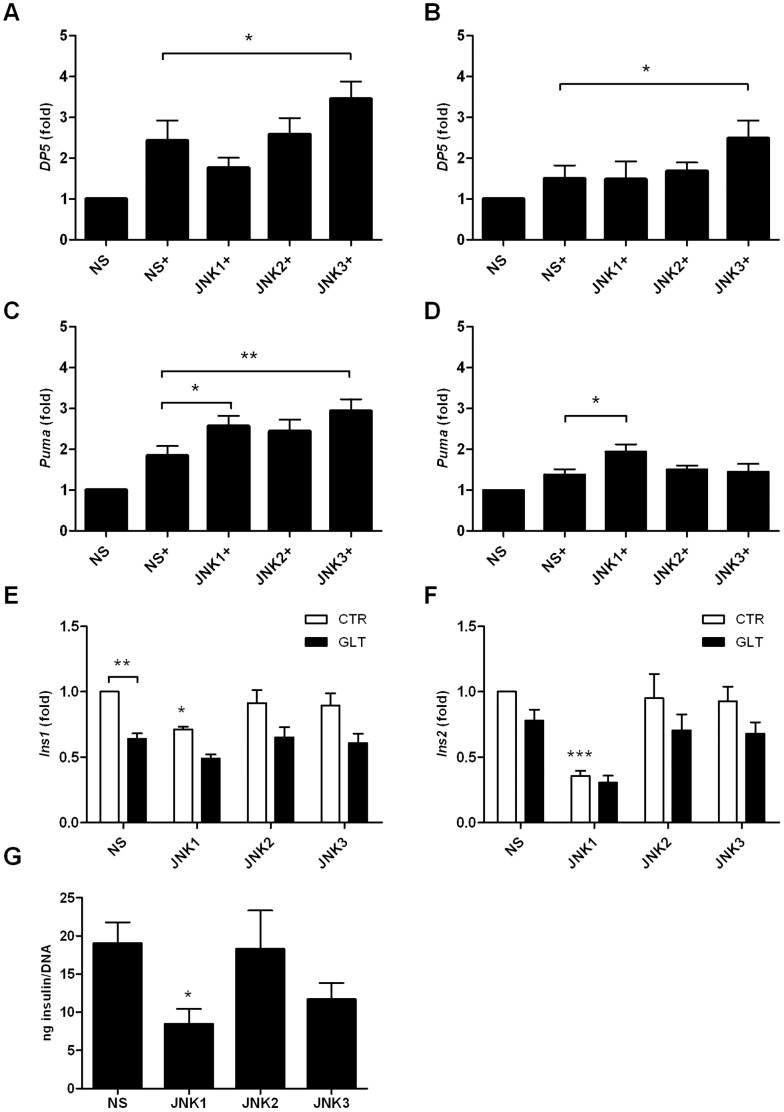
Pancreatic β-cell dysfunction is central to type 2 diabetes pathogenesis. Prolonged elevated levels of circulating free-fatty acids and hyperglycemia, also termed glucolipotoxicity, mediate β-cell dysfunction and apoptosis associated with increased c-Jun N-terminal Kinase (JNK) activity. Endoplasmic reticulum (ER) and oxidative stress are elicited by palmitate and high glucose concentrations further potentiating JNK activity. Our aim was to determine the role of the JNK subtypes JNK1, JNK2 and JNK3 in palmitate and high glucose-induced β-cell apoptosis. We established insulin-producing INS1 cell lines stably expressing JNK subtype specific shRNAs to understand the differential roles of the individual JNK isoforms. JNK activity was increased after 3 h of palmitate and high glucose exposure associated with increased expression of ER and mitochondrial stress markers. JNK1 shRNA expressing INS1 cells showed increased apoptosis and cleaved caspase 9 and 3 compared to non-sense shRNA expressing control INS1 cells when exposed to palmitate and high glucose associated with increased CHOP expression, ROS formation and Puma mRNA expression. JNK2 shRNA expressing INS1 cells did not affect palmitate and high glucose induced apoptosis or ER stress markers, but increased Puma mRNA expression compared to non-sense shRNA expressing INS1 cells. Finally, JNK3 shRNA expressing INS1 cells did not induce apoptosis compared to non-sense shRNA expressing INS1 cells when exposed to palmitate and high glucose but showed increased caspase 9 and 3 cleavage associated with increased DP5 and Puma mRNA expression. These data suggest that JNK1 protects against palmitate and high glucose-induced β-cell apoptosis associated with reduced ER and mitochondrial stress.
胰腺β细胞功能障碍是2型糖尿病发病机制的核心。循环中游离脂肪酸水平长期升高和高血糖,也称为糖脂毒性,介导与c-Jun氨基末端激酶(JNK)活性增加相关的β细胞功能障碍和凋亡。棕榈酸酯和高葡萄糖浓度引发内质网(ER)和氧化应激,进一步增强JNK活性。我们的目的是确定JNK亚型JNK1、JNK2和JNK3在棕榈酸酯和高葡萄糖诱导的β细胞凋亡中的作用。我们建立了稳定表达JNK亚型特异性短发夹RNA(shRNA)的胰岛素分泌INS1细胞系,以了解各个JNK亚型的不同作用。在棕榈酸酯和高葡萄糖暴露3小时后,JNK活性增加,同时ER和线粒体应激标志物的表达增加。与表达无义shRNA的对照INS1细胞相比,表达JNK1 shRNA的INS1细胞在暴露于棕榈酸酯和高葡萄糖时,凋亡增加,半胱天冬酶9和3裂解增加,同时CHOP表达增加、活性氧(ROS)形成以及Puma mRNA表达增加。表达JNK2 shRNA的INS1细胞不影响棕榈酸酯和高葡萄糖诱导的凋亡或ER应激标志物,但与表达无义shRNA的INS1细胞相比,Puma mRNA表达增加。最后,与表达无义shRNA的INS1细胞相比,表达JNK3 shRNA的INS1细胞在暴露于棕榈酸酯和高葡萄糖时不诱导凋亡,但半胱天冬酶9和3裂解增加,同时DP5和Puma mRNA表达增加。这些数据表明,JNK1可预防棕榈酸酯和高葡萄糖诱导的与ER和线粒体应激减轻相关的β细胞凋亡。