Garcia David E, Keasling Jay D
Joint BioEnergy Institute, Emeryville, California, United States of America ; Department of Chemistry, University of California, Berkeley, California, United States of America ; Physical Biosciences Division, Lawrence Berkeley National Laboratory, Berkeley, California, United States of America.
Joint BioEnergy Institute, Emeryville, California, United States of America ; Physical Biosciences Division, Lawrence Berkeley National Laboratory, Berkeley, California, United States of America ; Department of Chemical & Biomolecular Engineering, University of California, Berkeley, California, United States of America ; Department of Bioengineering, University of California, Berkeley, California, United States of America.
PLoS One. 2014 Jan 27;9(1):e87112. doi: 10.1371/journal.pone.0087112. eCollection 2014.
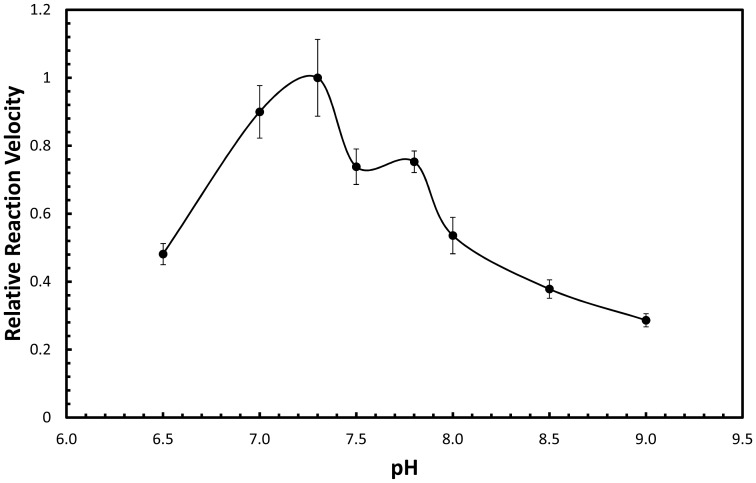
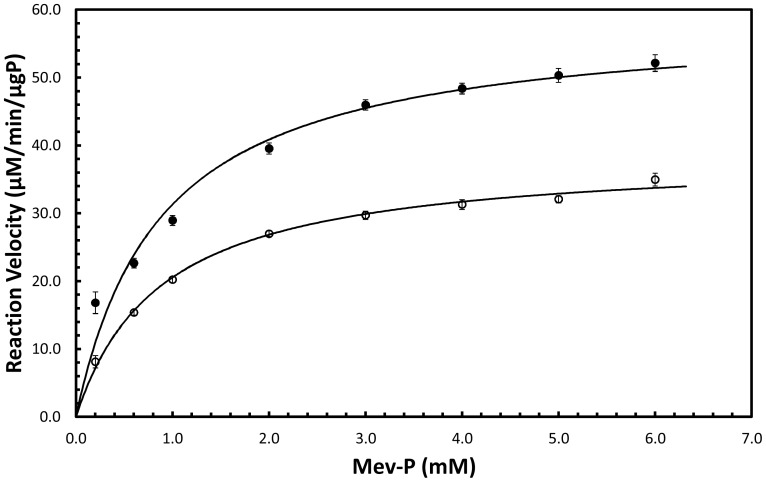
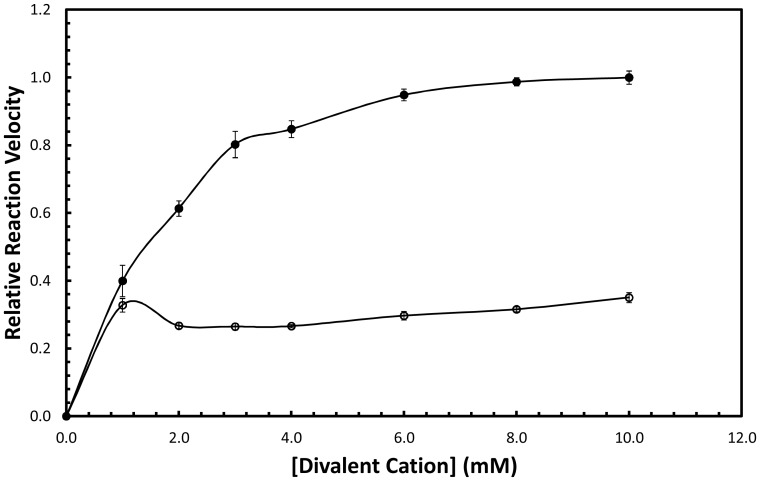
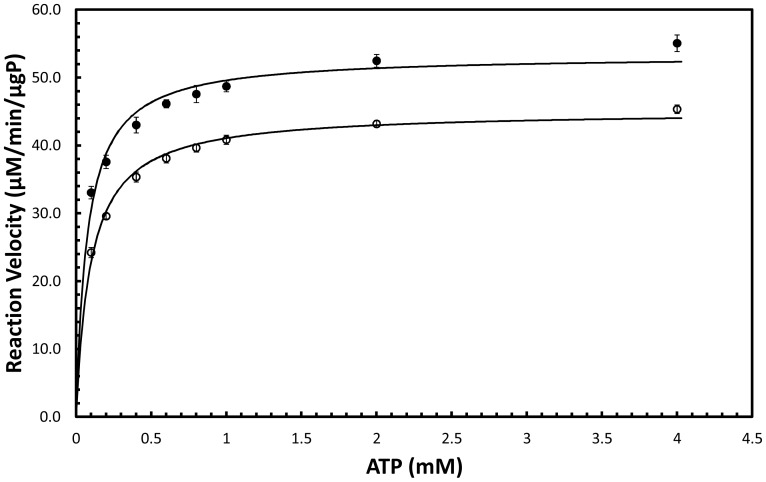
The mevalonate-based isoprenoid biosynthetic pathway is responsible for producing cholesterol in humans and is used commercially to produce drugs, chemicals, and fuels. Heterologous expression of this pathway in Escherichia coli has enabled high-level production of the antimalarial drug artemisinin and the proposed biofuel bisabolane. Understanding the kinetics of the enzymes in the biosynthetic pathway is critical to optimize the pathway for high flux. We have characterized the kinetic parameters of phosphomevalonate kinase (PMK, EC 2.7.4.2) from Saccharomyces cerevisiae, a previously unstudied enzyme. An E. coli codon-optimized version of the S. cerevisiae gene was cloned into pET-52b+, then the C-terminal 6X His-tagged protein was expressed in E. coli BL21(DE3) and purified on a Ni²⁺ column. The KM of the ATP binding site was determined to be 98.3 µM at 30°C, the optimal growth temperature for S. cerevisiae, and 74.3 µM at 37°C, the optimal growth temperature for E. coli. The K(M) of the mevalonate-5-phosphate binding site was determined to be 885 µM at 30°C and 880 µM at 37°C. The V(max) was determined to be 4.51 µmol/min/mg enzyme at 30°C and 5.33 µmol/min/mg enzyme at 37°C. PMK is Mg²⁺ dependent, with maximal activity achieved at concentrations of 10 mM or greater. Maximum activity was observed at pH = 7.2. PMK was not found to be substrate inhibited, nor feedback inhibited by FPP at concentrations up to 10 µM FPP.
基于甲羟戊酸的类异戊二烯生物合成途径负责在人体内产生胆固醇,并在商业上用于生产药物、化学品和燃料。该途径在大肠杆菌中的异源表达已实现抗疟药物青蒿素和拟议的生物燃料红没药烯的高水平生产。了解生物合成途径中酶的动力学对于优化该途径以实现高通量至关重要。我们已经表征了来自酿酒酵母的磷酸甲羟戊酸激酶(PMK,EC 2.7.4.2)的动力学参数,这是一种以前未被研究的酶。将酿酒酵母基因的大肠杆菌密码子优化版本克隆到pET-52b+中,然后在大肠杆菌BL21(DE3)中表达C末端带有6X组氨酸标签的蛋白质,并在镍柱上进行纯化。在酿酒酵母的最佳生长温度30°C下,ATP结合位点的KM测定为98.3 μM,在大肠杆菌的最佳生长温度37°C下为74.3 μM。甲羟戊酸-5-磷酸结合位点的K(M)在30°C下测定为885 μM,在37°C下为880 μM。V(max)在30°C下测定为4.51 μmol/min/mg酶,在37°C下为5.33 μmol/min/mg酶。PMK依赖于Mg²⁺,在浓度为10 mM或更高时达到最大活性。在pH = 7.2时观察到最大活性。未发现PMK受到底物抑制,在高达10 μM FPP的浓度下也未受到FPP的反馈抑制。