Morawetz Carmen, Kirilina Evgeniya, Baudewig Juergen, Heekeren Hauke R
Department of Education and Psychology, Freie Universität Berlin, Berlin, Germany.
Dahlem Institute for Neuroimaging of Emotion, Freie Universität Berlin, Berlin, Germany.
PLoS One. 2014 Jan 27;9(1):e87277. doi: 10.1371/journal.pone.0087277. eCollection 2014.
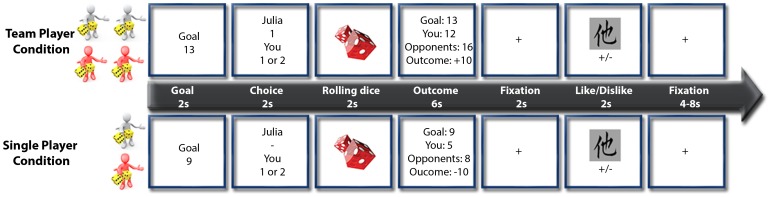
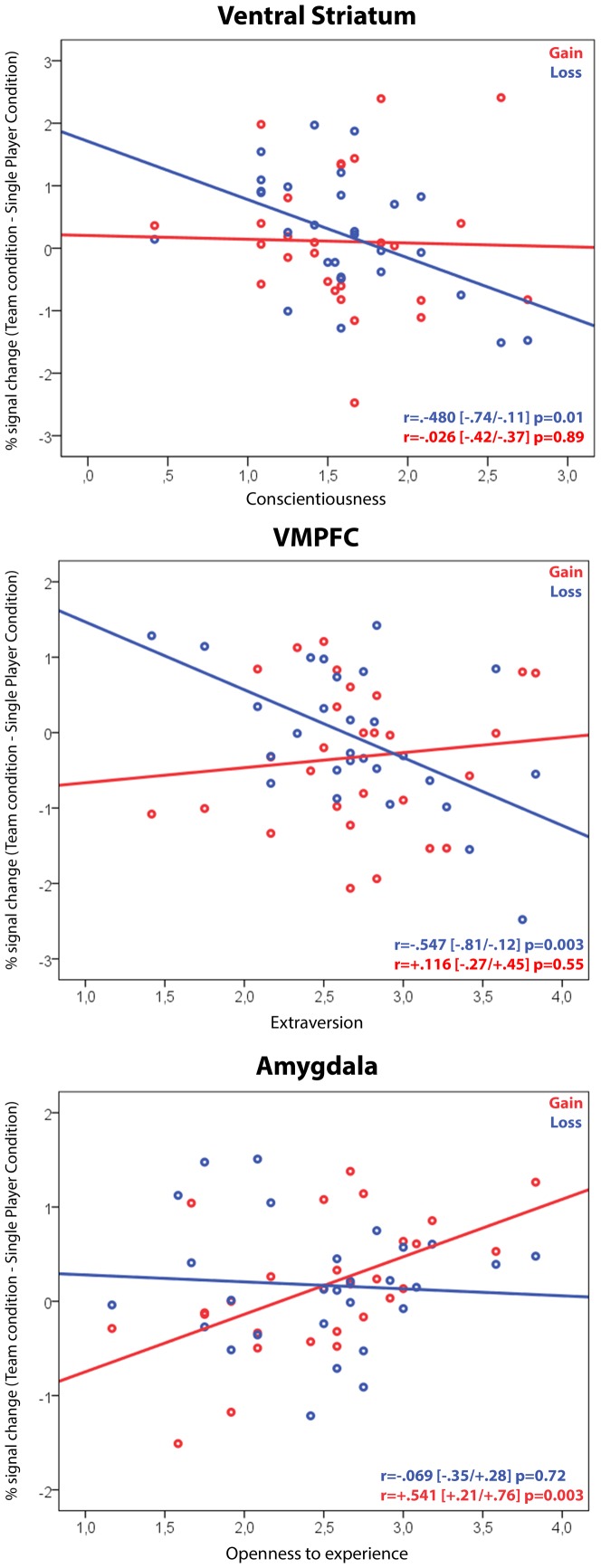
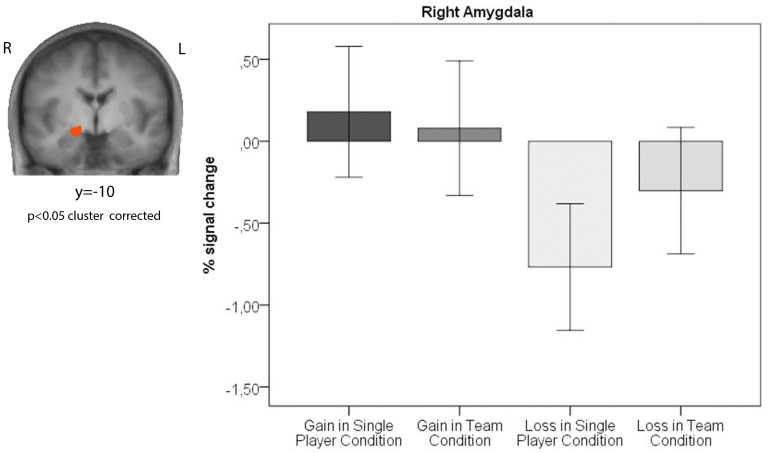
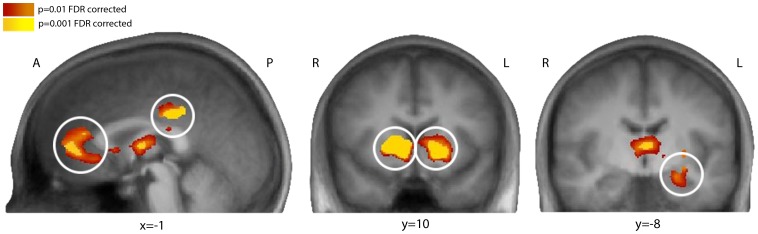
Cooperation is an integral part of human social life and we often build teams to achieve certain goals. However, very little is currently understood about emotions with regard to cooperation. Here, we investigated the impact of social context (playing alone versus playing on a team) on emotions while winning or losing a game. We hypothesized that activity in the reward network is modulated by the social context and that personality characteristics might impact team play. We conducted an event-related functional magnetic resonance imaging experiment that involved a simple game of dice. In the team condition, the participant played with a partner against another two-person team. In the single-player condition, the participant played alone against another player. Our results revealed that reward processing in the right amygdala was modulated by the social context. The main effect of outcome (gains versus losses) was associated with increased responses in the reward network. We also found that differences in the reward-related neural response due to social context were associated with specific personality traits. When playing on a team, increased activity in the amygdala during winning was a unique function of openness, while decreased activity in the ventromedial prefrontal cortex and ventral striatum during losing was associated with extraversion and conscientiousness, respectively. In conclusion, we provide evidence that working on a team influences the affective value of a negative outcome by attenuating the negative response associated with it in the amygdala. Our results also show that brain reward responses in a social context are affected by personality traits related to teamwork.
合作是人类社会生活不可或缺的一部分,我们常常组建团队以实现特定目标。然而,目前对于合作过程中的情绪了解甚少。在此,我们研究了社会情境(独自游戏与团队游戏)对输赢游戏时情绪的影响。我们假设奖励网络的活动受社会情境调节,且人格特征可能会影响团队协作。我们进行了一项与事件相关的功能磁共振成像实验,该实验涉及一个简单的掷骰子游戏。在团队条件下,参与者与一名伙伴对抗另一个两人团队。在单人条件下,参与者独自对抗另一名玩家。我们的结果显示,右侧杏仁核的奖励处理受社会情境调节。结果(赢与输)的主要效应与奖励网络中反应增强相关。我们还发现,由于社会情境导致的奖励相关神经反应差异与特定人格特质有关。在团队游戏时,获胜期间杏仁核活动增加是开放性的独特作用,而失败期间腹内侧前额叶皮层和腹侧纹状体活动减少分别与外向性和尽责性有关。总之,我们提供的证据表明,团队合作通过减弱杏仁核中与之相关的负面反应来影响负面结果的情感价值。我们的结果还表明,社会情境下的大脑奖励反应受与团队合作相关的人格特质影响。