Jiang Pei-Luen, Pasaribu Buntora, Chen Chii-Shiarng
Graduate Institute of Marine Biotechnology, National Dong-Hwa University, Pingtung, Taiwan ; Taiwan Coral Research Center, National Museum of Marine Biology and Aquarium, Pingtung, Taiwan.
Graduate Institute of Biotechnology, National Chung-Hsing University, Taichung, Taiwan.
PLoS One. 2014 Jan 27;9(1):e87416. doi: 10.1371/journal.pone.0087416. eCollection 2014.
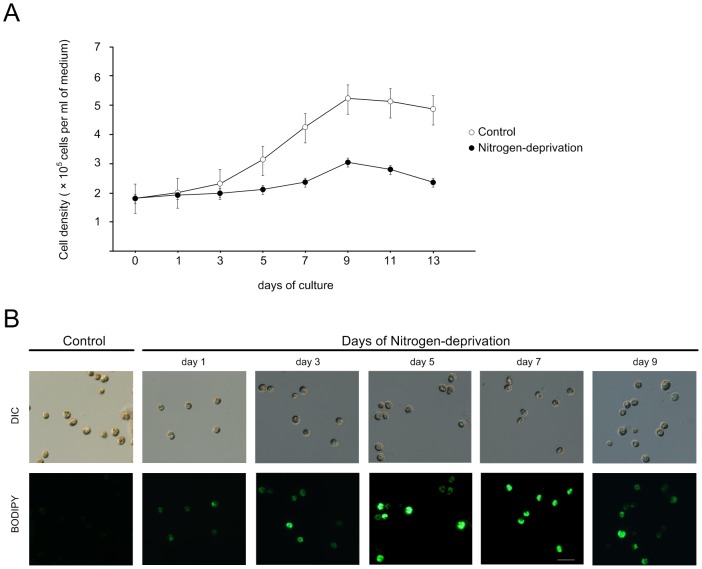
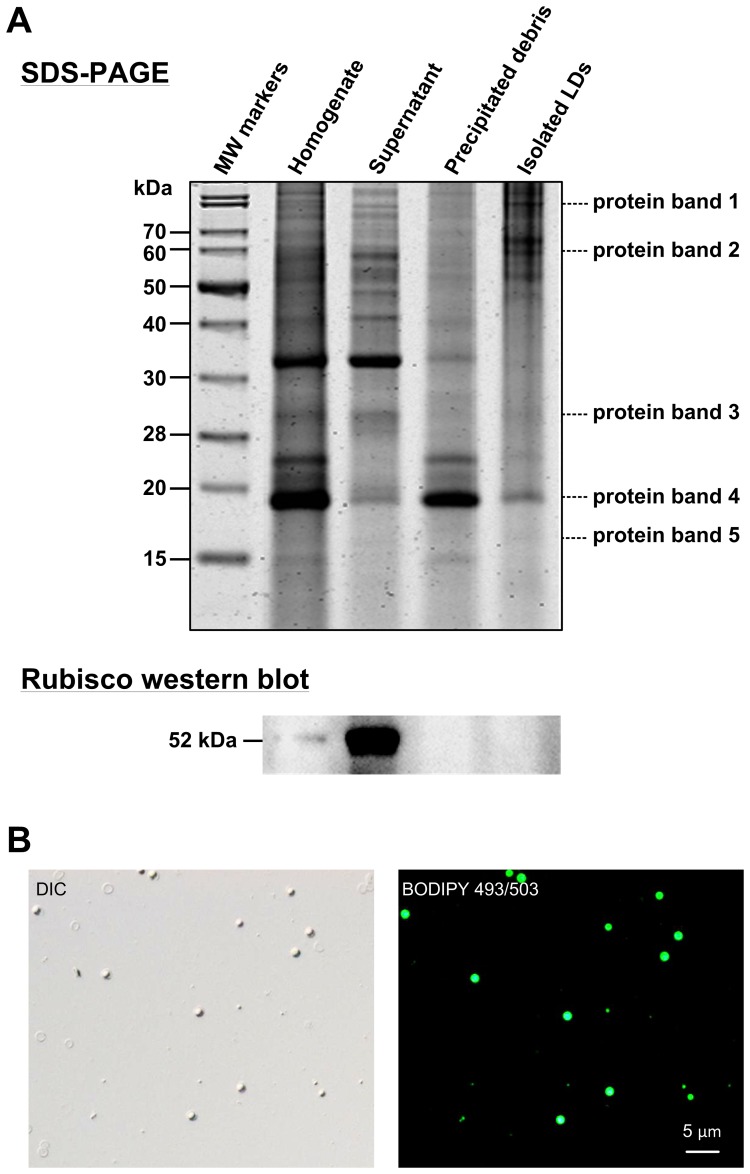
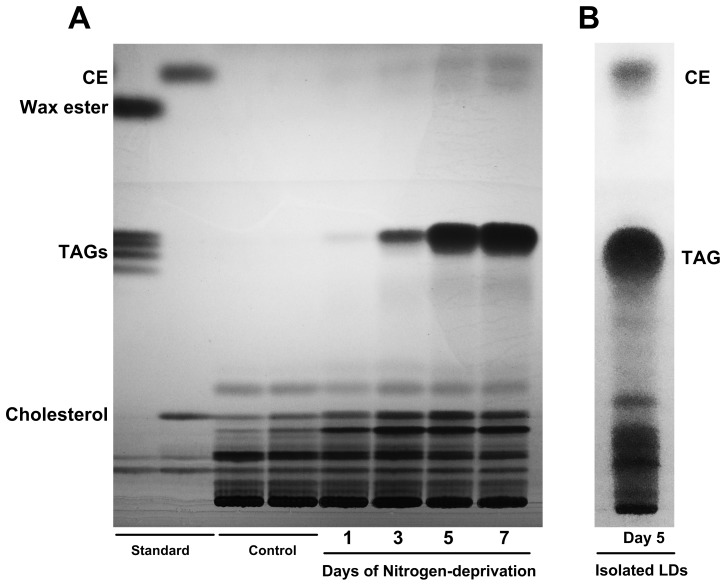
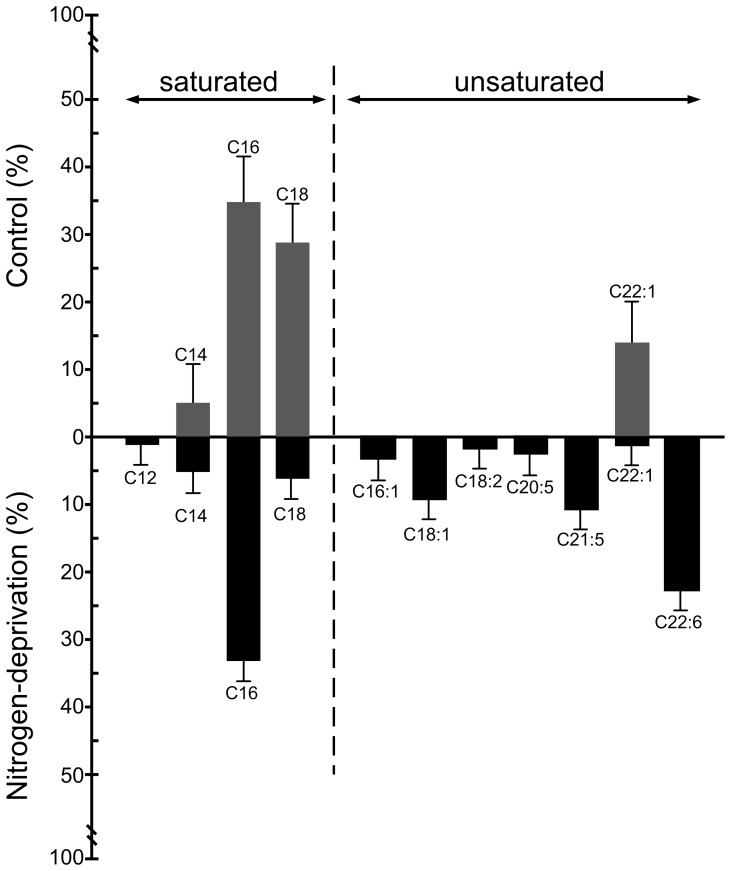
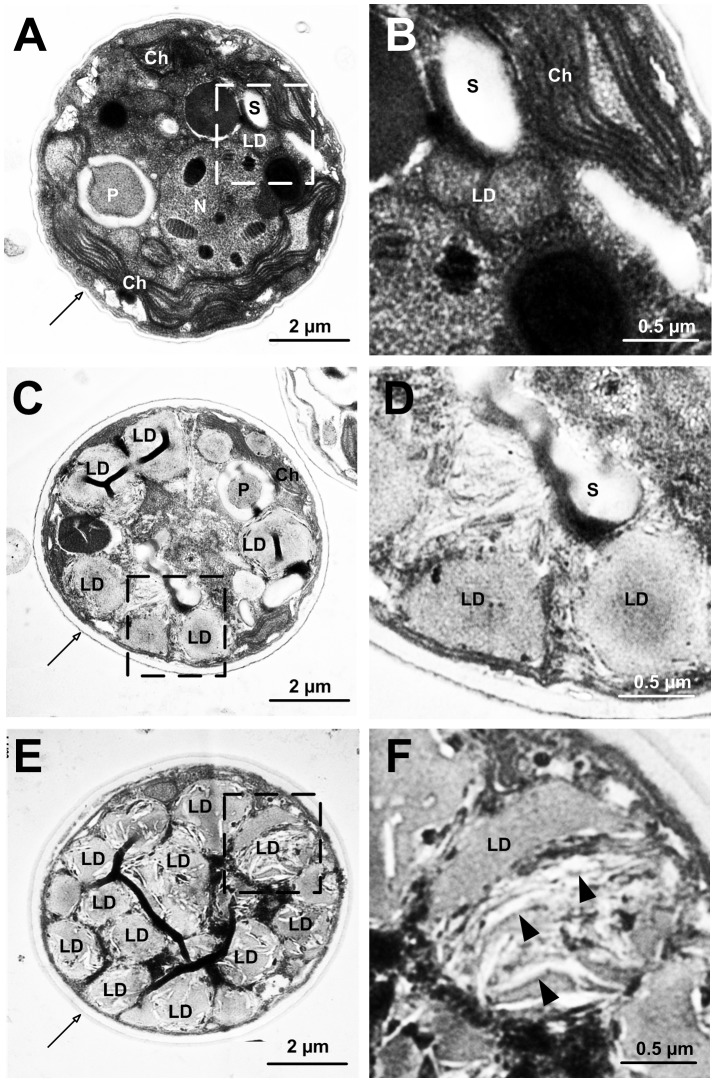
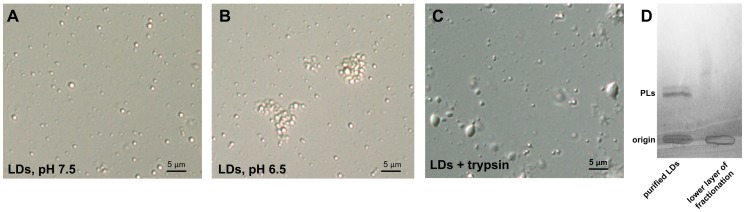
Stable cnidarian-dinoflagellate (genus Symbiodinium) endosymbioses depend on the regulation of nutrient transport between Symbiodinium populations and their hosts. It has been previously shown that the host cytosol is a nitrogen-deficient environment for the intracellular Symbiodinium and may act to limit growth rates of symbionts during the symbiotic association. This study aimed to investigate the cell proliferation, as well as ultrastructural and lipid compositional changes, in free-living Symbiodinium spp. (clade B) upon nitrogen (N)-deprivation. The cell proliferation of the N-deprived cells decreased significantly. Furthermore, staining with a fluorescent probe, boron dipyrromethane 493/503 (BODIPY 493/503), indicated that lipid contents progressively accumulated in the N-deprived cells. Lipid analyses further showed that both triacylglycerol (TAG) and cholesterol ester (CE) were drastically enriched, with polyunsaturated fatty acids (PUFA; i.e., docosahexaenoic acid, heneicosapentaenoic acid, and oleic acid) became more abundant. Ultrastructural examinations showed that the increase in concentration of these lipid species was due to the accumulation of lipid droplets (LDs), a cellular feature that have previously shown to be pivotal in the maintenance of intact endosymbioses. Integrity of these stable LDs was maintained via electronegative repulsion and steric hindrance possibly provided by their surface proteins. Proteomic analyses of these LDs identified proteins putatively involved in lipid metabolism, signaling, stress response and energy metabolism. These results suggest that LDs production may be an adaptive response that enables Symbiodinium to maintain sufficient cellular energy stores for survival under the N-deprived conditions in the host cytoplasm.
稳定的刺胞动物-甲藻(共生藻属)内共生关系依赖于共生藻种群与其宿主之间营养物质运输的调节。此前已有研究表明,宿主细胞质对于细胞内的共生藻来说是一个氮缺乏的环境,并且可能在共生关系中限制共生体的生长速率。本研究旨在调查自由生活的共生藻属物种(B类分支)在缺氮情况下的细胞增殖情况,以及超微结构和脂质组成的变化。缺氮细胞的细胞增殖显著下降。此外,用荧光探针硼二吡咯甲烷493/503(BODIPY 493/503)染色表明,脂质含量在缺氮细胞中逐渐积累。脂质分析进一步显示,三酰甘油(TAG)和胆固醇酯(CE)都大幅富集,多不饱和脂肪酸(PUFA,即二十二碳六烯酸、二十一碳五烯酸和油酸)变得更加丰富。超微结构检查表明,这些脂质种类浓度的增加是由于脂滴(LDs)的积累,这一细胞特征先前已被证明在维持完整的内共生关系中至关重要。这些稳定脂滴的完整性通过其表面蛋白可能提供的负电排斥和空间位阻得以维持。对这些脂滴的蛋白质组分析鉴定出了可能参与脂质代谢、信号传导、应激反应和能量代谢的蛋白质。这些结果表明,脂滴的产生可能是一种适应性反应,使共生藻能够在宿主细胞质缺氮条件下维持足够的细胞能量储备以生存。