Bruells Christian S, Bergs Ingmar, Rossaint Rolf, Du Jun, Bleilevens Christian, Goetzenich Andreas, Weis Joachim, Wiggs Michael P, Powers Scott K, Hein Marc
Department of Surgical Intensive and Intermediate Care, and Department of Anesthesiology, University hospital of the RWTH Aachen, University of Excellence, Aachen, Germany.
Department of cardiothoracic and vascular surgery, University hospital of the RWTH Aachen, University of Excellence, Aachen, Germany.
PLoS One. 2014 Jan 27;9(1):e87460. doi: 10.1371/journal.pone.0087460. eCollection 2014.
Mechanical ventilation (MV) induces diaphragmatic muscle fiber atrophy and contractile dysfunction (ventilator induced diaphragmatic dysfunction, VIDD). It is unknown how rapidly diaphragm muscle recovers from VIDD once spontaneous breathing is restored. We hypothesized that following extubation, the return to voluntary breathing would restore diaphragm muscle fiber size and contractile function using an established rodent model.
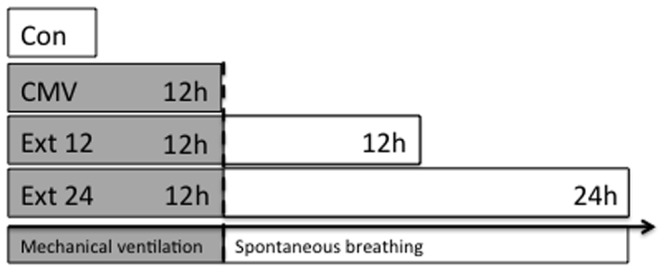
Following 12 hours of MV, animals were either euthanized or, after full wake up, extubated and returned to voluntary breathing for 12 hours or 24 hours. Acutely euthanized animals served as controls (each n = 8/group). Diaphragmatic contractility, fiber size, protease activation, and biomarkers of oxidative damage in the diaphragm were assessed.
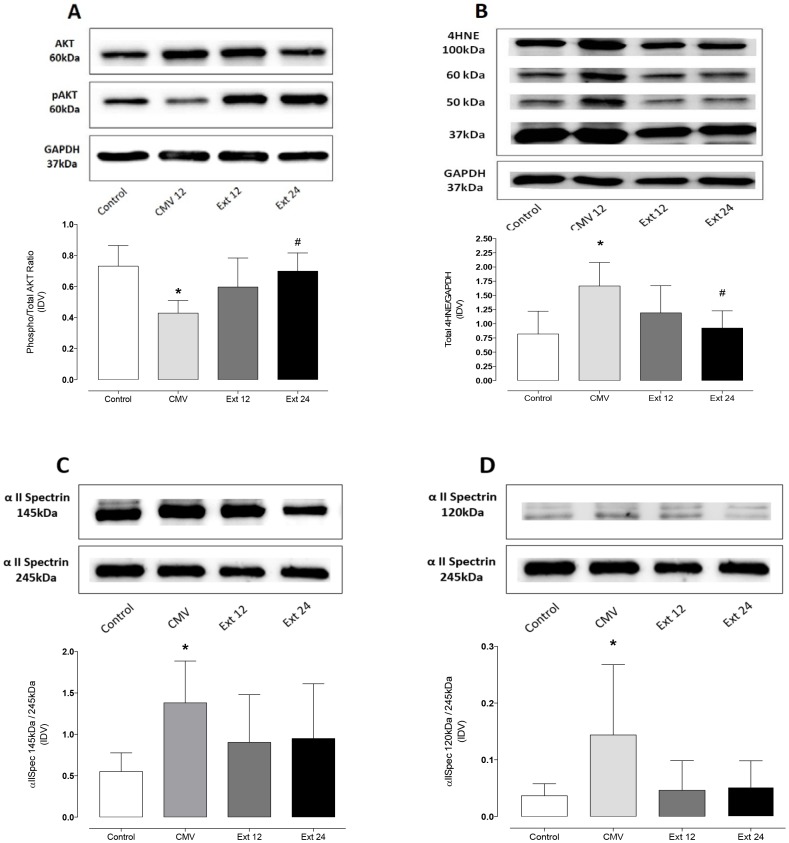
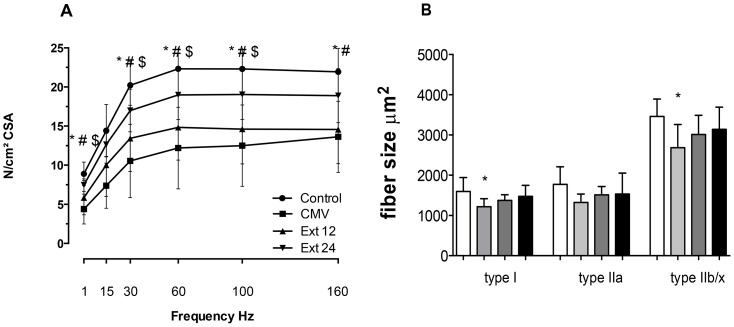
12 hours of MV induced VIDD. Compared to controls diaphragm contractility remained significantly depressed at 12 h after extubation but rebounded at 24 h to near control levels. Diaphragmatic levels of oxidized proteins were significantly elevated after MV (p = 0.002) and normalized at 24 hours after extubation.
These findings indicate that diaphragm recovery from VIDD, as indexed by fiber size and contractile properties, returns to near control levels within 24 hours after returning to spontaneous breathing. Besides the down-regulation of proteolytic pathways and oxidative stress at 24 hours after extubation further repairing mechanisms have to be determined.
机械通气(MV)可导致膈肌纤维萎缩和收缩功能障碍(呼吸机诱发的膈肌功能障碍,VIDD)。目前尚不清楚一旦恢复自主呼吸,膈肌从VIDD中恢复的速度有多快。我们假设,在拔管后,使用已建立的啮齿动物模型,恢复自主呼吸将恢复膈肌纤维大小和收缩功能。
在进行12小时的MV后,动物要么被安乐死,要么在完全苏醒后拔管并恢复自主呼吸12小时或24小时。急性安乐死的动物作为对照(每组n = 8)。评估膈肌收缩力、纤维大小、蛋白酶激活以及膈肌氧化损伤的生物标志物。
12小时的MV诱发了VIDD。与对照组相比,拔管后12小时膈肌收缩力仍显著降低,但在24小时时反弹至接近对照水平。MV后膈肌氧化蛋白水平显著升高(p = 0.002),并在拔管后24小时恢复正常。
这些发现表明,以纤维大小和收缩特性为指标,膈肌从VIDD中恢复,在恢复自主呼吸后24小时内恢复到接近对照水平。除了拔管后24小时蛋白水解途径和氧化应激的下调外,还必须确定进一步的修复机制。