Department of Physiology, Kyoto Prefectural University of Medicine Kyoto, Japan ; Department of Molecular Neuroimaging, Molecular Imaging Center, National Institute of Radiological Sciences Chiba, Japan.
Department of Physiology, Kyoto Prefectural University of Medicine Kyoto, Japan ; Brain Science Institute, Tamagawa University Machida, Japan.
Front Syst Neurosci. 2014 Jan 28;8:3. doi: 10.3389/fnsys.2014.00003. eCollection 2014.
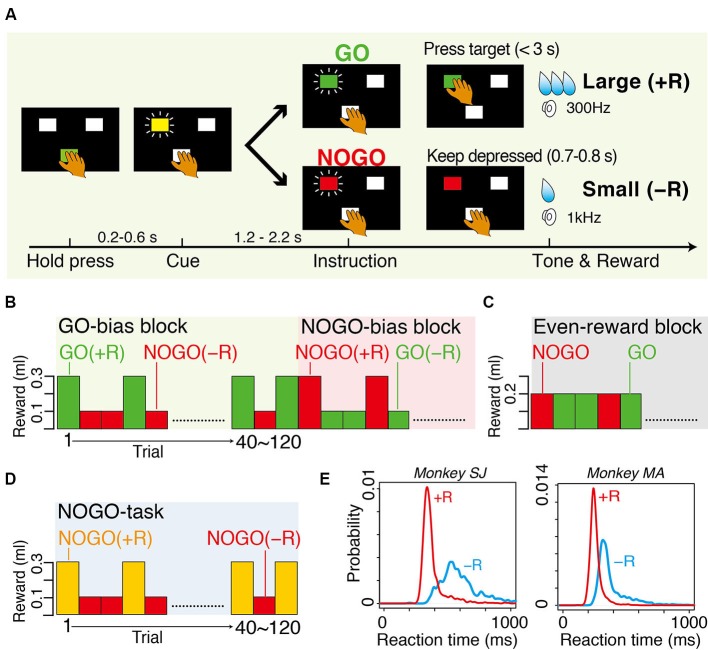
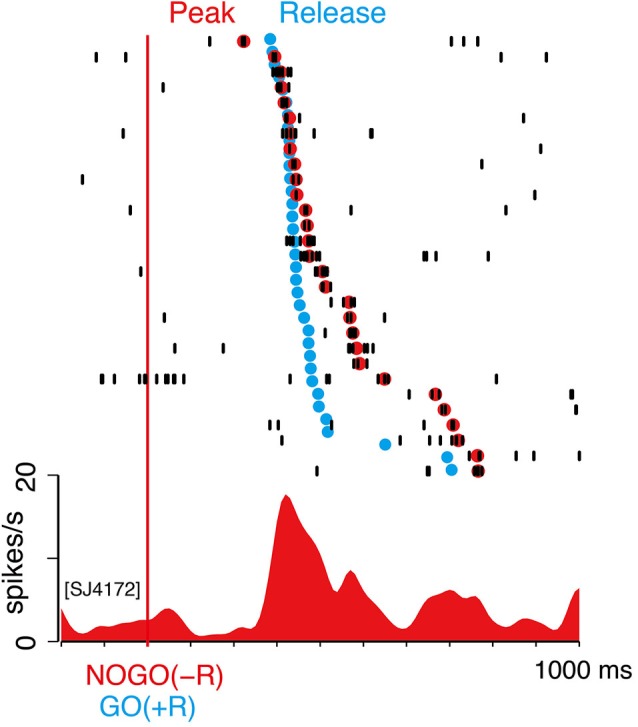
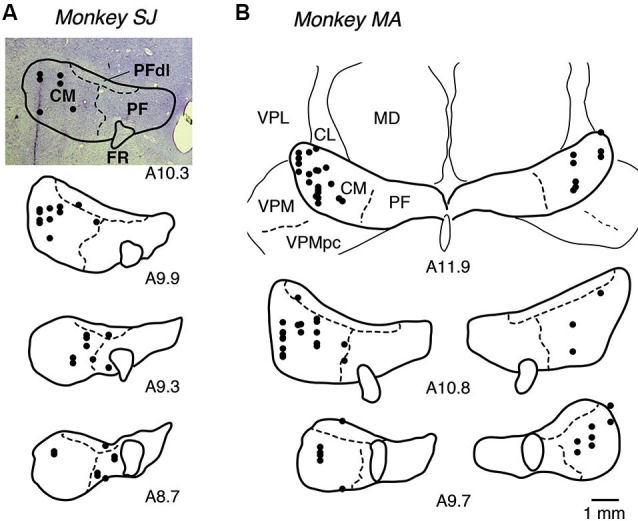
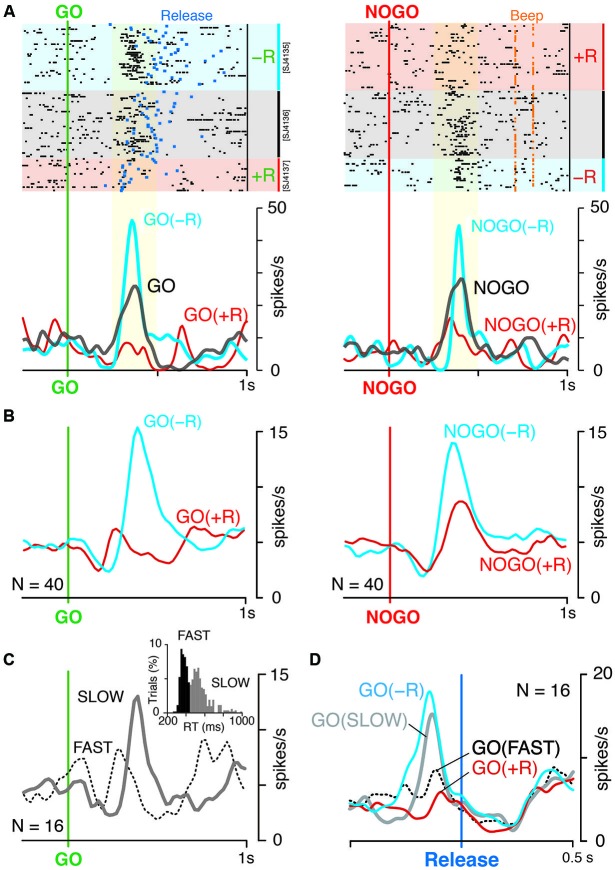
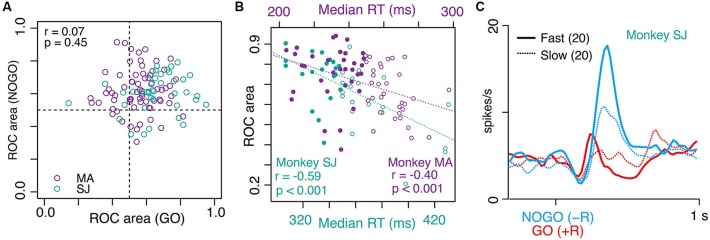
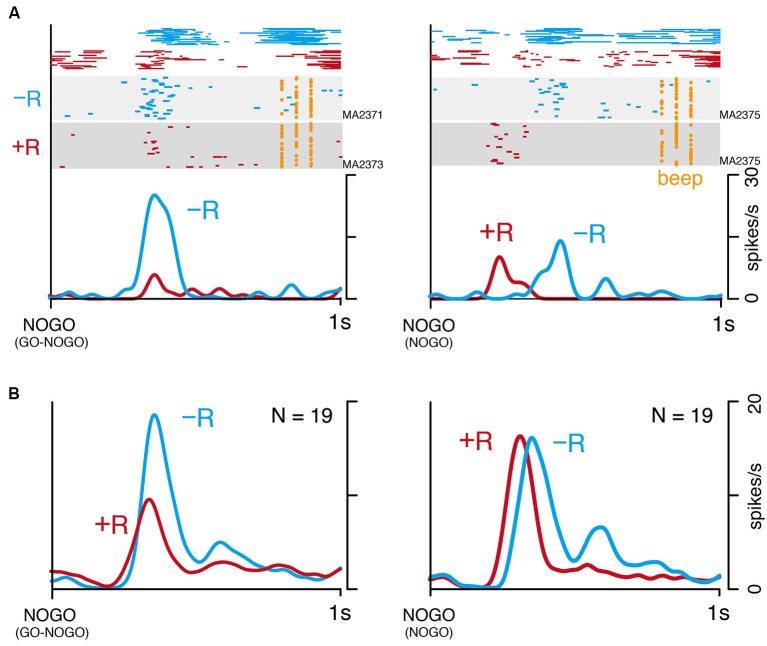
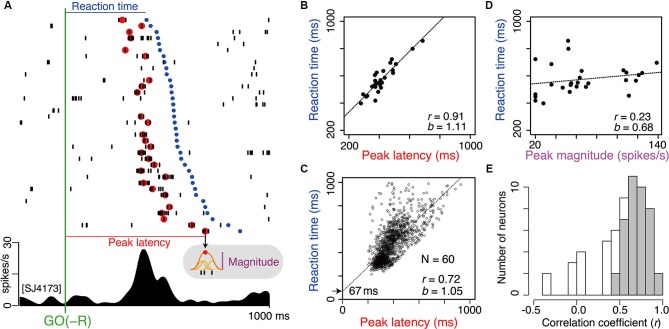
Most of our daily actions are selected and executed involuntarily under familiar situations by the guidance of internal drives, such as motivation. The behavioral tendency or biasing towards one over others reflects the action-selection process in advance of action execution (i.e., pre-action bias). Facing unexpected situations, however, pre-action bias should be withdrawn and replaced by an alternative that is suitable for the situation (i.e., counteracting bias). To understand the neural mechanism for the counteracting process, we studied the neural activity of the thalamic centromedian (CM) nucleus in monkeys performing GO-NOGO task with asymmetrical or symmetrical reward conditions. The monkeys reacted to GO signal faster in large-reward condition, indicating behavioral bias toward large reward. In contrast, they responded slowly in small-reward condition, suggesting a conflict between internal drive and external demand. We found that neurons in the CM nucleus exhibited phasic burst discharges after GO and NOGO instructions especially when they were associated with small reward. The small-reward preference was positively correlated with the strength of behavioral bias toward large reward. The small-reward preference disappeared when only NOGO action was requested. The timing of activation predicted the timing of action opposed to bias. These results suggest that CM signals the discrepancy between internal pre-action bias and external demand, and mediates the counteracting process-resetting behavioral bias and leading to execution of opposing action.
我们的大多数日常行为都是在熟悉的情况下,由内部驱动力(如动机)引导而无意识地选择和执行的。行为倾向或对某一选择的偏好超过其他选择反映了在行动执行之前的行动选择过程(即,行动前偏向)。然而,面对意外情况,应该撤回行动前偏向,并代之以适合当前情况的替代方案(即,对抗偏向)。为了了解对抗过程的神经机制,我们研究了猴子在执行具有不对称或对称奖励条件的 GO-NOGO 任务时丘脑中央核(CM)核的神经活动。猴子在大奖励条件下对 GO 信号的反应更快,表明对大奖励的行为偏向。相比之下,在小奖励条件下,它们的反应较慢,表明内部驱动力和外部需求之间存在冲突。我们发现,CM 核中的神经元在 GO 和 NOGO 指令后表现出相位爆发放电,尤其是当它们与小奖励相关时。小奖励偏好与大奖励的行为偏向强度呈正相关。当只要求进行 NOGO 操作时,小奖励偏好消失。激活的时间预测了对抗偏向的动作的时间。这些结果表明,CM 信号传递了内部行动前偏向与外部需求之间的差异,并介导了对抗过程——重置行为偏向并导致对抗性动作的执行。