Graduate Institute of Medical Sciences, School of Medicine, Taipei Medical University, 250 Wu-Hsing Street, Taipei 11031, Taiwan.
Department of Pharmacology, School of Medicine, Taipei Medical University, 250 Wu-Hsing Street, Taipei 11031, Taiwan.
Evid Based Complement Alternat Med. 2013;2013:821813. doi: 10.1155/2013/821813. Epub 2013 Dec 29.
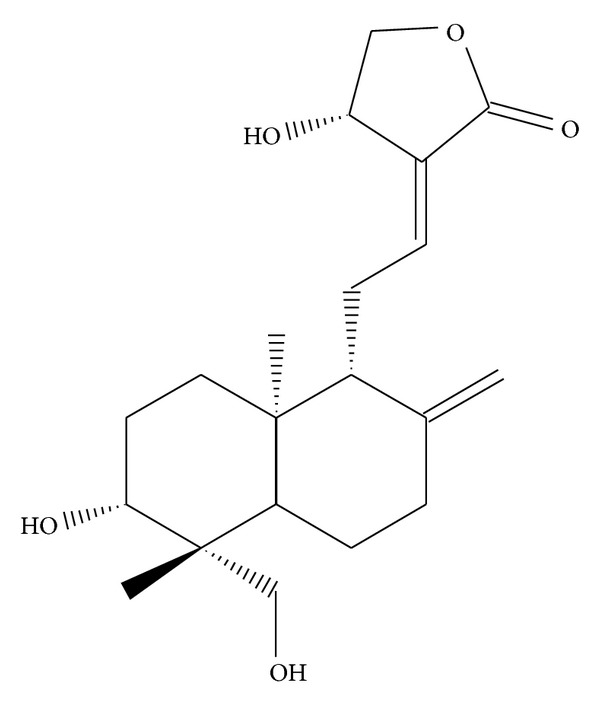
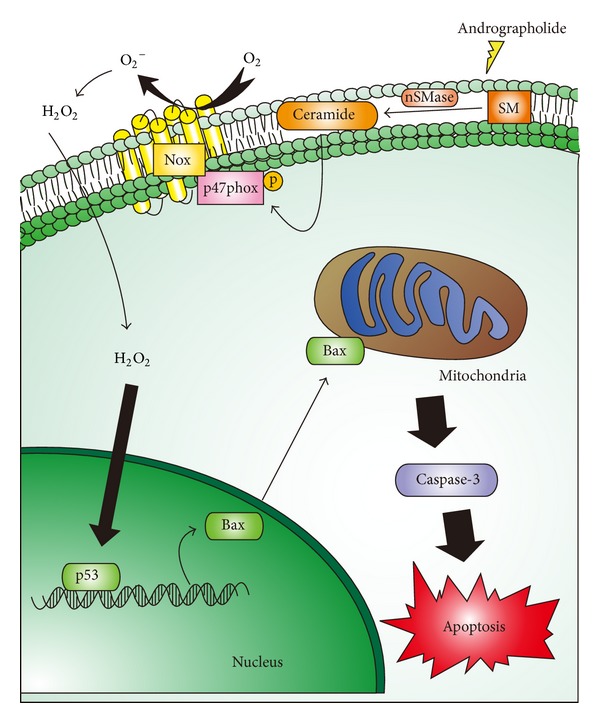
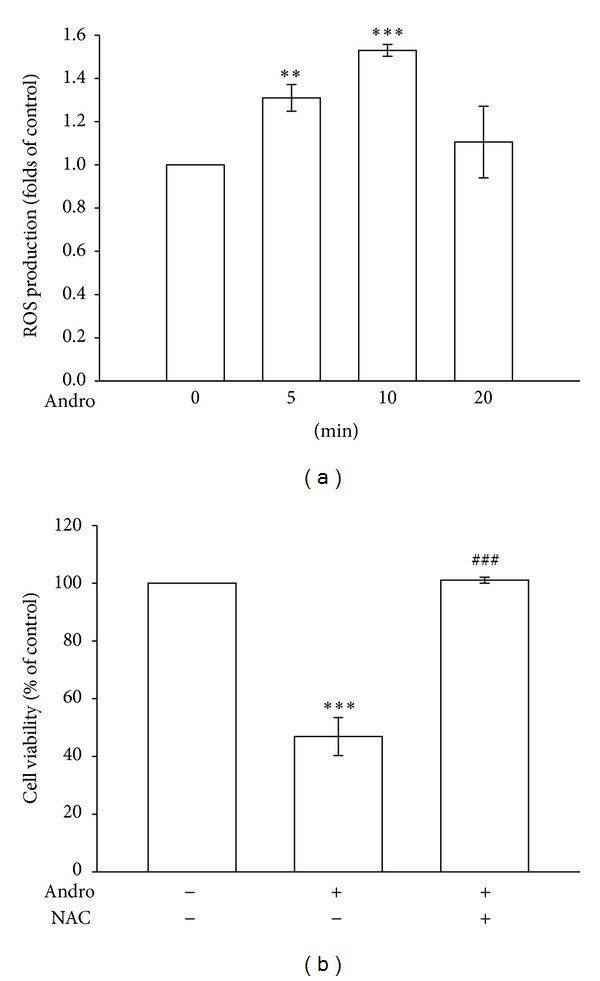
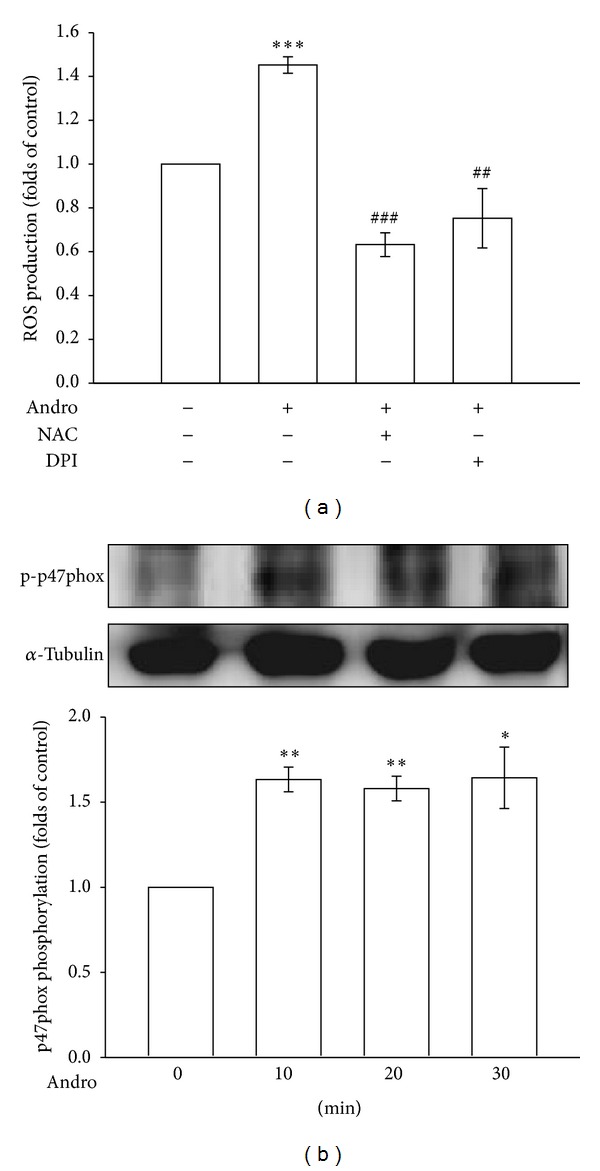
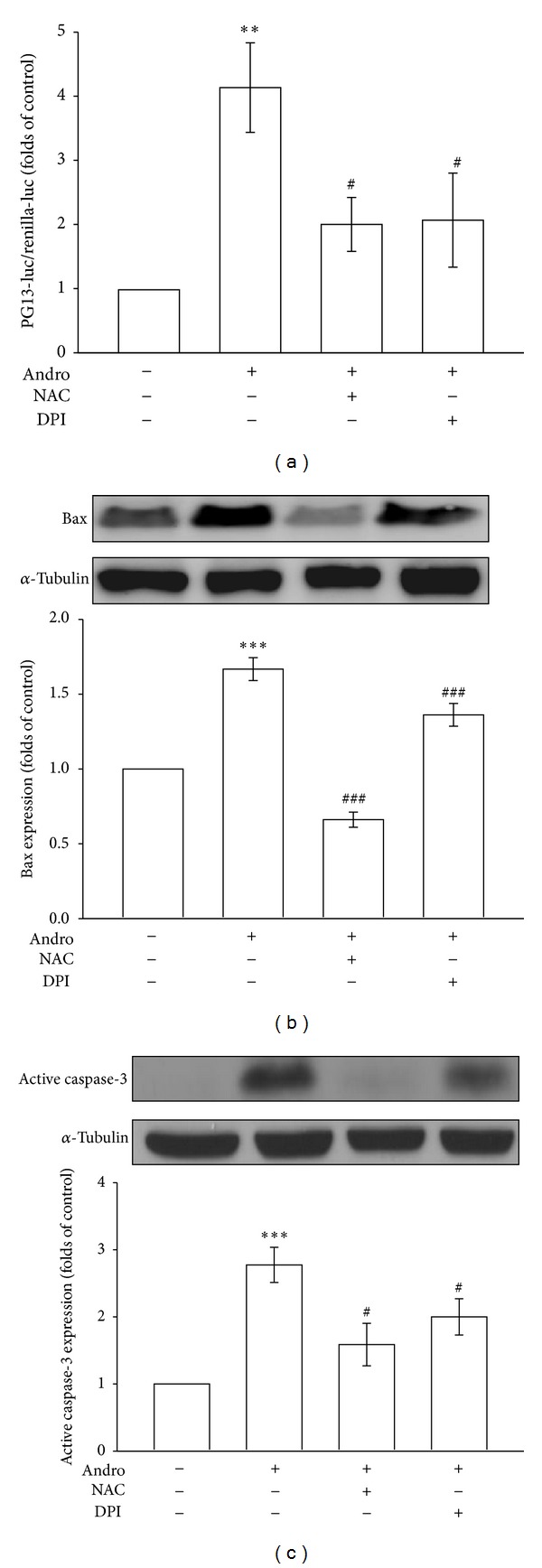
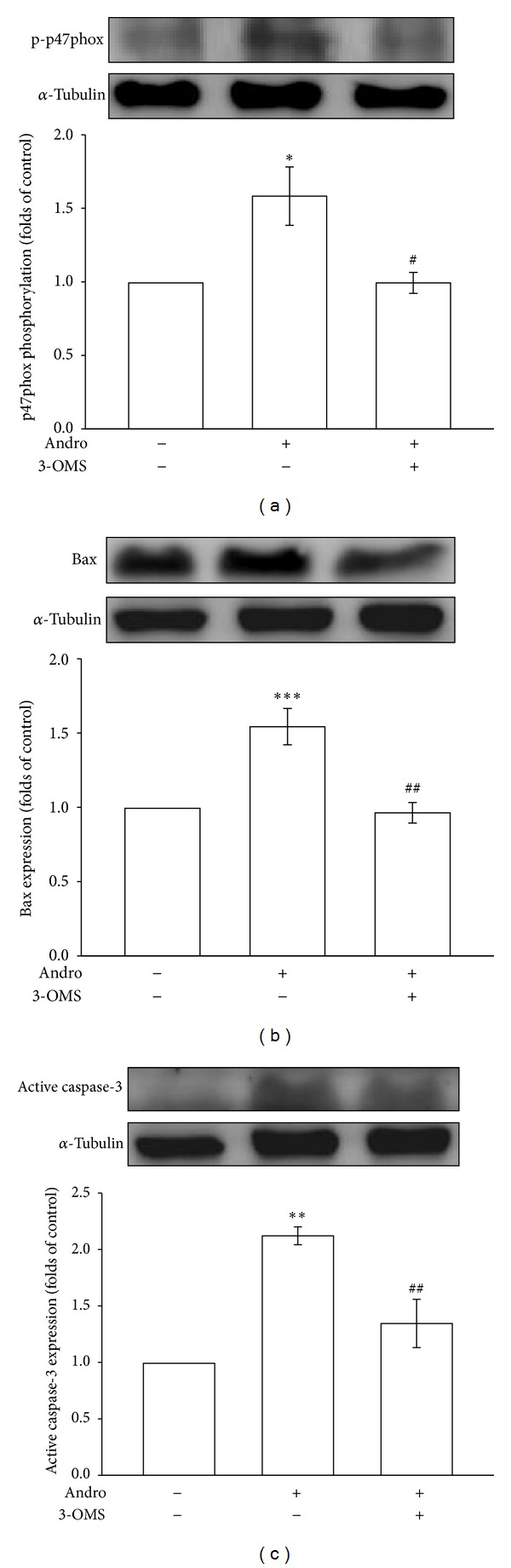
Atherosclerosis is linked with the development of many cardiovascular complications. Abnormal proliferation of vascular smooth muscle cells (VSMCs) plays a crucial role in the development of atherosclerosis. Accordingly, the apoptosis of VSMCs, which occurs in the progression of vascular proliferation, may provide a beneficial strategy for managing cardiovascular diseases. Andrographolide, a novel nuclear factor- κ B inhibitor, is the most active and critical constituent isolated from the leaves of Andrographis paniculata. Recent studies have indicated that andrographolide is a potential therapeutic agent for treating cancer through the induction of apoptosis. In this study, the apoptosis-inducing activity and mechanisms in andrographolide-treated rat VSMCs were characterized. Andrographolide significantly induced reactive oxygen species (ROS) formation, p53 activation, Bax, and active caspase-3 expression, and these phenomena were suppressed by pretreating the cells with N-acetyl-L-cysteine, a ROS scavenger, or diphenylene iodonium, a nicotinamide adenine dinucleotide phosphate (NADPH) oxidase (Nox) inhibitor. Furthermore, p47phox, a Nox subunit protein, was phosphorylated in andrographolide-treated rat VSMCs. However, pretreatment with 3-O-methyl-sphingomyelin, a neutral sphingomyelinase inhibitor, significantly inhibited andrographolide-induced p47phox phosphorylation as well as Bax and active caspase-3 expression. Our results collectively demonstrate that andrographolide-reduced cell viability can be attributed to apoptosis in VSMCs, and this apoptosis-inducing activity was associated with the ceramide-p47phox-ROS signaling cascade.
动脉粥样硬化与许多心血管并发症的发展有关。血管平滑肌细胞(VSMCs)的异常增殖在动脉粥样硬化的发展中起着关键作用。因此,VSMCs 的凋亡发生在血管增殖的进展中,可能为治疗心血管疾病提供有益的策略。穿心莲内酯是一种新型核因子-κB 抑制剂,是从穿心莲叶片中分离得到的最活跃和最重要的成分。最近的研究表明,穿心莲内酯通过诱导细胞凋亡,是治疗癌症的一种潜在治疗剂。在本研究中,我们对穿心莲内酯处理的大鼠 VSMCs 的凋亡诱导活性和机制进行了研究。穿心莲内酯显著诱导活性氧(ROS)的形成,p53 的激活,Bax 和活性 caspase-3 的表达,这些现象可以通过用 N-乙酰-L-半胱氨酸(一种 ROS 清除剂)或二苯基碘(一种烟酰胺腺嘌呤二核苷酸磷酸(NADPH)氧化酶(Nox)抑制剂)预处理细胞来抑制。此外,穿心莲内酯处理的大鼠 VSMCs 中 p47phox 的磷酸化。然而,用 3-O-甲基神经酰胺(一种中性鞘磷脂酶抑制剂)预处理可显著抑制穿心莲内酯诱导的 p47phox 磷酸化以及 Bax 和活性 caspase-3 的表达。我们的研究结果表明,穿心莲内酯降低细胞活力可归因于 VSMCs 的凋亡,这种凋亡诱导活性与神经酰胺-p47phox-ROS 信号级联有关。