The Adams Super Center for Brain Studies, The Lily and Avraham Gildor Chair for the Investigation of Growth Factors, The Elton Laboratory for Neuroendocrinology, Department of Human Molecular Genetics and Biochemistry, Sackler Faculty of Medicine and Sagol School of Neuroscience, Tel Aviv University, Tel Aviv, Israel.
Center for Translational Research in Neurodegenerative Disease, University of Florida College of Medicine, Gainesville, Florida, United States of America.
PLoS One. 2014 Jan 29;9(1):e87383. doi: 10.1371/journal.pone.0087383. eCollection 2014.
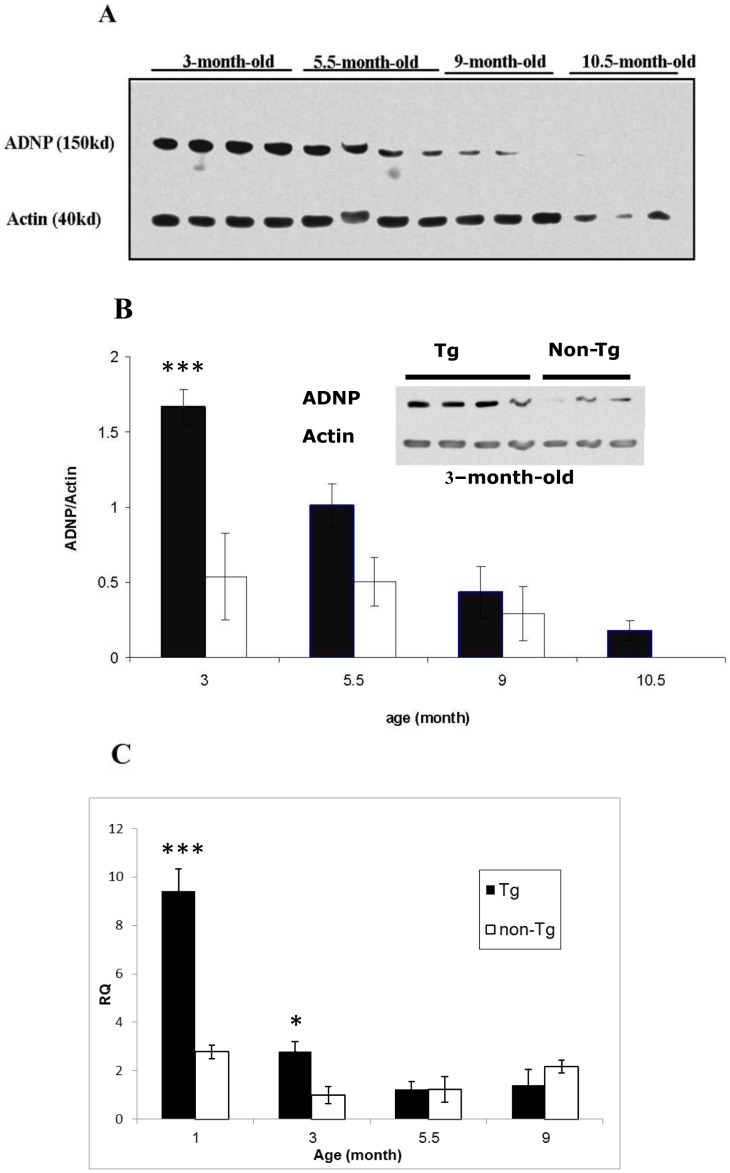
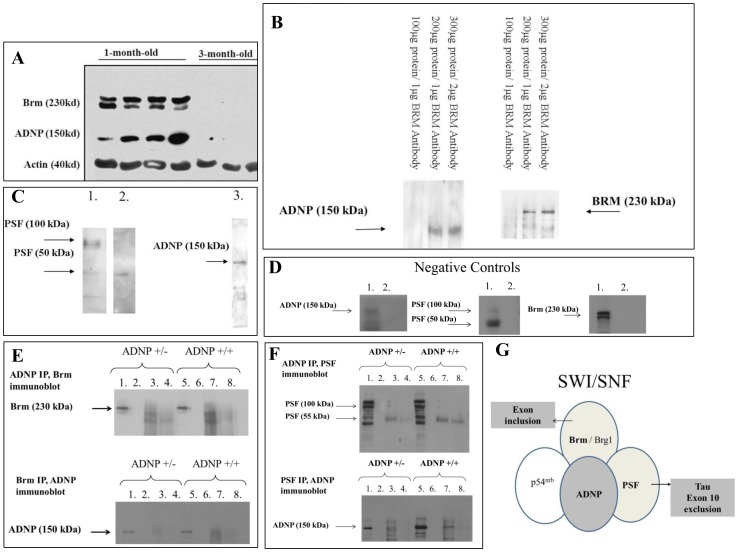
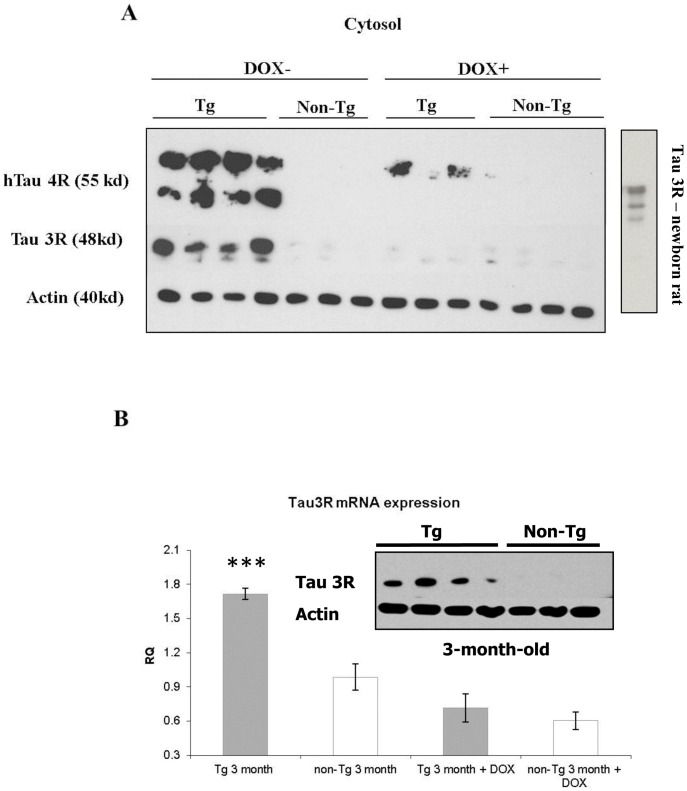
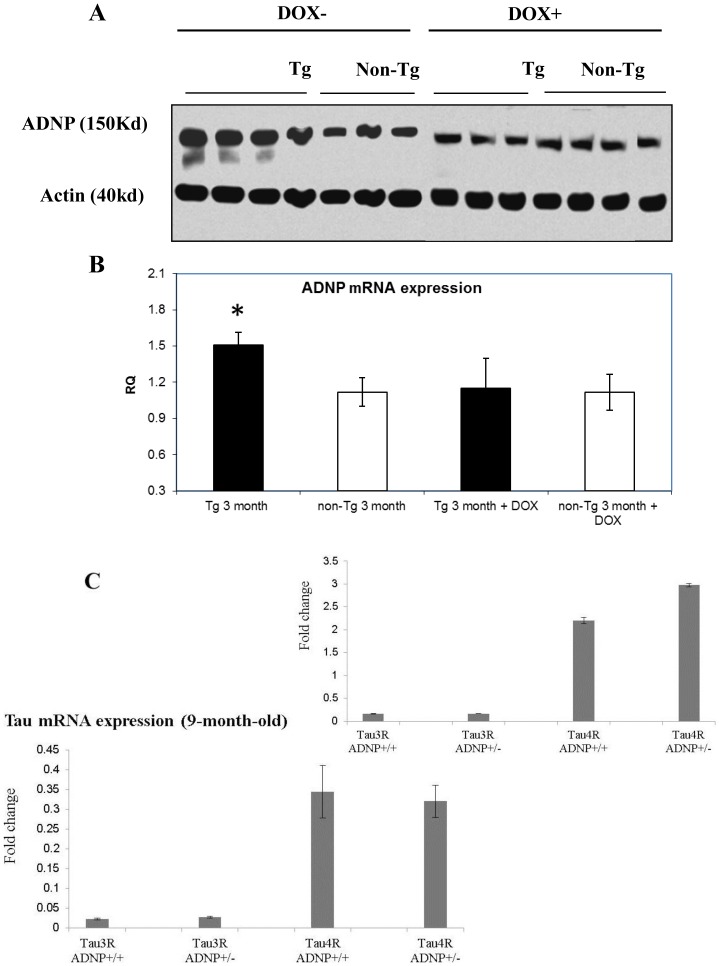
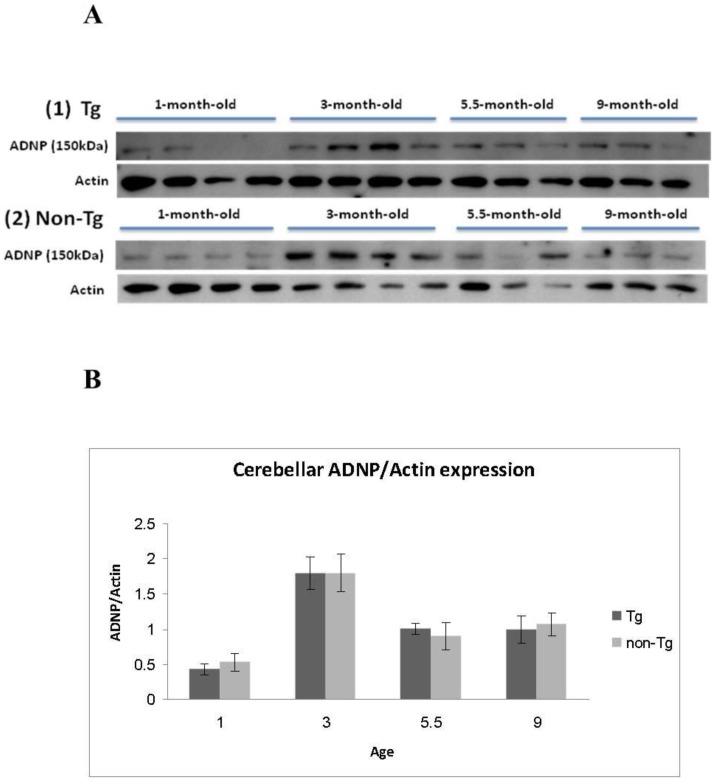
Tauopathy, a major pathology in Alzheimer's disease, is also found in 50% of frontotemporal dementias (FTDs). Tau transcript, a product of a single gene, undergoes alternative splicing to yield 6 protein species, each with either 3 or 4 microtubule binding repeat domains (tau 3R or 4R, associated with dynamic and stable microtubules, respectively). While the healthy human brain shows a 1/1 ratio of tau 3R/4R, this ratio may be dramatically changed in the FTD brain. We have previously discovered that activity-dependent neuroprotective protein (ADNP) is essential for brain formation in the mouse, with ADNP+/- mice exhibiting tauopathy, age-driven neurodegeneration and behavioral deficits. Here, in transgenic mice overexpressing a mutated tau 4R species, in the cerebral cortex but not in the cerebellum, we showed significantly increased ADNP expression (3-fold transcripts) in the cerebral cortex of young transgenic mice (~disease onset), but not in the cerebellum, as compared to control littermates. The transgene-age-related increased ADNP expression paralleled augmented dynamic tau 3R transcript level compared to control littermates. Blocking mutated tau 4R transgene expression resulted in normalization of ADNP and tau 3R expression. ADNP was previously shown to be a member of the SWItch/Sucrose NonFermentable (SWI/SNF) chromatin remodeling complex. Here, Brahma (Brm), a component of the SWI/SNF complex regulating alternative splicing, showed a similar developmental expression pattern to ADNP. Immunoprecipitations further suggested Brm-ADNP interaction coupled to ADNP - polypyrimidine tract-binding protein (PTB)-associated splicing factor (PSF)-binding, with PSF being a direct regulator of tau transcript splicing. It should be noted that although we have shown a correlation between levels of ADNP and tau isoform expression three months of age, we are not presenting evidence of a direct link between the two. Future research into ADNP/tau relations is warranted.
tau 病,阿尔茨海默病的主要病理学特征,也存在于约 50%的额颞叶痴呆症(FTD)中。tau 转录本,一种单一基因的产物,经过选择性剪接产生 6 种蛋白,每种蛋白都有 3 个或 4 个微管结合重复结构域(tau 3R 或 4R,分别与动态和稳定的微管相关)。虽然健康人的大脑显示 tau 3R/4R 的比例为 1/1,但在 FTD 大脑中,这种比例可能会发生显著变化。我们之前发现,活性依赖性神经保护蛋白(ADNP)对小鼠大脑的形成至关重要,ADNP+/- 小鼠表现出 tau 病、年龄驱动的神经退行性变和行为缺陷。在这里,我们在过表达突变型 tau 4R 种的转基因小鼠中,仅在大脑皮层而不在小脑,显示年轻转基因小鼠(发病前)大脑皮层中 ADNP 表达显著增加(3 倍转录物),但小脑没有,与对照同窝仔鼠相比。转基因与年龄相关的 ADNP 表达增加与与对照同窝仔鼠相比,动态 tau 3R 转录物水平增加相一致。阻断突变型 tau 4R 转基因的表达导致 ADNP 和 tau 3R 表达的正常化。ADNP 先前被证明是 SWItch/Sucrose NonFermentable(SWI/SNF)染色质重塑复合物的成员。在这里,Brahma(Brm),调节选择性剪接的 SWI/SNF 复合物的一个组成部分,表现出与 ADNP 相似的发育表达模式。免疫沉淀进一步表明,Brm-ADNP 相互作用与 ADNP-多嘧啶 tract 结合蛋白(PTB)相关剪接因子(PSF)结合相关,PSF 是 tau 转录本剪接的直接调节剂。应该注意的是,尽管我们在 3 个月大时显示了 ADNP 和 tau 同工型表达水平之间的相关性,但我们没有提供两者之间直接联系的证据。未来对 ADNP/tau 关系的研究是值得的。