Department of Engineering, University of Cambridge.
Department of Psychology, University of Oregon.
Psychol Rev. 2014 Jan;121(1):124-49. doi: 10.1037/a0035234.
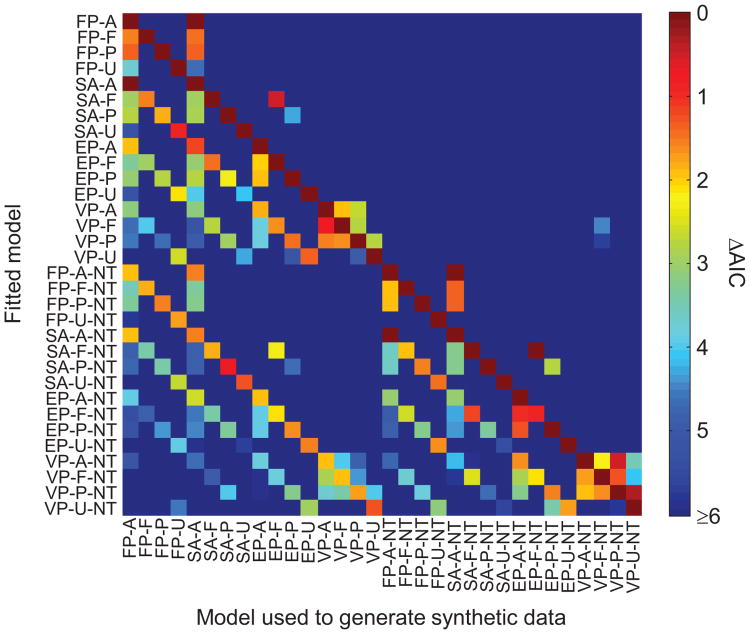
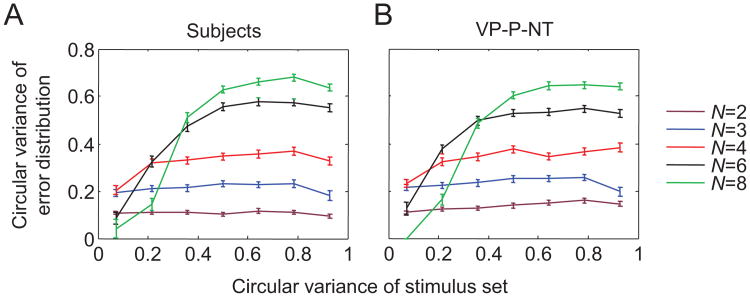
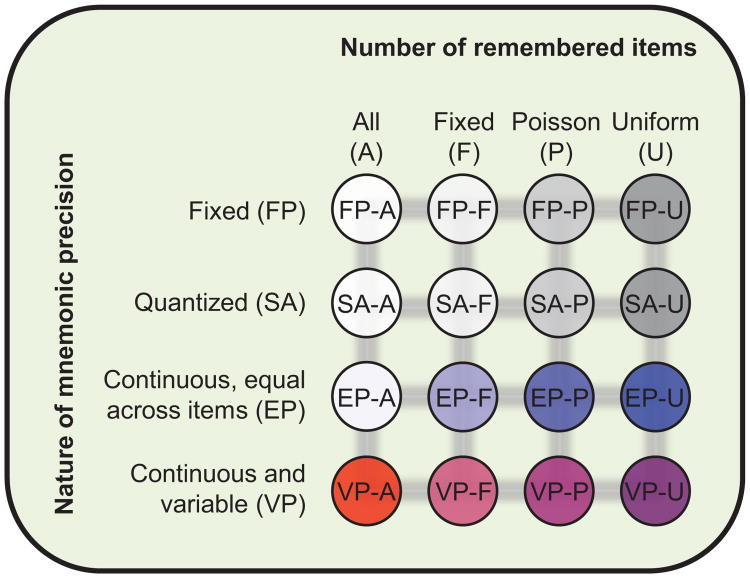
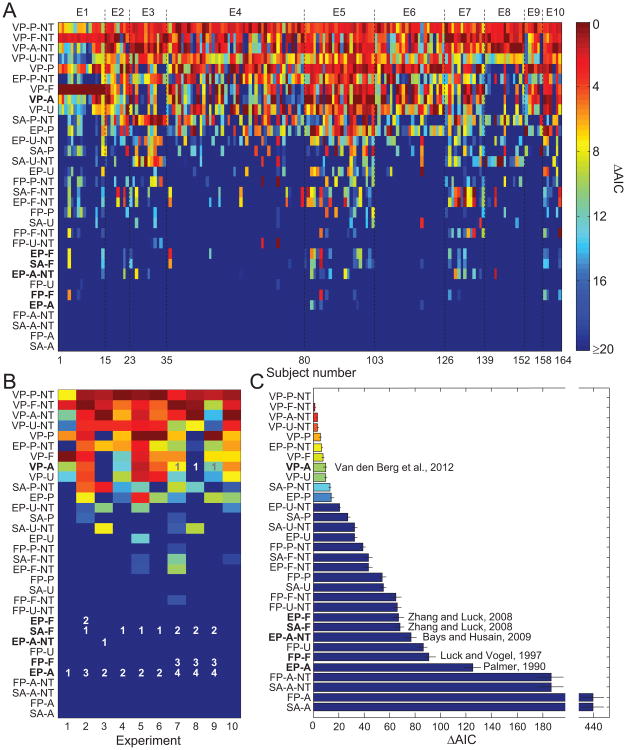
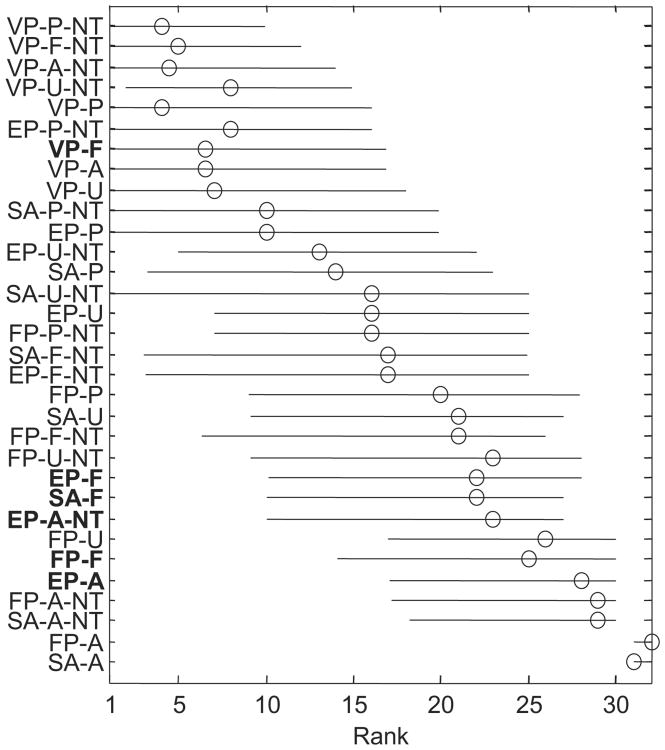
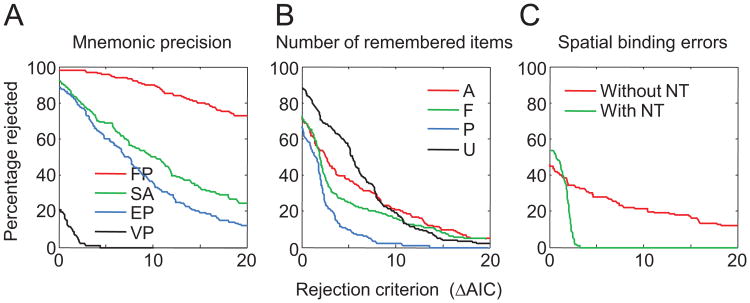
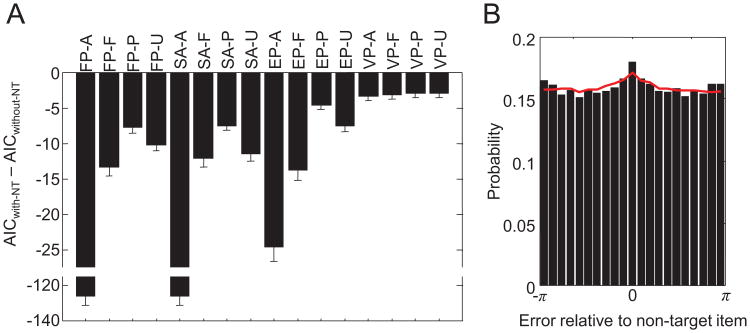
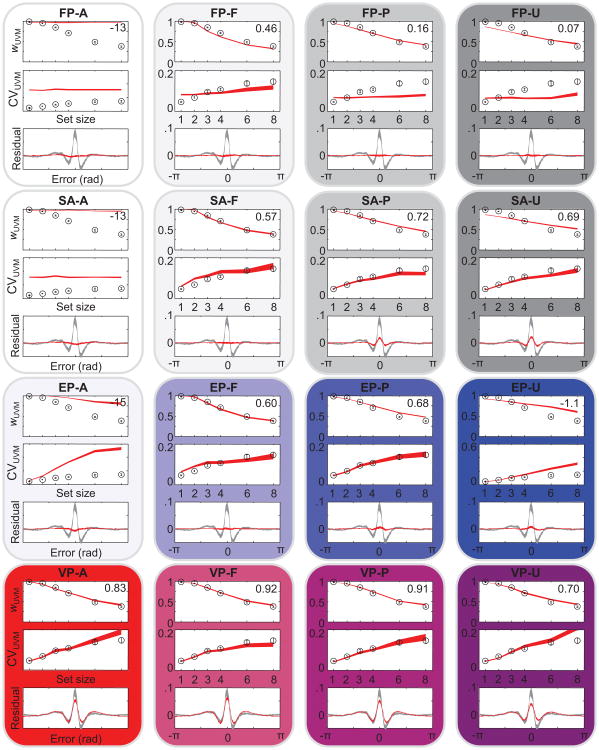
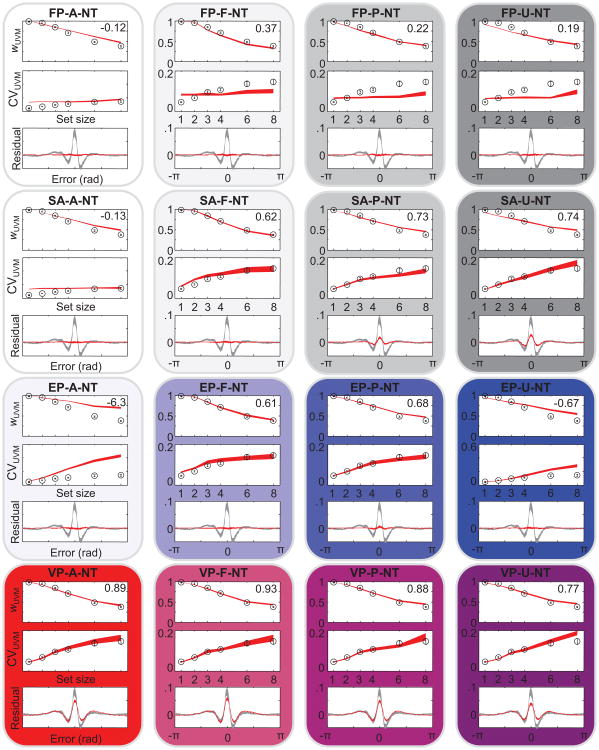
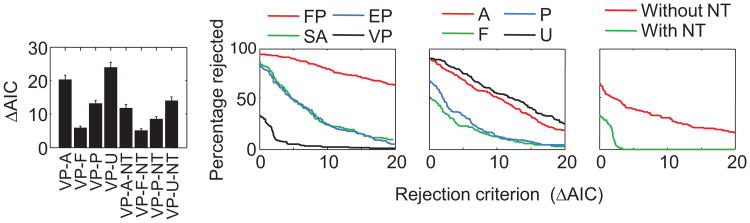
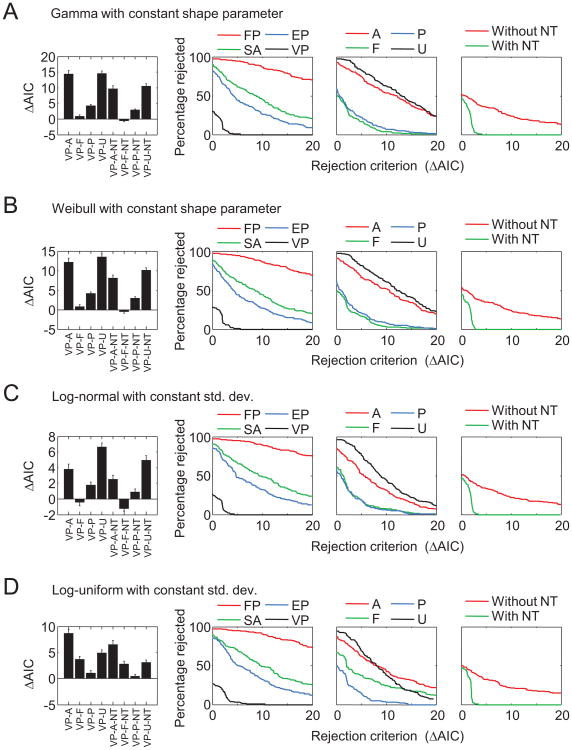
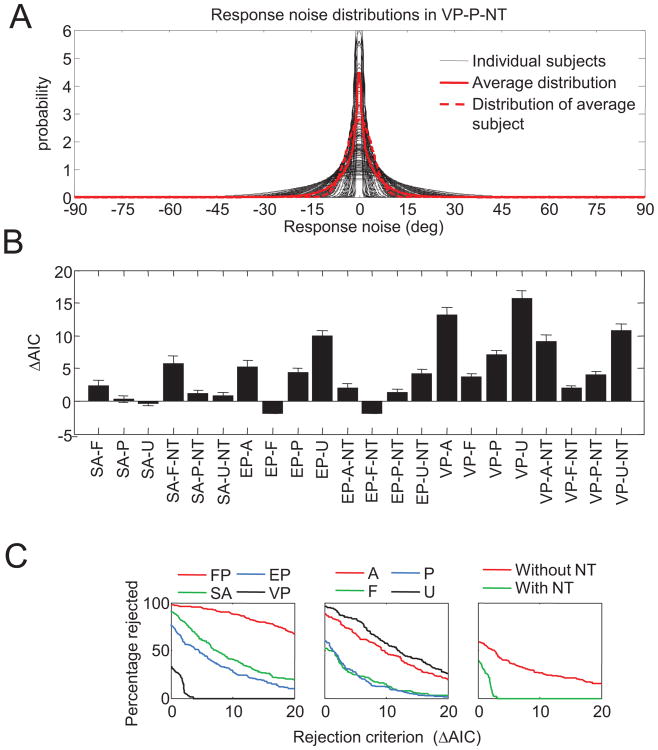
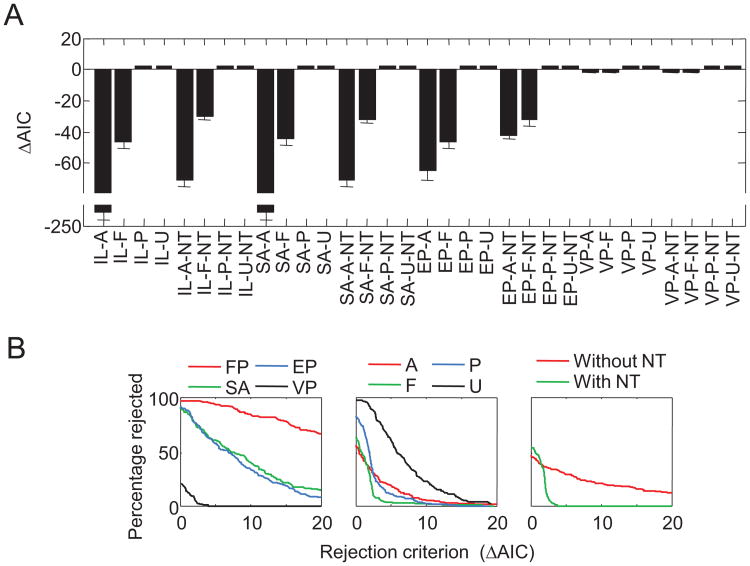
Three questions have been prominent in the study of visual working memory limitations: (a) What is the nature of mnemonic precision (e.g., quantized or continuous)? (b) How many items are remembered? (c) To what extent do spatial binding errors account for working memory failures? Modeling studies have typically focused on comparing possible answers to a single one of these questions, even though the result of such a comparison might depend on the assumed answers to both others. Here, we consider every possible combination of previously proposed answers to the individual questions. Each model is then a point in a 3-factor model space containing a total of 32 models, of which only 6 have been tested previously. We compare all models on data from 10 delayed-estimation experiments from 6 laboratories (for a total of 164 subjects and 131,452 trials). Consistently across experiments, we find that (a) mnemonic precision is not quantized but continuous and not equal but variable across items and trials; (b) the number of remembered items is likely to be variable across trials, with a mean of 6.4 in the best model (median across subjects); (c) spatial binding errors occur but explain only a small fraction of responses (16.5% at set size 8 in the best model). We find strong evidence against all 6 documented models. Our results demonstrate the value of factorial model comparison in working memory.
(a) 记忆精度的本质是什么(例如,量化还是连续)?(b) 能记住多少个项目?(c) 空间绑定错误在多大程度上导致了工作记忆失败?建模研究通常侧重于比较对这些问题中的一个问题的可能答案,即使这种比较的结果可能取决于对其他两个问题的假设答案。在这里,我们考虑了对各个问题的先前提出的答案的每种可能组合。然后,每个模型都是包含总共 32 个模型的 3 因素模型空间中的一个点,其中只有 6 个以前已经过测试。我们在来自 6 个实验室的 10 个延迟估计实验的数据上比较所有模型(共 164 个主体和 131452 次试验)。跨实验一致地,我们发现:(a) 记忆精度不是量化的,而是连续的,并且不是均等的,而是跨项目和试验变化的;(b) 记住的项目数量可能在试验中变化,在最佳模型中平均值为 6.4(跨主体中位数);(c) 空间绑定错误确实发生,但仅解释了很小一部分响应(在最佳模型中,在集合大小为 8 时为 16.5%)。我们发现有强有力的证据反对所有 6 个有记录的模型。我们的结果证明了在工作记忆中进行因子模型比较的价值。