Ribalet François, Bastianini Mauro, Vidoudez Charles, Acri Francesco, Berges John, Ianora Adrianna, Miralto Antonio, Pohnert Georg, Romano Giovanna, Wichard Thomas, Casotti Raffaella
Stazione Zoologica Anton Dohrn di Napoli, Napoli, Italy.
ISMAR CNR Istituto Scienze Marine, Venezia, Italy.
PLoS One. 2014 Jan 31;9(1):e85947. doi: 10.1371/journal.pone.0085947. eCollection 2014.
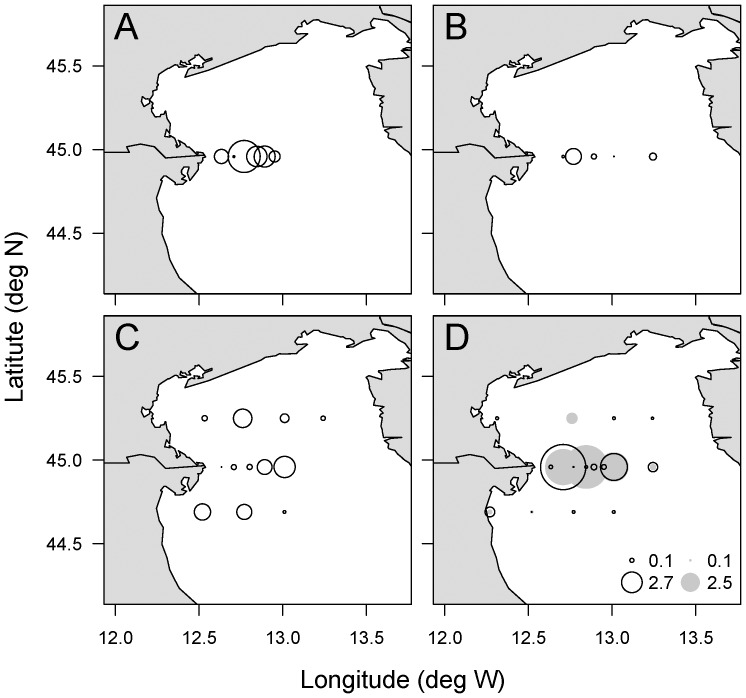
Diatoms are able to react to biotic and abiotic stress, such as competition, predation and unfavorable growth conditions, by producing bioactive compounds including polyunsaturated aldehydes (PUAs). PUAs have been shown to act against grazers and either enhance or inhibit the growth of different phytoplankton and bacteria both in culture and in the field. Presence of nanomolar concentrations of dissolved PUAs in seawater has been reported in the North Adriatic Sea (Mediterranean), suggesting that these compounds are released in seawater following diatom cell lysis. However, the origin of the PUAs and their effects on natural phytoplankton assemblages remain unclear. Here we present data from four oceanographic cruises that took place during diatom blooms in the northern Adriatic Sea where concentrations of particulate and dissolved PUAs were monitored along with phytoplankton cell lysis. Cell lysis was positively correlated with both concentrations of particulate and dissolved PUAs (R = 0.69 and R = 0.77, respectively), supporting the hypothesis that these compounds are released by cell lysis. However, the highest concentration of dissolved PUAs (2.53 nM) was measured when cell lysis was high (0.24 d(-1)) but no known PUA-producing diatoms were detected, suggesting either that other organisms can produce PUAs or that PUA-producing enzymes retain activity extracellularly after diatom cells have lysed. Although in situ concentrations of dissolved PUAs were one to three orders of magnitude lower than those typically used in laboratory culture experiments, we argue that concentrations produced in the field could induce similar effects to those observed in culture and therefore may help shape plankton community composition and function in the oceans.
硅藻能够通过产生包括多不饱和醛(PUA)在内的生物活性化合物,对生物和非生物胁迫作出反应,如竞争、捕食和不利的生长条件。PUA已被证明对食草动物有作用,并且在培养和野外环境中,对不同浮游植物和细菌的生长既有促进作用,也有抑制作用。据报道,在亚得里亚海北部(地中海)的海水中存在纳摩尔浓度的溶解态PUA,这表明这些化合物是在硅藻细胞裂解后释放到海水中的。然而,PUA的来源及其对天然浮游植物群落的影响仍不清楚。在这里,我们展示了在亚得里亚海北部硅藻大量繁殖期间进行的四次海洋学巡航的数据,在巡航过程中,对颗粒态和溶解态PUA的浓度以及浮游植物细胞裂解情况进行了监测。细胞裂解与颗粒态和溶解态PUA的浓度均呈正相关(相关系数R分别为0.69和0.77),这支持了这些化合物是通过细胞裂解释放的这一假设。然而,当细胞裂解率较高(0.24 d⁻¹)时,测得的溶解态PUA最高浓度为2.53 nM,但未检测到已知能产生PUA的硅藻,这表明要么其他生物可以产生PUA,要么在硅藻细胞裂解后,产生PUA的酶仍能在细胞外保持活性。尽管现场溶解态PUA的浓度比实验室培养实验中通常使用的浓度低一到三个数量级,但我们认为在野外产生的浓度可能会诱导出与培养实验中观察到的类似效应,因此可能有助于塑造海洋中浮游生物群落的组成和功能。