Department of Molecular Biosciences, University of Texas at Austin, Austin, TX, USA.
Sci Rep. 2020 Feb 6;10(1):2029. doi: 10.1038/s41598-020-58885-9.
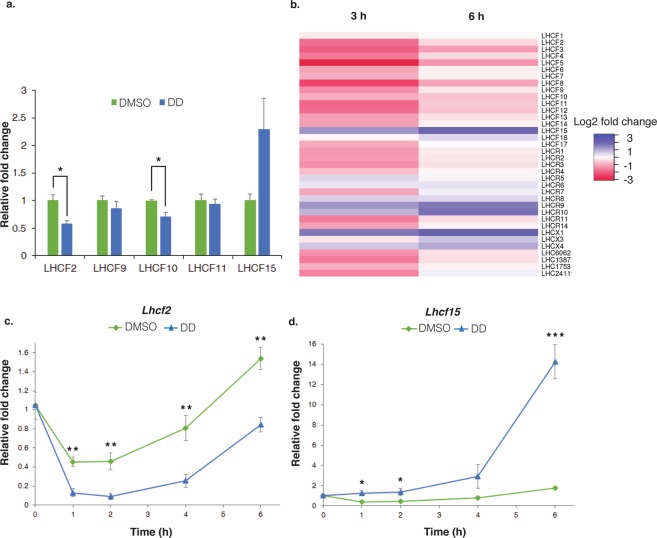
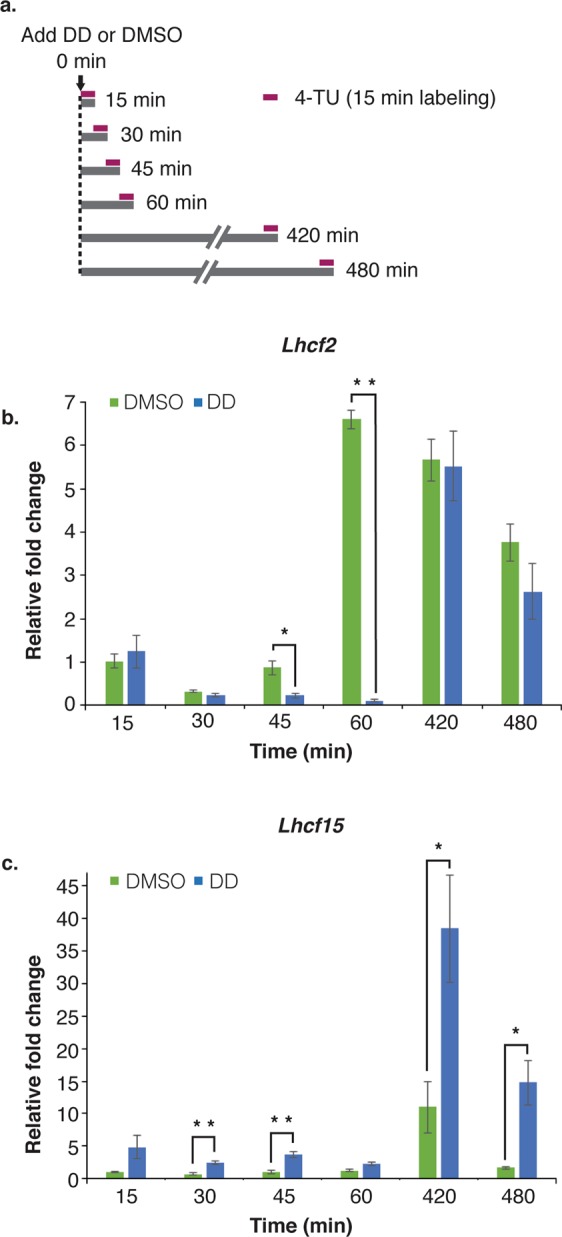
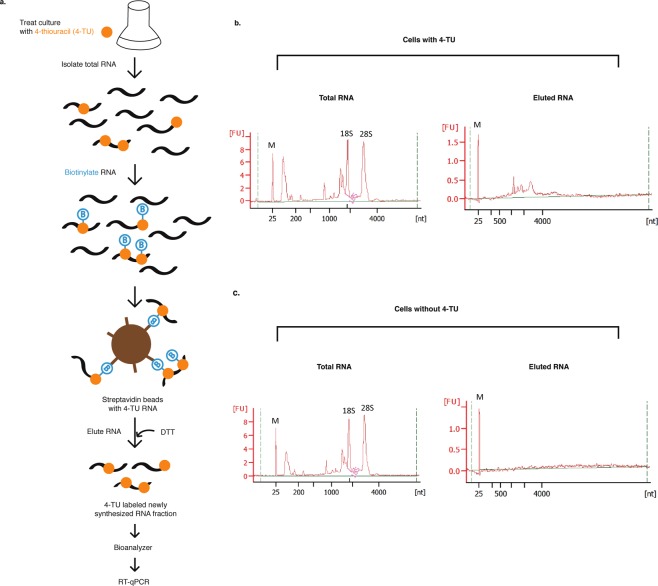
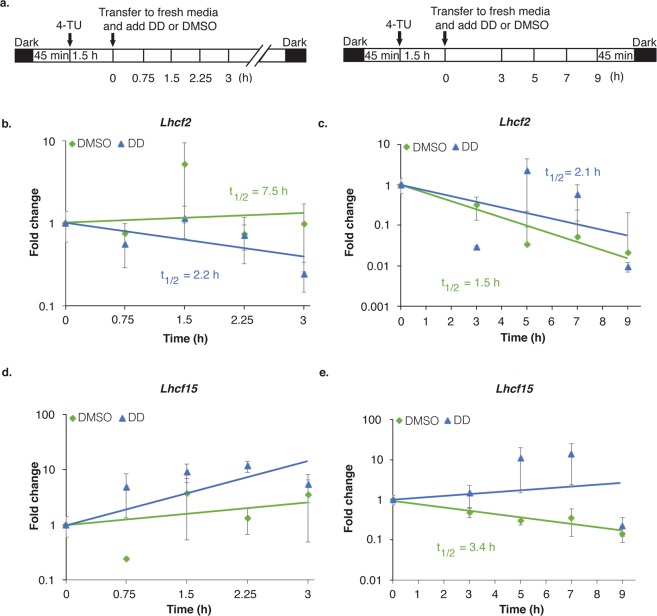
Abiotic and biotic stresses widely reduce light harvesting complex (LHC) gene expression in higher plants and algae. However, control mechanisms and functions of these changes are not well understood. During herbivory, marine diatom species release oxylipins that impair grazer reproduction and serve as signaling molecules to nearby undamaged diatoms. To examine LHC mRNA regulation by oxylipin exposure, the diatom Phaeodactylum tricornutum was treated with a sublethal concentration of trans,trans-2,4-decadienal (DD) during the light cycle. Transcriptome analyses revealed extensive suppression of LHC mRNAs and a smaller set of up-regulated LHC mRNAs at 3 h. For two divergently regulated LHCF antennae family mRNAs, in vivo 4-thiouracil metabolic labeling was used to distinguish synthesis and degradation rates. Within 3 h of DD exposure, Lhcf2 mRNA levels and transcription were strongly suppressed and its mRNA half-life decreased. In contrast, Lhcf15 mRNA mainly accumulated between 3-9 h, its transcription increased and its mRNA was highly stabilized. Hence, DD-treated cells utilized transcriptional and mRNA stability control mechanisms which were likely major factors in the differing Lhcf2 and Lhcf15 expression patterns. Widespread LHC mRNA regulation and possible effects on photosynthesis may contribute to enhanced fitness in cells impacted by herbivory and other stresses.
非生物和生物胁迫广泛降低高等植物和藻类的光捕获复合体 (LHC) 基因表达。然而,这些变化的控制机制和功能还不是很清楚。在食草动物的侵害过程中,海洋硅藻物种释放出氧化脂类,损害食草动物的繁殖,并作为信号分子传递给附近未受损的硅藻。为了研究氧化脂类暴露对 LHC mRNA 的调控作用,在用亚致死浓度的反式,顺式-2,4-癸二烯醛(DD)处理光周期中的菱形藻 Phaeodactylum tricornutum。转录组分析显示,LHC mRNA 广泛受到抑制,而在 3 小时时有一小部分 LHC mRNA 上调。对于两个差异调节的 LHCF 天线家族 mRNA,使用体内 4-硫代尿嘧啶代谢标记来区分合成和降解速率。在 DD 暴露后的 3 小时内,Lhcf2 mRNA 水平和转录强烈受到抑制,其 mRNA 半衰期降低。相比之下,Lhcf15 mRNA 主要在 3-9 小时之间积累,其转录增加,其 mRNA 高度稳定。因此,DD 处理的细胞利用转录和 mRNA 稳定性控制机制,这可能是 Lhcf2 和 Lhcf15 表达模式不同的主要因素。广泛的 LHC mRNA 调控以及对光合作用的可能影响可能有助于增强受食草动物侵害和其他胁迫影响的细胞的适应性。