Université Grenoble Alpes, Institut de Biologie Structurale, Grenoble, France ; CEA, DSV/IBS, Grenoble, France ; CNRS, IBS, Grenoble, France.
Université Grenoble Alpes, Institut de Biologie Structurale, Grenoble, France ; CEA, DSV/IBS, Grenoble, France ; CNRS, IBS, Grenoble, France ; Institut Universitaire de France, Paris, France.
PLoS One. 2014 Jan 31;9(1):e87394. doi: 10.1371/journal.pone.0087394. eCollection 2014.
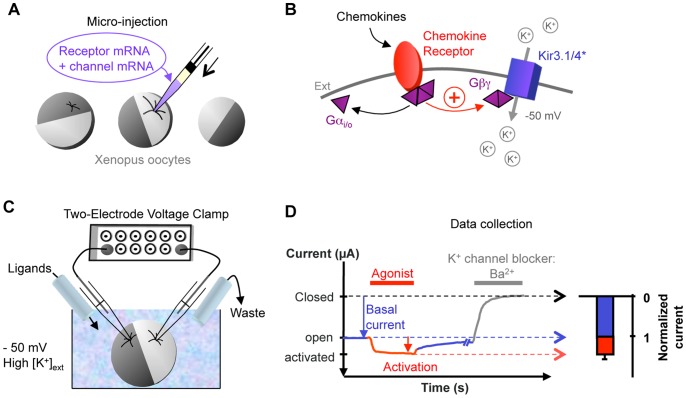
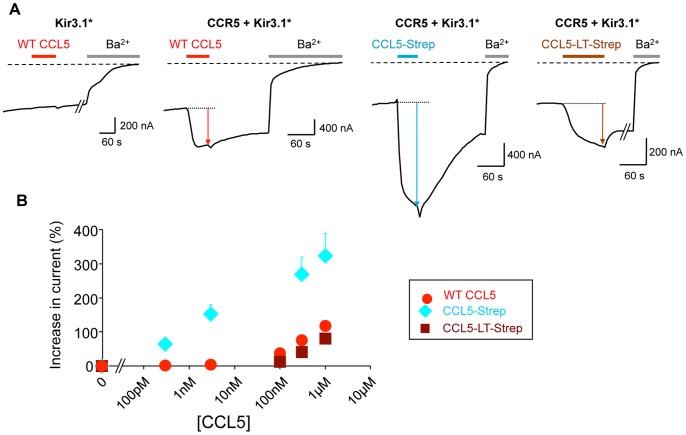
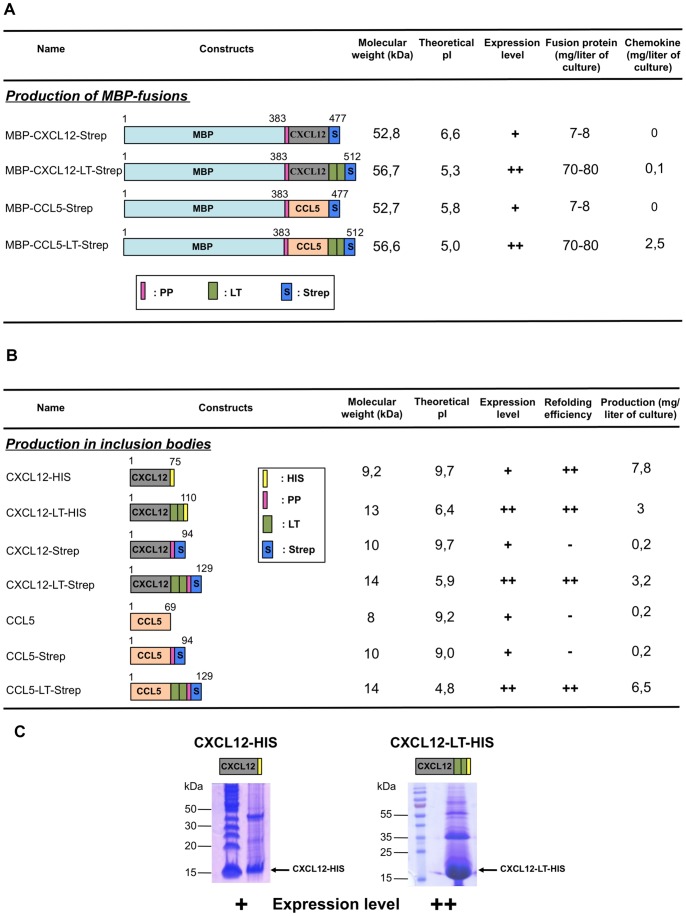
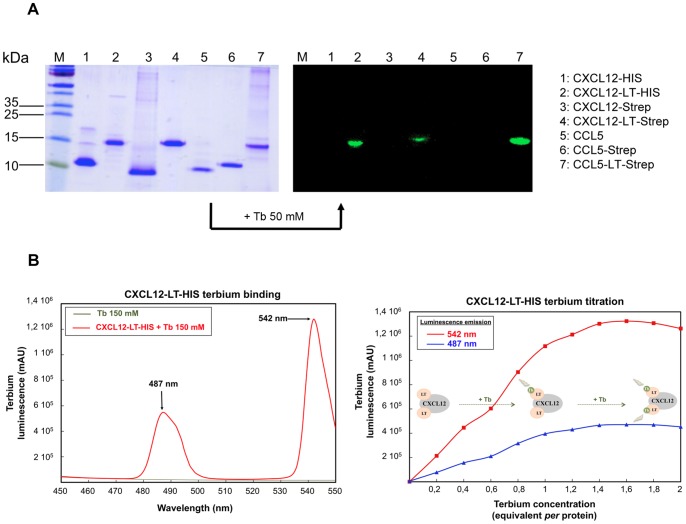
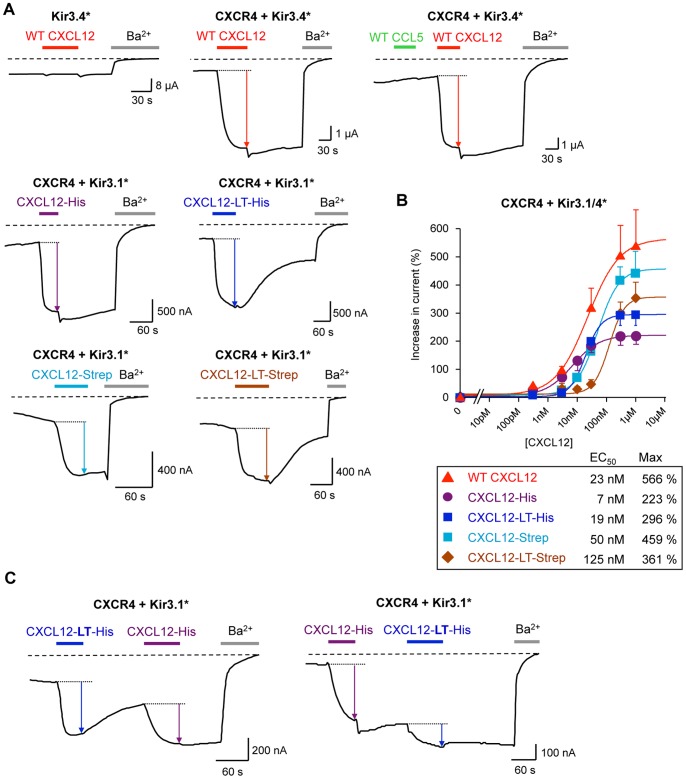
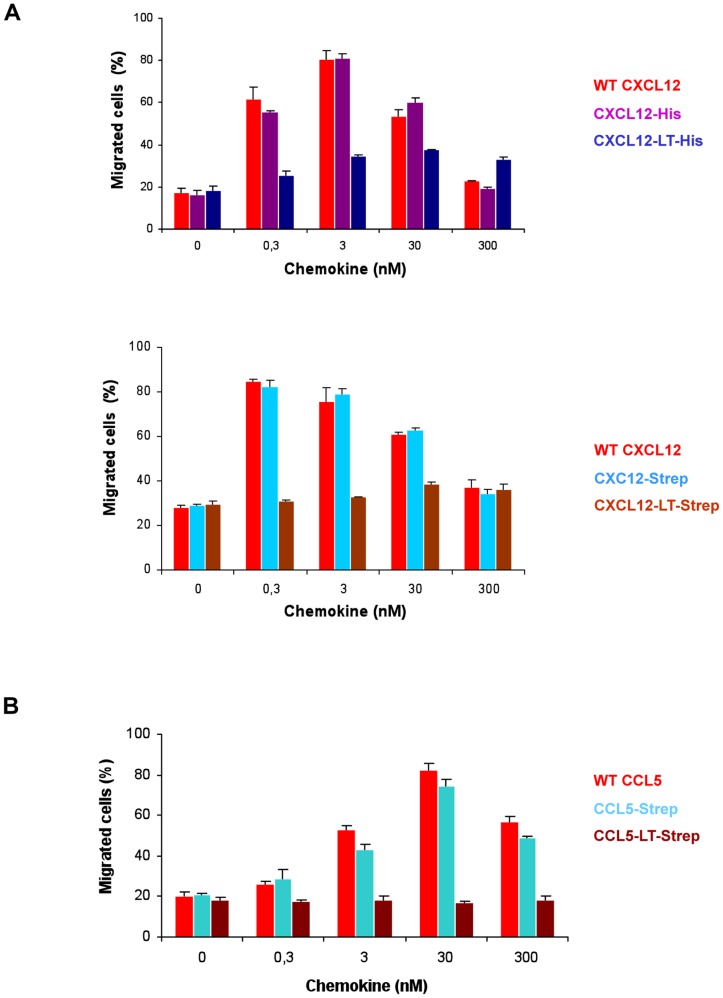
Chemokines are chemotactic cytokines comprised of 70-100 amino acids. The chemokines CXCL12 and CCL5 are the endogenous ligands of the CXCR4 and CCR5 G protein-coupled receptors that are also HIV co-receptors. Biochemical, structural and functional studies of receptors are ligand-consuming and the cost of commercial chemokines hinders their use in such studies. Here, we describe methods for the expression, refolding, purification, and functional characterization of CXCL12 and CCL5 constructs incorporating C-terminal epitope tags. The model tags used were hexahistidines and Strep-Tag for affinity purification, and the double lanthanoid binding tag for fluorescence imaging and crystal structure resolution. The ability of modified and purified chemokines to bind and activate CXCR4 and CCR5 receptors was tested in Xenopus oocytes expressing the receptors, together with a Kir3 G-protein activated K(+) channel that served as a reporter of receptor activation. Results demonstrate that tags greatly influence the biochemical properties of the recombinant chemokines. Besides, despite the absence of any evidence for CXCL12 or CCL5 C-terminus involvement in receptor binding and activation, we demonstrated unpredictable effects of tag insertion on the ligand apparent affinity and efficacy or on the ligand dissociation. These tagged chemokines should constitute useful tools for the selective purification of properly-folded chemokines receptors and the study of their native quaternary structures.
趋化因子是由 70-100 个氨基酸组成的趋化细胞因子。趋化因子 CXCL12 和 CCL5 是 CXCR4 和 CCR5 G 蛋白偶联受体的内源性配体,也是 HIV 的辅助受体。受体的生化、结构和功能研究是消耗配体的,商业趋化因子的成本阻碍了它们在这些研究中的应用。在这里,我们描述了表达、重折叠、纯化和功能表征包含 C 末端表位标签的 CXCL12 和 CCL5 构建体的方法。使用的模型标签是用于亲和纯化的六组氨酸和 Strep-Tag,以及用于荧光成像和晶体结构分辨率的双镧系元素结合标签。修饰和纯化的趋化因子与表达受体的非洲爪蟾卵母细胞结合并激活 CXCR4 和 CCR5 受体的能力,以及作为受体激活报告的 Kir3 G 蛋白激活的 K(+)通道一起进行了测试。结果表明,标签极大地影响了重组趋化因子的生化特性。此外,尽管没有任何证据表明 CXCL12 或 CCL5 C 末端参与受体结合和激活,但我们证明了标签插入对配体表观亲和力和效力或配体解离的不可预测影响。这些标记的趋化因子应该成为选择性纯化适当折叠的趋化因子受体和研究其天然四级结构的有用工具。