Department of Biological Sciences, George Washington University, Washington, DC, United States.
Front Immunol. 2018 Sep 12;9:2058. doi: 10.3389/fimmu.2018.02058. eCollection 2018.
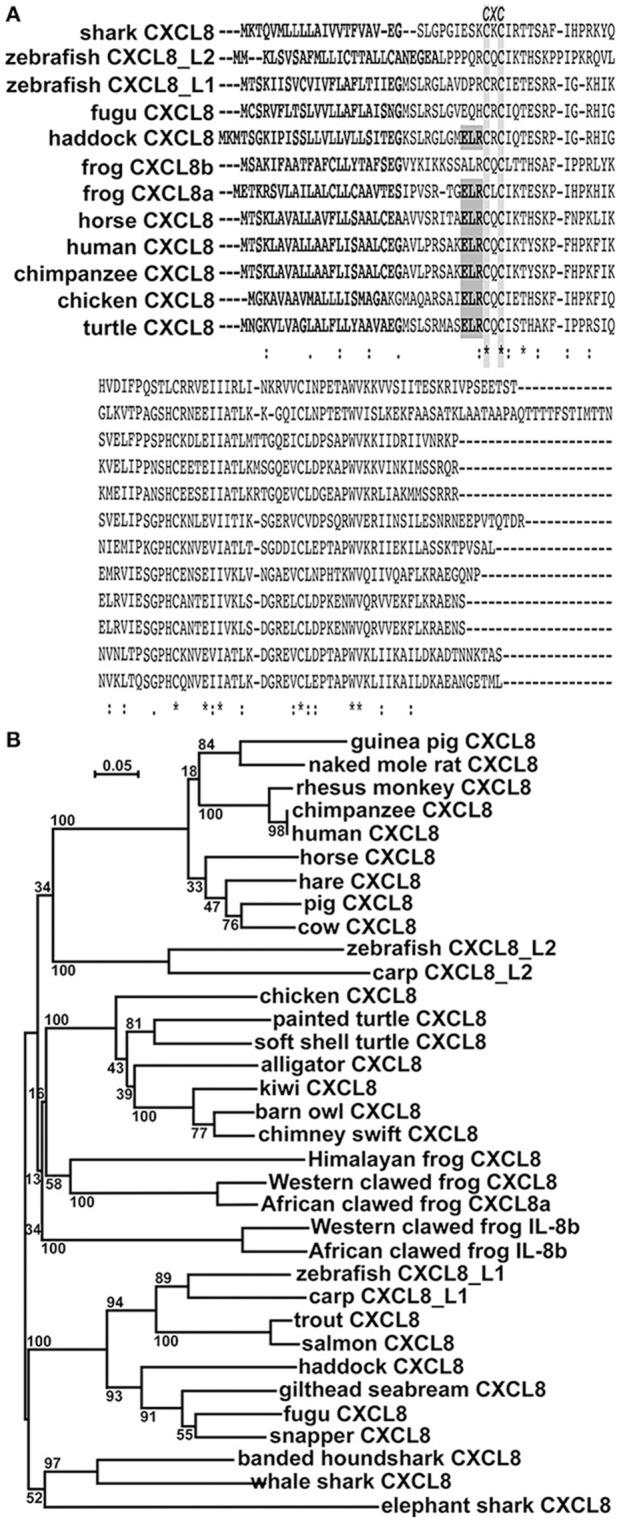
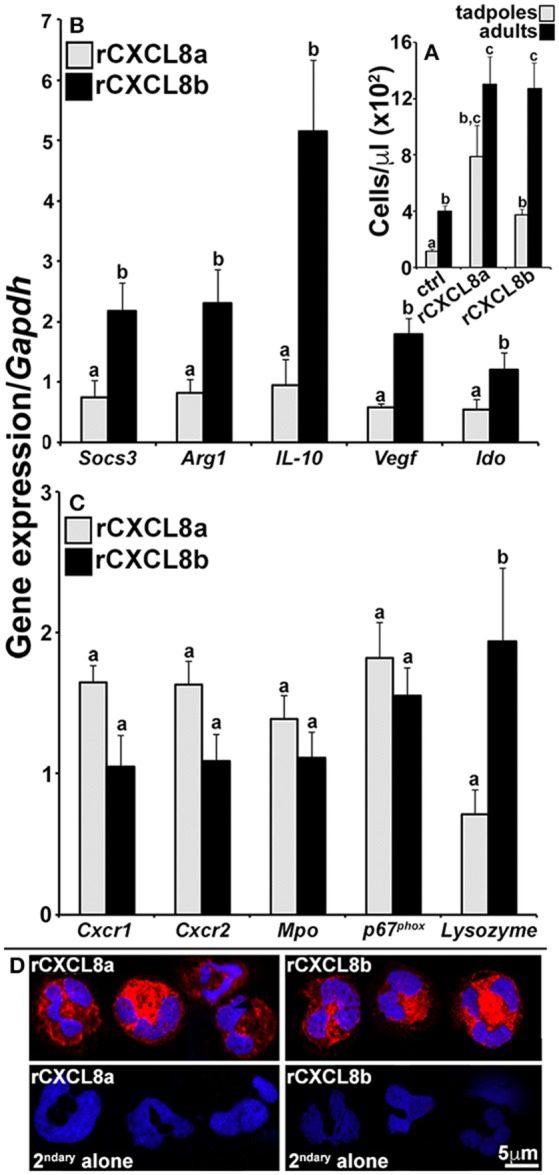
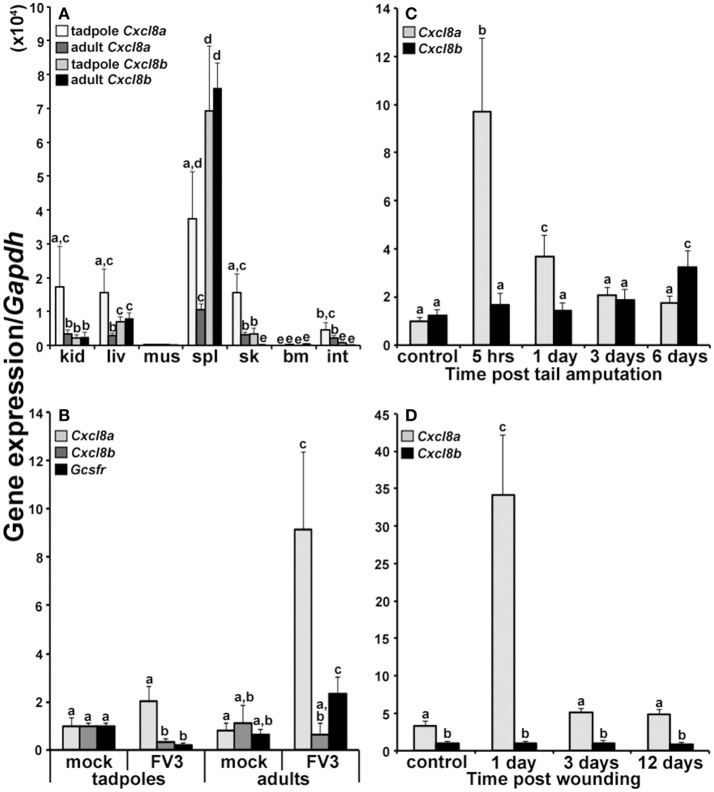
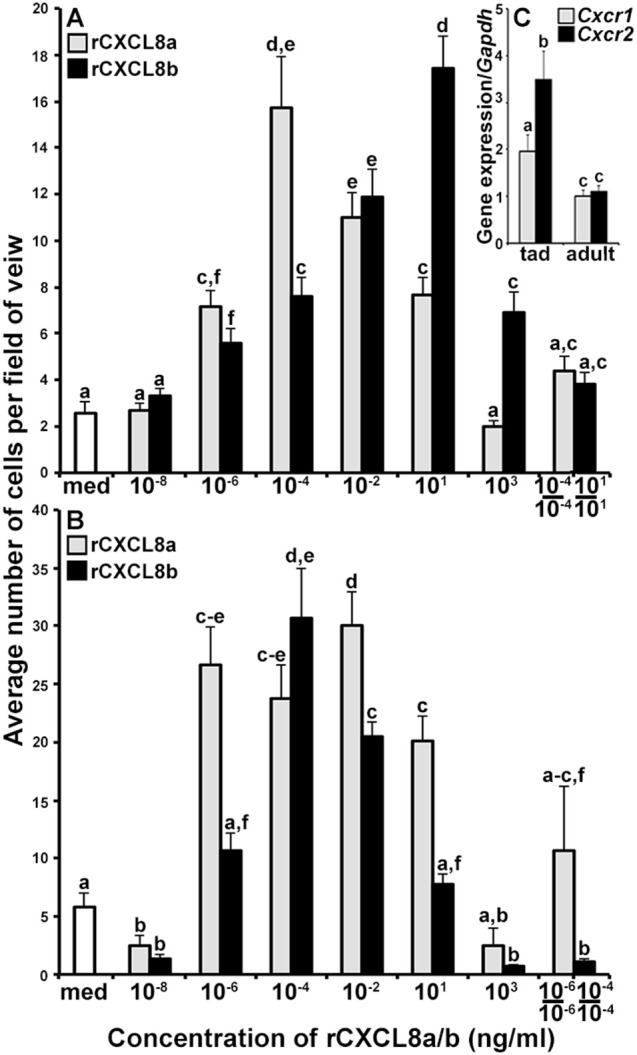
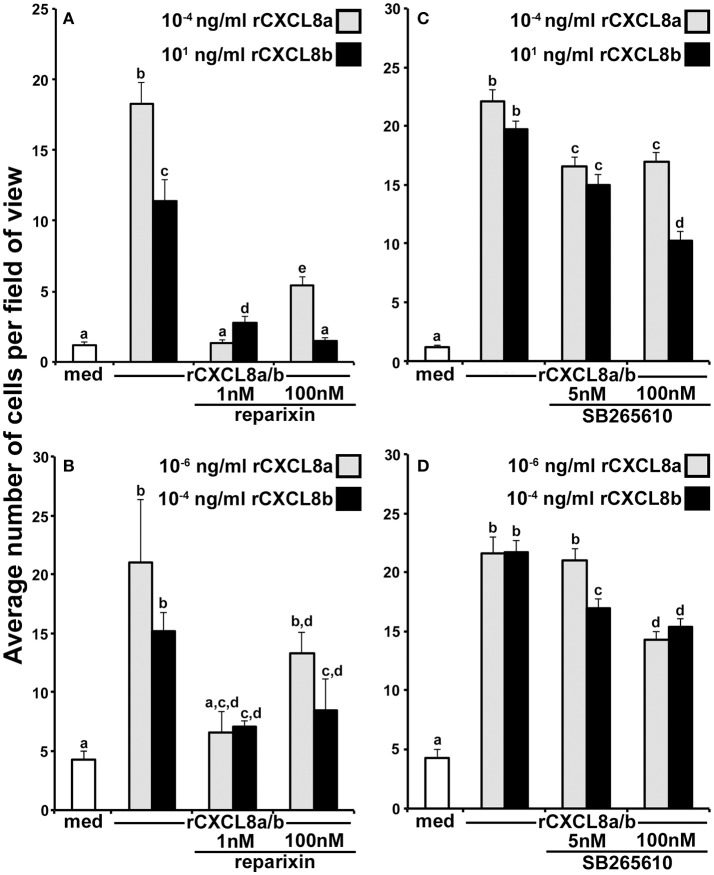
The glutamic acid-leucine-arginine (ELR) motif is a hallmark feature shared by mammalian inflammatory CXC chemokines such the granulocyte chemo-attractant CXCL8 (interleukin-8, IL-8). By contrast, most teleost fish inflammatory chemokines lack this motif. Interestingly, the amphibian encodes multiple isoforms of CXCL8, one of which (CXCL8a) possesses an ELR motif, while another (CXCL8b) does not. These CXCL8 isoforms exhibit distinct expression patterns during frog development and following immune challenge of animals and primary myeloid cultures. To define potential functional differences between these CXCL8 chemokines, we produced them in recombinant form (rCXCL8a and rCXCL8b) and performed dose-response chemotaxis assays. Our results indicate that compared to rCXCL8b, rCXCL8a is a significantly more potent chemo-attractant of -derived tadpole granulocytes and of -differentiated frog bone marrow granulocytes. The mammalian CXCL8 mediates its effects through two distinct chemokine receptors, CXCR1 and CXCR2 and our pharmacological inhibition of these receptors in frog granulocytes indicates that the CXCL8a and CXCL8b both chemoattract tadpole and adult frog granulocytes by engaging CXCR1 and CXCR2. To delineate which frog cells are recruited by CXCL8a and CXCL8b , we injected tadpoles and adult frogs intraperitoneally with rCXCL8a or rCXCL8b and recovered the accumulated cells by lavage. Our transcriptional and cytological analyses of these tadpole and adult frog peritoneal exudates indicate that they are comprised predominantly of granulocytes. Interestingly, the granulocytes recruited into the tadpole, but not adult frog peritonea by rCXCL8b, express significantly greater levels of several pan immunosuppressive genes.
谷氨酸-亮氨酸-精氨酸 (ELR) 基序是哺乳动物炎症性 CXC 趋化因子的一个显著特征,如粒细胞趋化因子 CXCL8(白细胞介素-8,IL-8)。相比之下,大多数硬骨鱼炎症趋化因子缺乏此基序。有趣的是, 编码了多个 CXCL8 同工型,其中一个(CXCL8a)具有 ELR 基序,而另一个(CXCL8b)没有。这些 CXCL8 同工型在青蛙发育过程中和动物及原代髓样细胞受到免疫挑战后表现出不同的表达模式。为了确定这些 CXCL8 趋化因子之间可能存在的功能差异,我们以重组形式产生了它们(rCXCL8a 和 rCXCL8b)并进行了剂量反应趋化性测定。我们的结果表明,与 rCXCL8b 相比,rCXCL8a 是 -衍生的蝌蚪粒细胞和分化的青蛙骨髓粒细胞的更有效的趋化因子。哺乳动物 CXCL8 通过两个不同的趋化因子受体 CXCR1 和 CXCR2 发挥其作用,我们在青蛙粒细胞中对这些受体的药理学抑制表明, CXCL8a 和 CXCL8b 都通过与 CXCR1 和 CXCR2 结合来趋化蝌蚪和成年青蛙的粒细胞。为了阐明 CXCL8a 和 CXCL8b 招募的是哪些青蛙细胞,我们向蝌蚪和成年青蛙腹膜内注射 rCXCL8a 或 rCXCL8b,并通过灌洗回收积聚的细胞。我们对这些蝌蚪和成年青蛙腹膜渗出液的转录和细胞学分析表明,它们主要由粒细胞组成。有趣的是,rCXCL8b 招募到蝌蚪腹膜,但不能招募到成年青蛙腹膜的粒细胞,表达了几个泛免疫抑制基因的水平显著更高。