Institute for Cellular and Molecular Biology, University of Texas at Austin, Austin, TX 78712, USA.
Immunobiology and Cancer Program, Oklahoma Medical Research Foundation, Departments of Cell Biology and Microbiology and Immunology, University of Oklahoma Health Sciences Center, Oklahoma City, OK 73104, USA.
Stem Cell Reports. 2014 Jan 14;2(1):26-35. doi: 10.1016/j.stemcr.2013.12.002.
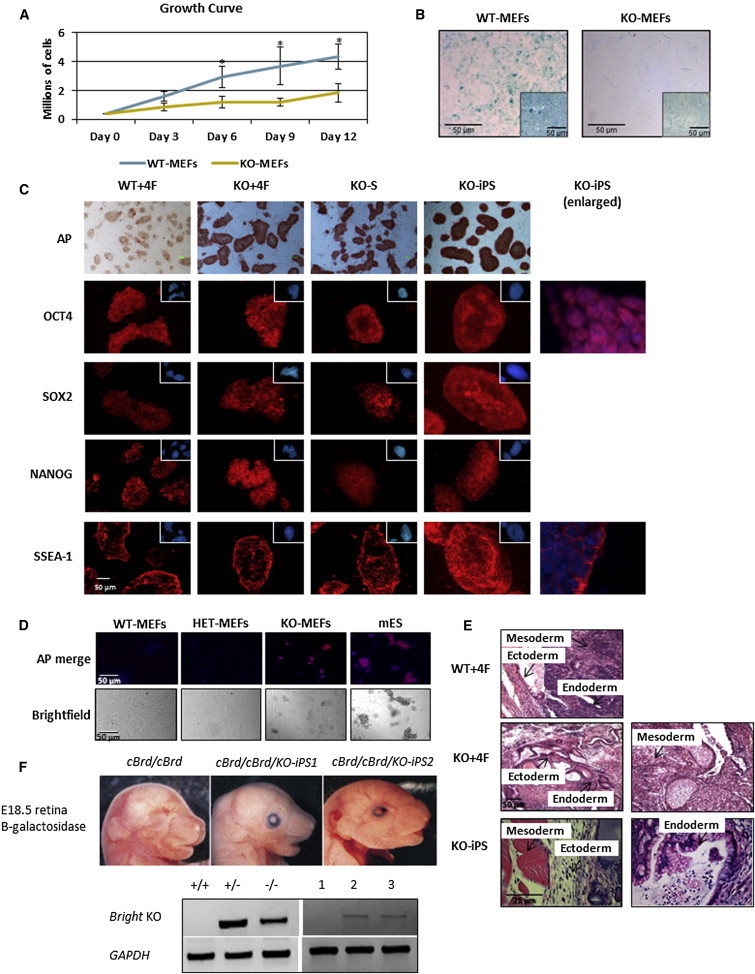
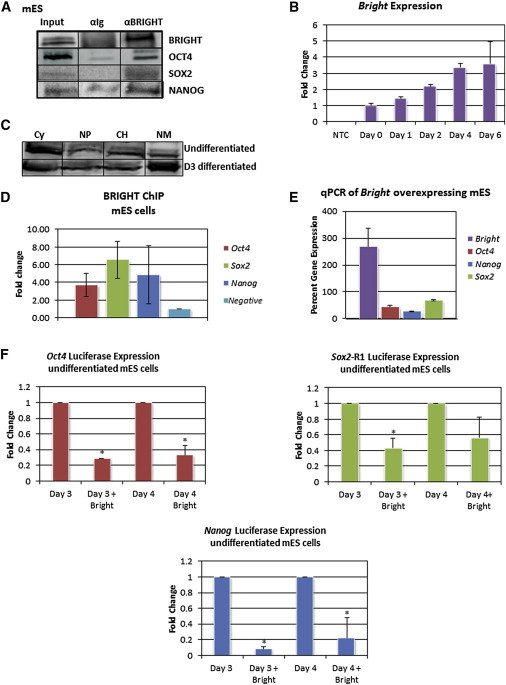
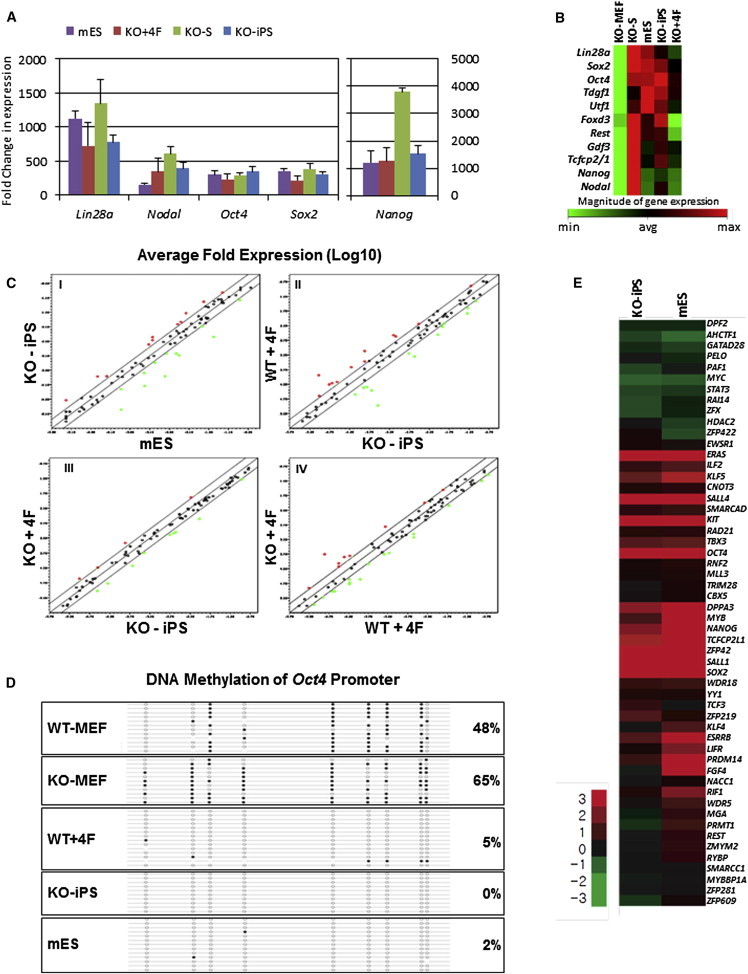
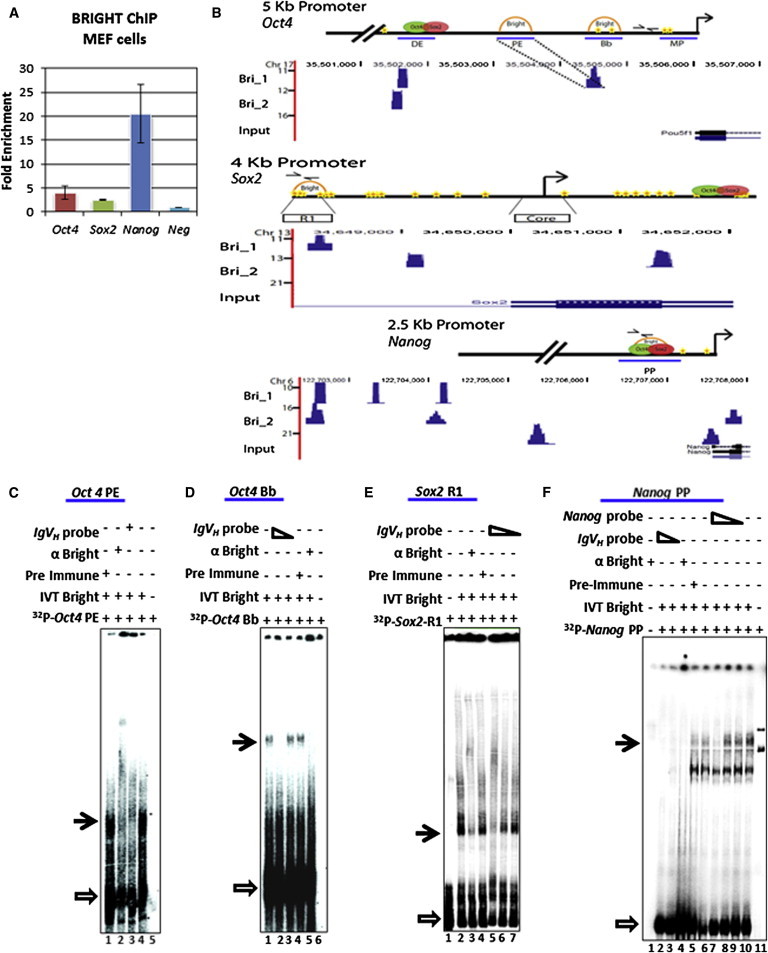
We show here that singular loss of the Bright/Arid3A transcription factor leads to reprograming of mouse embryonic fibroblasts (MEFs) and enhancement of standard four-factor (4F) reprogramming. Bright-deficient MEFs bypass senescence and, under standard embryonic stem cell (ESC) culture conditions, spontaneously form clones that in vitro express pluripotency markers, differentiate to all germ lineages, and in vivo form teratomas and chimeric mice. We demonstrate that BRIGHT binds directly to the promoter/enhancer regions of Oct4, Sox2, and Nanog to contribute to their repression in both MEFs and ESCs. Thus, elimination of the BRIGHT barrier may provide an approach for somatic cell reprogramming.
我们在这里表明,Bright/Arid3A 转录因子的单一缺失会导致小鼠胚胎成纤维细胞 (MEF) 的重编程,并增强标准的四因子 (4F) 重编程。Bright 缺陷型 MEF 绕过衰老,并且在标准胚胎干细胞 (ESC) 培养条件下,自发形成克隆,这些克隆在体外表达多能性标记物,分化为所有生殖谱系,并在体内形成畸胎瘤和嵌合小鼠。我们证明 BRIGHT 直接结合到 Oct4、Sox2 和 Nanog 的启动子/增强子区域,有助于它们在 MEF 和 ESC 中的抑制。因此,消除 BRIGHT 障碍可能为体细胞重编程提供一种方法。