Tran Nicholas M, Zhang Alan, Zhang Xiaodong, Huecker Julie B, Hennig Anne K, Chen Shiming
Ph.D. program in Molecular Genetics and Genomics, Washington University in Saint Louis, Saint Louis, Missouri, United States of America.
College of Arts & Sciences, Washington University in Saint Louis, Saint Louis, Missouri, United States of America.
PLoS Genet. 2014 Feb 6;10(2):e1004111. doi: 10.1371/journal.pgen.1004111. eCollection 2014 Feb.
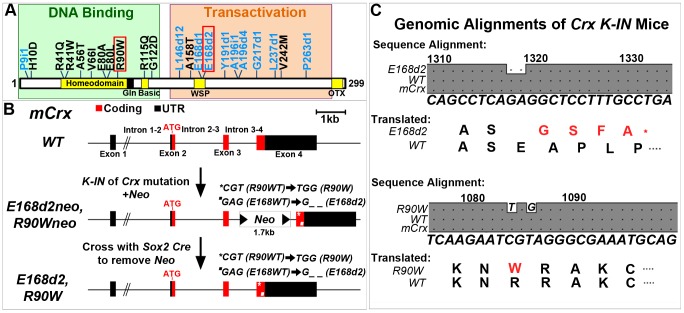
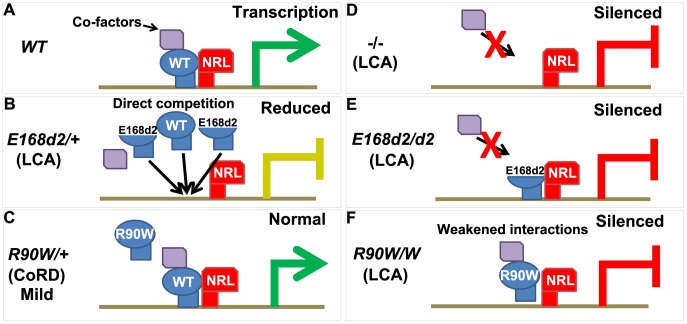
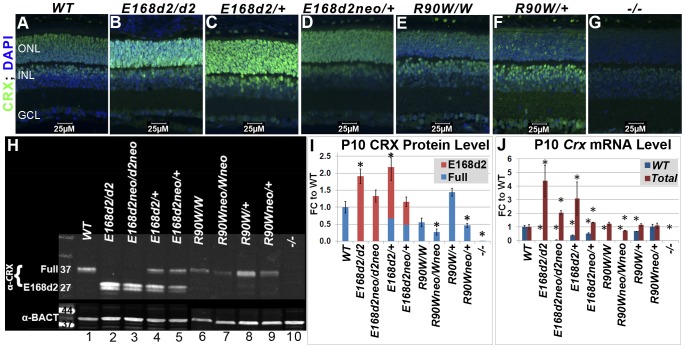
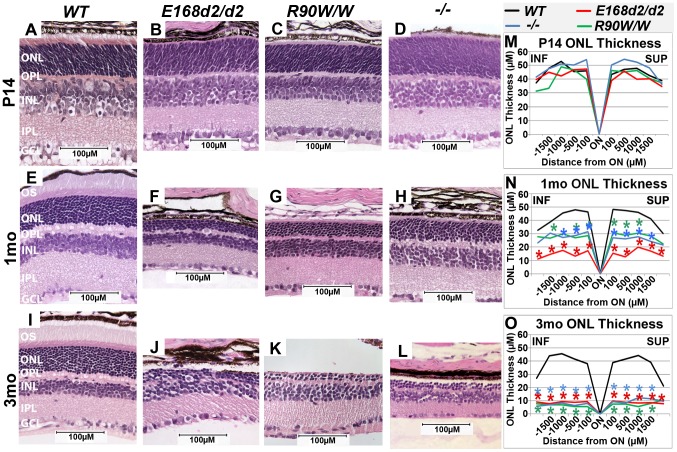
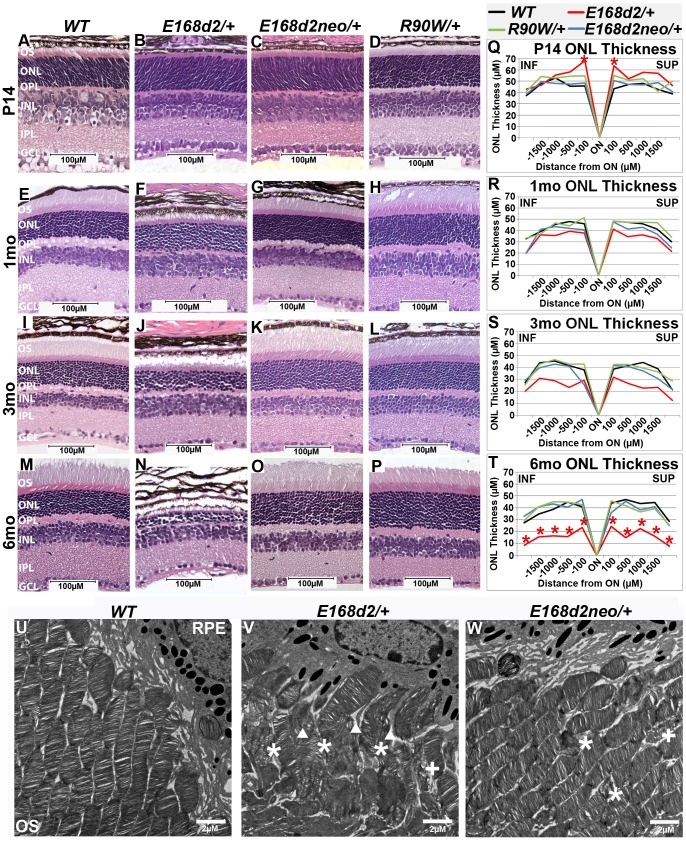
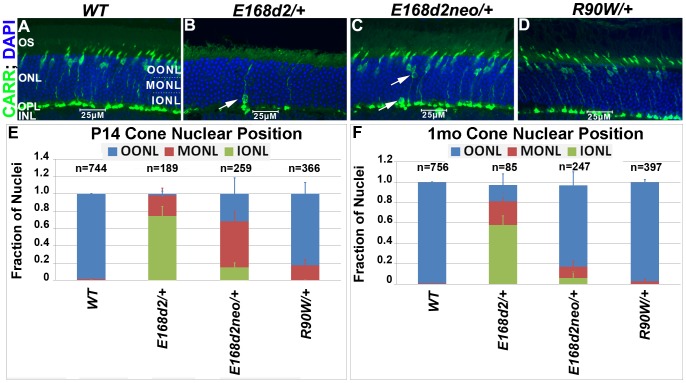
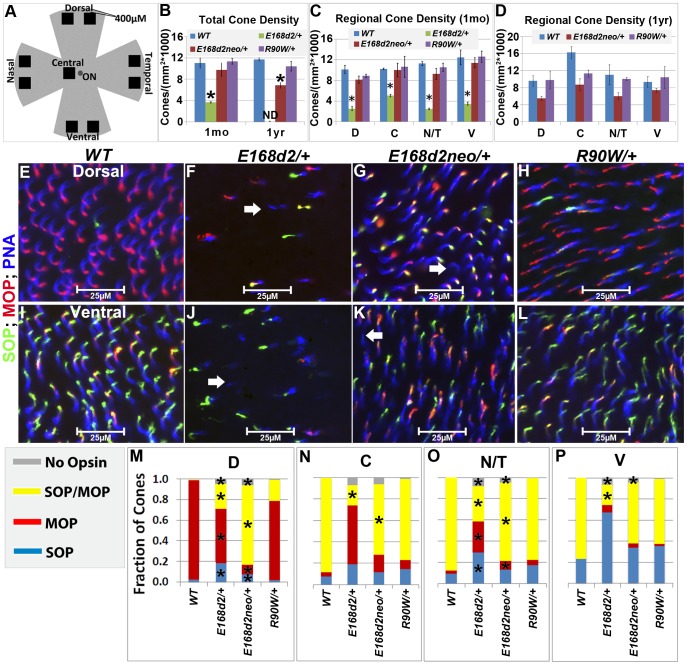
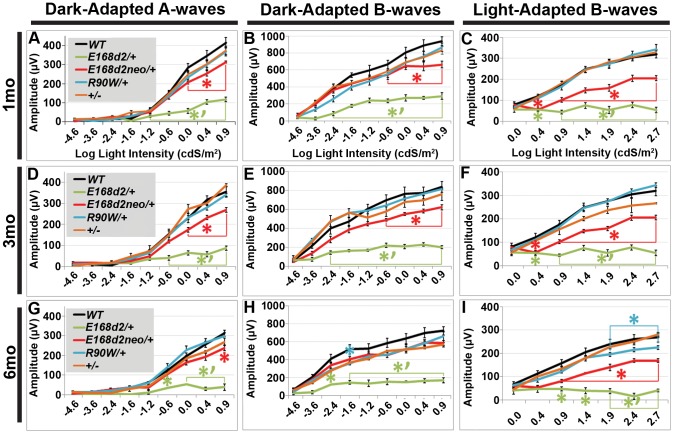
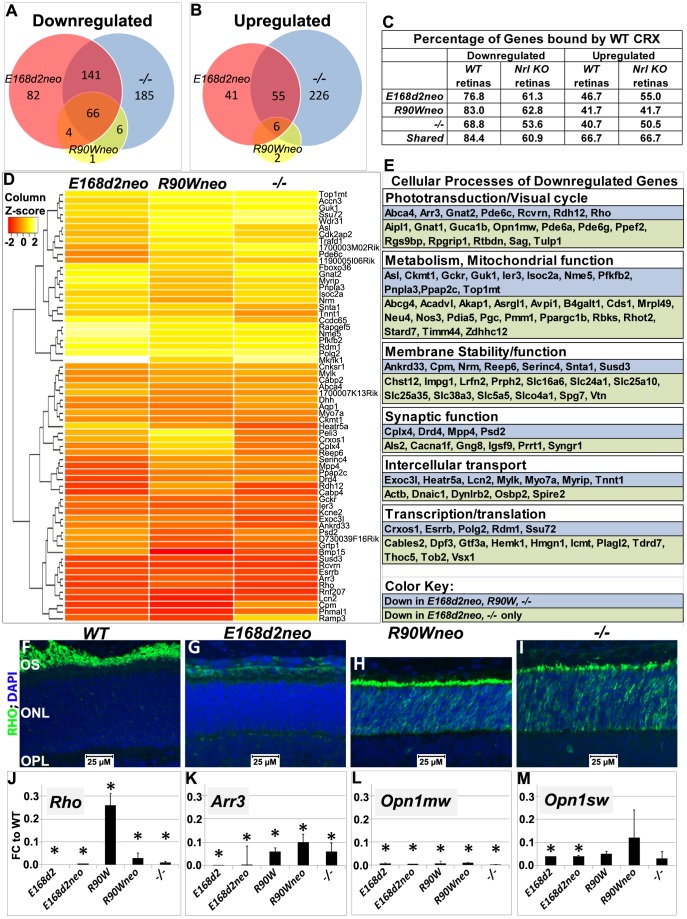
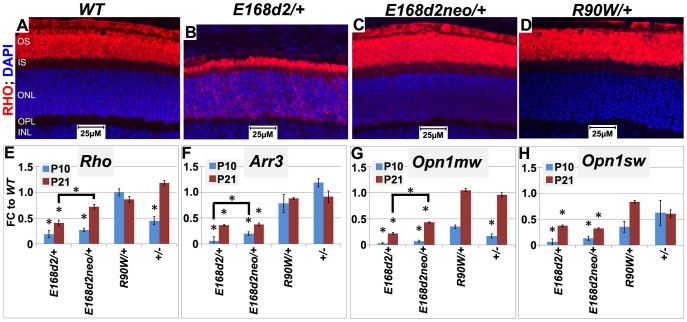
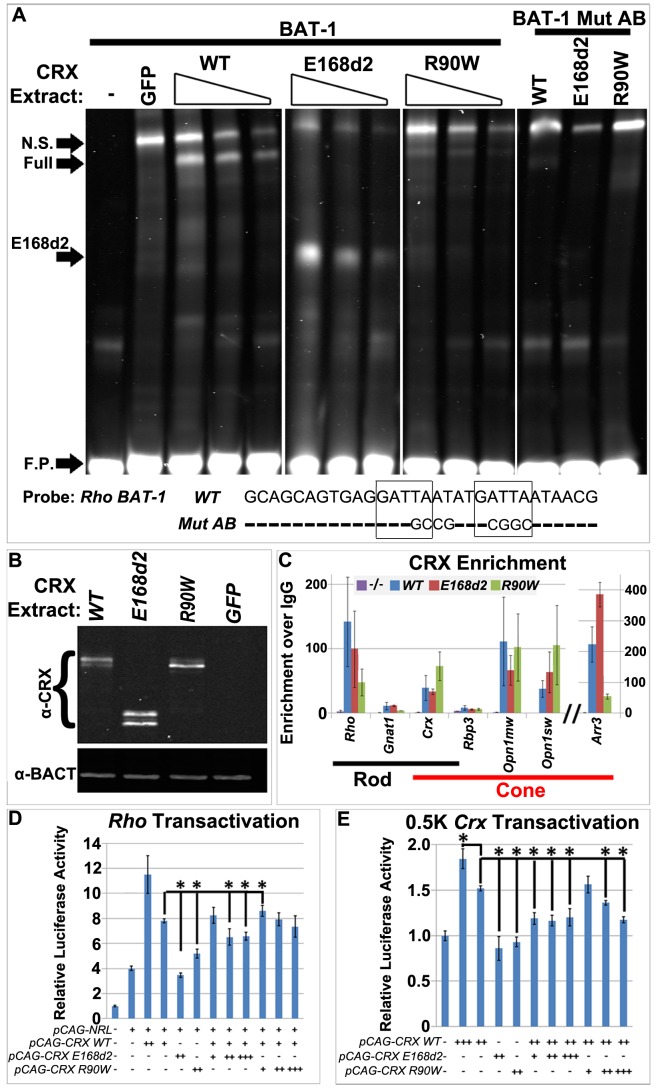
Cone-rod homeobox (CRX) protein is a "paired-like" homeodomain transcription factor that is essential for regulating rod and cone photoreceptor transcription. Mutations in human CRX are associated with the dominant retinopathies Retinitis Pigmentosa (RP), Cone-Rod Dystrophy (CoRD) and Leber Congenital Amaurosis (LCA), with variable severity. Heterozygous Crx Knock-Out (KO) mice ("+/-") have normal vision as adults and fail to model the dominant human disease. To investigate how different mutant CRX proteins produce distinct disease pathologies, we generated two Crx Knock-IN (K-IN) mouse models: Crx(E168d2) ("E168d2") and Crx(R90W) ("R90W"). E168d2 mice carry a frameshift mutation in the CRX activation domain, Glu168del2, which is associated with severe dominant CoRD or LCA in humans. R90W mice carry a substitution mutation in the CRX homeodomain, Arg90Trp, which is associated with dominant mild late-onset CoRD and recessive LCA. As seen in human patients, heterozygous E168d2 ("E168d2/+") but not R90W ("R90W/+") mice show severely impaired retinal function, while mice homozygous for either mutation are blind and undergo rapid photoreceptor degeneration. E168d2/+ mice also display abnormal rod/cone morphology, greater impairment of CRX target gene expression than R90W/+ or +/- mice, and undergo progressive photoreceptor degeneration. Surprisingly, E168d2/+ mice express more mutant CRX protein than wild-type CRX. E168d2neo/+, a subline of E168d2 with reduced mutant allele expression, displays a much milder retinal phenotype, demonstrating the impact of Crx expression level on disease severity. Both CRX([E168d2]) and CRX([R90W]) proteins fail to activate transcription in vitro, but CRX([E168d2]) interferes more strongly with the function of wild type (WT) CRX, supporting an antimorphic mechanism. E168d2 and R90W are mechanistically distinct mouse models for CRX-associated disease that will allow the elucidation of molecular mechanisms and testing of novel therapeutic approaches for different forms of CRX-associated disease.
视锥 - 视杆同源框(CRX)蛋白是一种“类配对”同源结构域转录因子,对调节视杆和视锥光感受器转录至关重要。人类CRX基因的突变与显性视网膜病变色素性视网膜炎(RP)、视锥 - 视杆营养不良(CoRD)和莱伯先天性黑矇(LCA)相关,严重程度各异。杂合型Crx基因敲除(KO)小鼠(“+/-”)成年后视力正常,无法模拟人类显性疾病。为了研究不同的突变CRX蛋白如何产生不同的疾病病理,我们构建了两种Crx基因敲入(K-IN)小鼠模型:Crx(E168d2)(“E168d2”)和Crx(R90W)(“R90W”)。E168d2小鼠在CRX激活域携带移码突变Glu168del2,该突变在人类中与严重的显性CoRD或LCA相关。R90W小鼠在CRX同源结构域携带替换突变Arg90Trp,该突变与显性轻度迟发性CoRD和隐性LCA相关。如在人类患者中所见,杂合型E168d2(“E168d2/+”)小鼠而非R90W(“R90W/+”)小鼠表现出严重受损的视网膜功能,而两种突变的纯合子小鼠均失明并经历快速的光感受器退化。E168d2/+小鼠还表现出异常的视杆/视锥形态,与R90W/+或+/-小鼠相比,CRX靶基因表达受损更严重,并经历进行性光感受器退化。令人惊讶的是,E168d2/+小鼠表达的突变CRX蛋白比野生型CRX更多。E168d2neo/+是E168d2的一个亚系,其突变等位基因表达降低,表现出明显更轻的视网膜表型,证明了Crx表达水平对疾病严重程度的影响。CRX([E168d2])和CRX([R90W])蛋白在体外均无法激活转录,但CRX([E168d2])对野生型(WT)CRX功能的干扰更强,支持一种反式显性机制。E168d2和R90W是CRX相关疾病机制上不同的小鼠模型,将有助于阐明分子机制并测试针对不同形式CRX相关疾病的新型治疗方法。