Qi Mei, Yang Xiaoqing, Zhang Fan, Lin Tao, Sun Xiubin, Li Yanjiang, Yuan Huiqing, Ren Yubo, Zhang Juan, Qin Xiaomin, Han Bo
Department of Pathology, Shandong University Medical School, Jinan, China.
Department of Orthodontics, Shandong University School of Stomatology, Jinan, China.
PLoS One. 2014 Feb 7;9(2):e84959. doi: 10.1371/journal.pone.0084959. eCollection 2014.
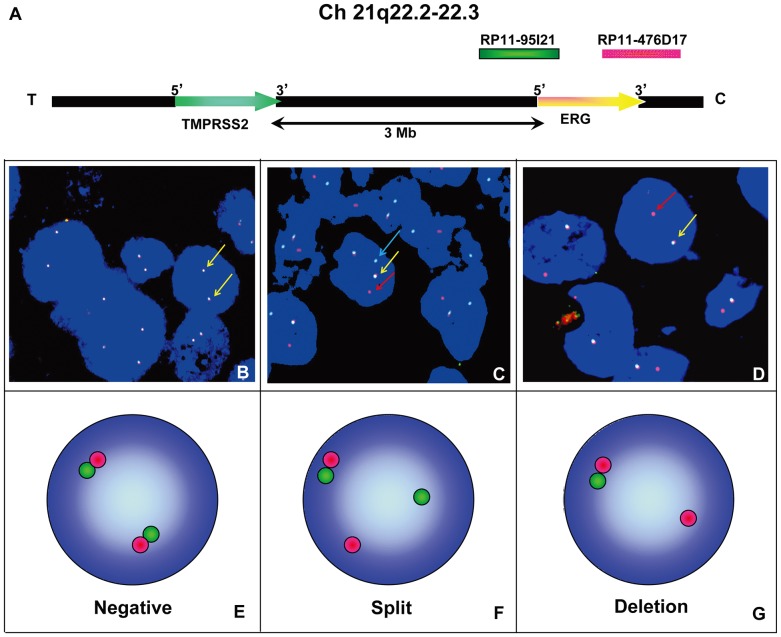
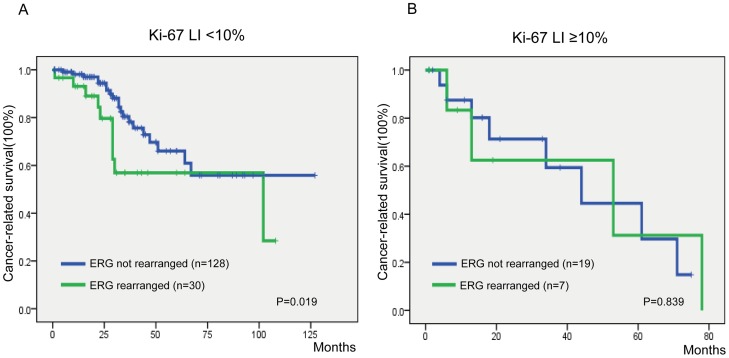
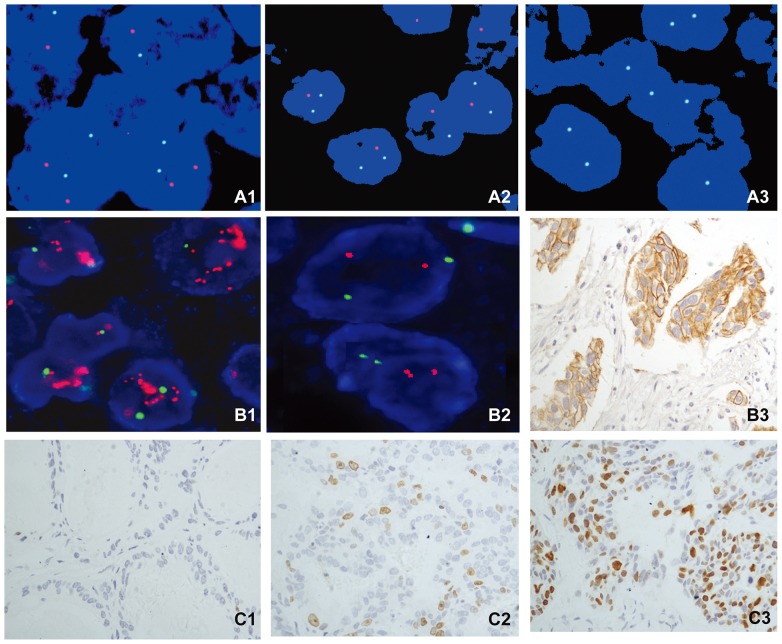
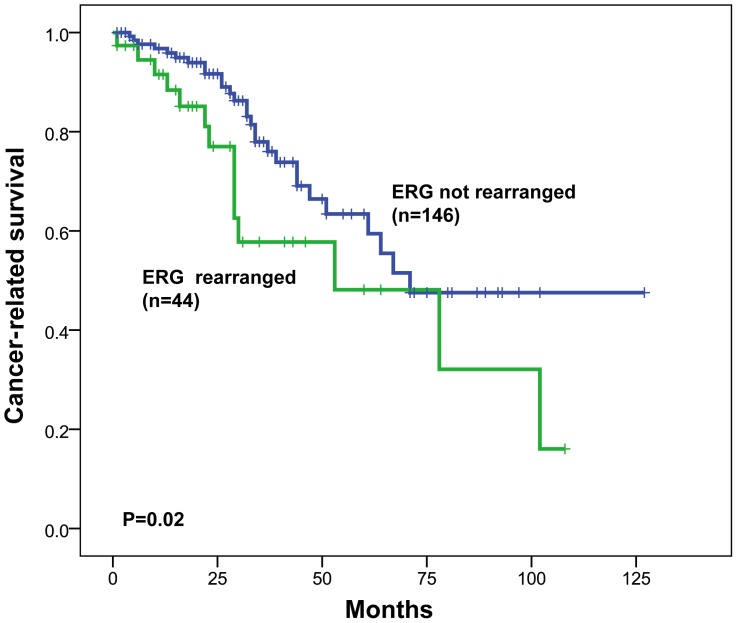
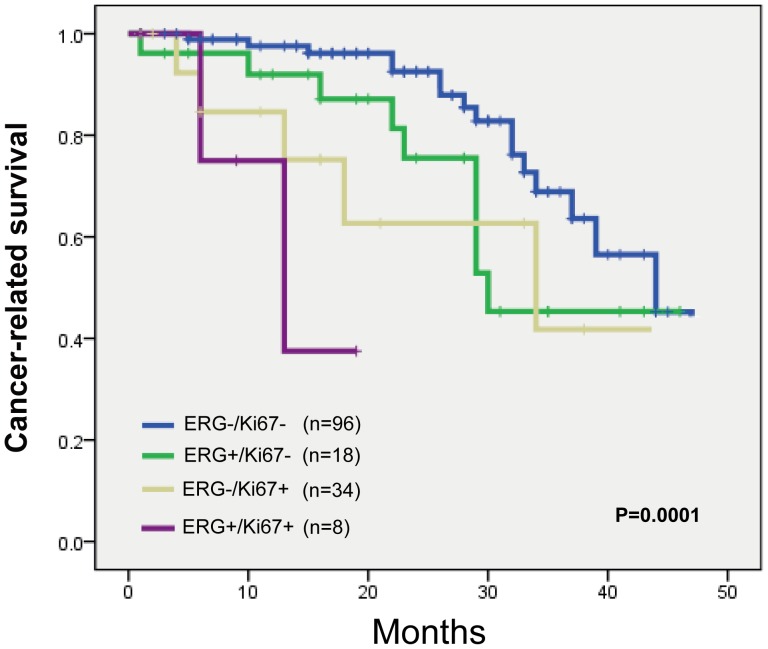
Recently, ETS-related gene (ERG) gene rearrangements, phosphatase tensin homologue (PTEN) deletions and EGFR family aberrations were characterized as potential biomarkers for prostate cancer (PCa) patient management. Although ERG gene rearrangement has been identified in approximately 50% of localized prostate cancers in western countries, the prognostic significance of this critical molecular event remains unknown in Chinese patients. Using fluorescence in situ hybridization (FISH) and immunohistochemistry, we evaluated ERG, PTEN and EGFR family aberrations in a cohort of 224 Chinese prostate cancer patients diagnosed in transurethral resection of the prostate (TUR-P). Overall, ERG rearrangement was detected in 23.2% (44/190) cases, of which 54.5% (24/44) showed deletion of the 5'end of ERG. PTEN deletion was identified in 10.8% (19/176) cases. Amplification of EGFR and HER2 genes was present in 1.1% (2/178) and 5.8% (10/173) of cases, respectively. Significant correlation between ERG rearrangement and PTEN deletion was identified in this cohort. EGFR and HER2 aberrations occurred more frequently in PCas without ERG rearrangement than in those with ERG rearrangement, although this did not reach statistical significance. Overall, ERG rearrangement was associated with pre-operative PSA values (P = 0.038) and cancer-related death (P = 0.02), but not with the age, clinical T stage, Gleason score, or Ki-67 labeling index (LI). Notably, multivariate analysis including known prognostic markers revealed ERG rearrangement was an independent prognostic factor (P = 0.022). Additionally, ERG rearrangement status was helpful to identify patients with poor prognosis from PCa group with low Ki-67 LI. In summary, we reported that ERG rearrangement was associated with cancer-related death in Chinese PCa patients. Determination of ERG rearrangement status allows stratification of PCa patients into different survival categories.
最近,ETS相关基因(ERG)重排、张力蛋白同源磷酸酶(PTEN)缺失以及表皮生长因子受体(EGFR)家族畸变被确定为前列腺癌(PCa)患者管理的潜在生物标志物。尽管在西方国家约50%的局限性前列腺癌中已发现ERG基因重排,但在中国患者中,这一关键分子事件的预后意义仍不清楚。我们采用荧光原位杂交(FISH)和免疫组化方法,对224例经尿道前列腺切除术(TUR-P)确诊的中国前列腺癌患者队列中的ERG、PTEN和EGFR家族畸变情况进行了评估。总体而言,在23.2%(44/190)的病例中检测到ERG重排,其中54.5%(24/44)显示ERG 5'端缺失。在10.8%(19/176)的病例中发现PTEN缺失。EGFR和HER2基因扩增分别出现在1.1%(2/178)和5.8%(10/173)的病例中。在该队列中确定了ERG重排与PTEN缺失之间存在显著相关性。EGFR和HER2畸变在无ERG重排的PCa中比在有ERG重排的PCa中更频繁出现,尽管这未达到统计学意义。总体而言,ERG重排与术前前列腺特异抗原(PSA)值(P = 0.038)和癌症相关死亡(P = 0.02)相关,但与年龄、临床T分期、 Gleason评分或Ki-67标记指数(LI)无关。值得注意的是,包括已知预后标志物的多因素分析显示ERG重排是一个独立的预后因素(P = 0.022)。此外,ERG重排状态有助于从低Ki-67 LI的PCa组中识别出预后不良的患者。总之,我们报告ERG重排在中国PCa患者中与癌症相关死亡有关。确定ERG重排状态可将PCa患者分层为不同的生存类别。