Universiti Sains Malaysia, School of Pharmaceutical Sciences, Department of Pharmacology, Pulau Penang, Malaysia, Universiti Sains Malaysia, School of Pharmaceutical Sciences, Department of Pharmacology, Pulau Penang, Malaysia.
Universiti Sains Malaysia, School of Pharmaceutical Sciences, Department of Pharmaceutical Chemistry, Pulau Penang, Malaysia, Universiti Sains Malaysia, School of Pharmaceutical Sciences, Department of Pharmaceutical Chemistry, Pulau Penang, Malaysia.
Clinics (Sao Paulo). 2014 Feb;69(2):134-44. doi: 10.6061/clinics/2014(02)10.
The present study aimed to investigate the mechanisms underlying the anti-inflammatory and anti-angiogenic effects of ethyl-p-methoxycinnamate isolated from Kaempferia galanga.
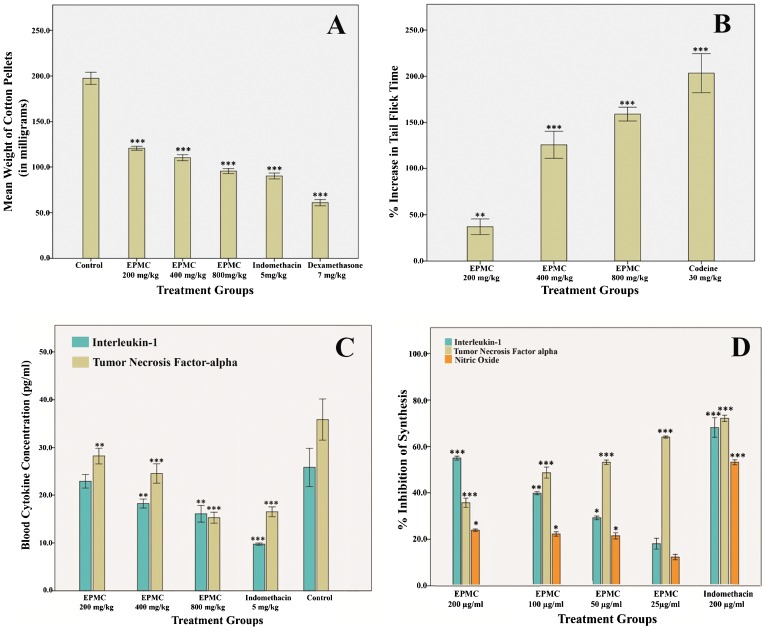
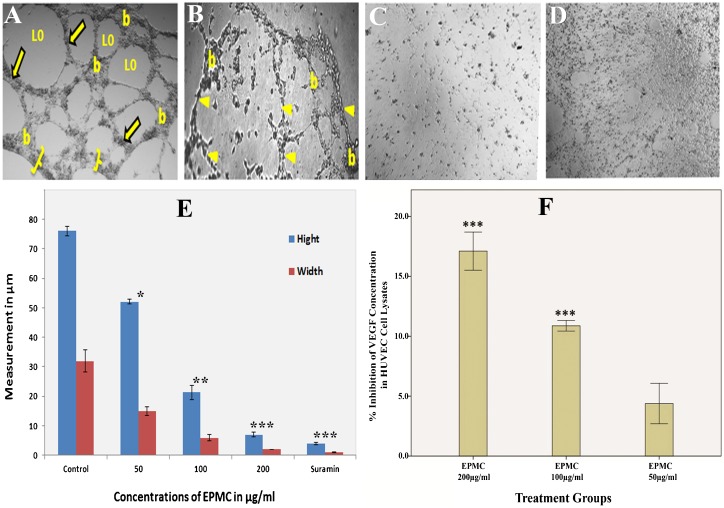
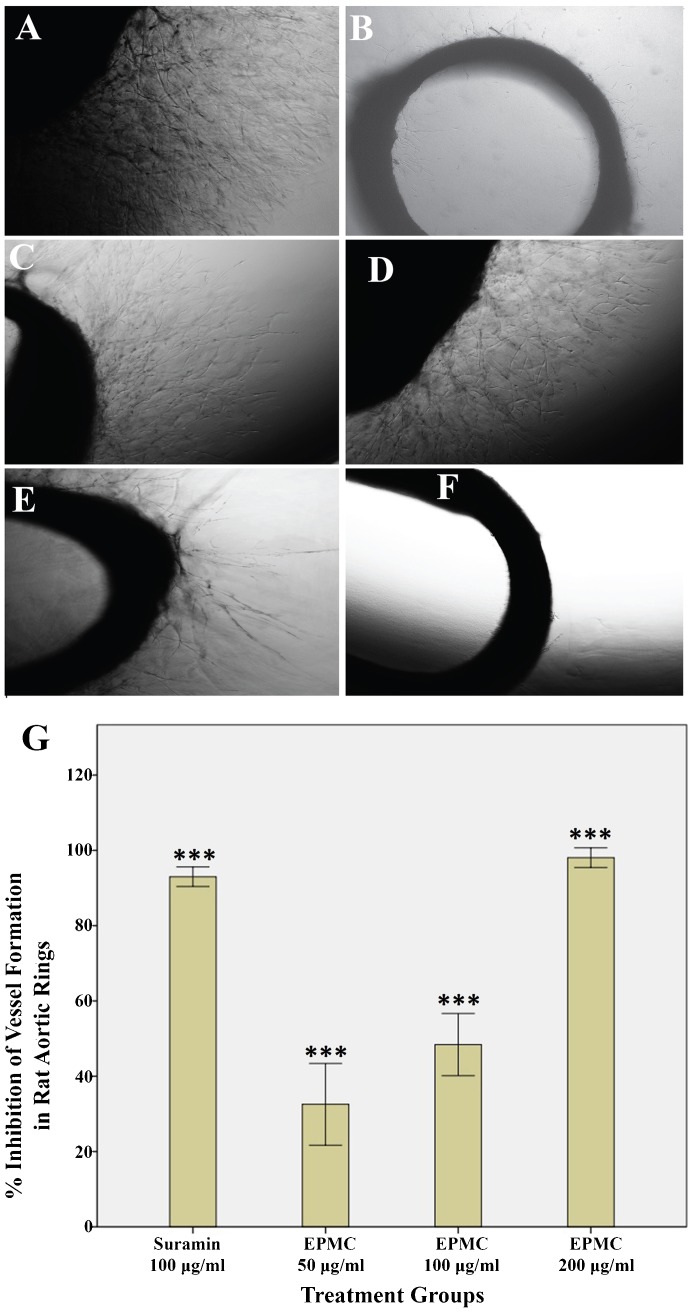
The anti-inflammatory effects of ethyl-p-methoxycinnamate were assessed using the cotton pellet granuloma assay in rats, whereby the levels of interleukin-1 and tumor necrosis factor-α were measured in the animals' blood. In addition, the levels of interleukin, tumor necrosis factor, and nitric oxide were measured in vitro using the human macrophage cell line (U937). The analgesic effects of ethyl-p-methoxycinnamate were assessed by the tail flick assay in rats. The anti-angiogenic effects were evaluated first by the rat aortic ring assay and, subsequently, by assessing the inhibitory effects of ethyl-p-methoxycinnamate on vascular endothelial growth factor, proliferation, migration, and tube formation in human umbilical vein endothelial cells.
Ethyl-p-methoxycinnamate strongly inhibited granuloma tissue formation in rats. It prolonged the tail flick time in rats by more than two-fold compared with the control animals. The inhibition of interleukin and tumor necrosis factor by ethyl-p-methoxycinnamate was significant in both in vivo and in vitro models; however, only a moderate inhibition of nitric oxide was observed in macrophages. Furthermore, ethyl-p-methoxycinnamate considerably inhibited microvessel sprouting from the rat aorta. These mechanistic studies showed that ethyl-p-methoxycinnamate strongly inhibited the differentiation and migration of endothelial cells, which was further confirmed by the reduced level of vascular endothelial growth factor.
Ethyl-p-methoxycinnamate exhibits significant anti-inflammatory potential by inhibiting pro-inflammatory cytokines and angiogenesis, thus inhibiting the main functions of endothelial cells. Thus, ethyl-p-methoxycinnamate could be a promising therapeutic agent for the treatment of inflammatory and angiogenesis-related diseases.
本研究旨在探讨姜黄中分离得到的对乙基-间甲氧基肉桂酸乙酯的抗炎和抗血管生成作用的机制。
采用大鼠棉球肉芽肿法评估对乙基-间甲氧基肉桂酸乙酯的抗炎作用,测定动物血液中白细胞介素-1 和肿瘤坏死因子-α的水平。此外,采用人巨噬细胞细胞系(U937)在体外测定白细胞介素、肿瘤坏死因子和一氧化氮的水平。采用大鼠甩尾试验评估对乙基-间甲氧基肉桂酸乙酯的镇痛作用。首先通过大鼠主动脉环试验评估其抗血管生成作用,随后评估对乙基-间甲氧基肉桂酸乙酯对血管内皮生长因子、增殖、迁移和人脐静脉内皮细胞管形成的抑制作用。
对乙基-间甲氧基肉桂酸乙酯强烈抑制大鼠肉芽肿组织形成。与对照组相比,它使大鼠甩尾时间延长了两倍以上。对乙基-间甲氧基肉桂酸乙酯在体内和体外模型中均显著抑制白细胞介素和肿瘤坏死因子,但仅观察到巨噬细胞中一氧化氮的中度抑制。此外,对乙基-间甲氧基肉桂酸乙酯可显著抑制大鼠主动脉微血管的发芽。这些机制研究表明,对乙基-间甲氧基肉桂酸乙酯通过抑制促炎细胞因子和血管生成强烈抑制内皮细胞的分化和迁移,这进一步证实了血管内皮生长因子水平降低。
对乙基-间甲氧基肉桂酸乙酯通过抑制促炎细胞因子和血管生成,从而抑制内皮细胞的主要功能,表现出显著的抗炎潜力。因此,对乙基-间甲氧基肉桂酸乙酯可能是治疗炎症和血管生成相关疾病的有前途的治疗剂。