Lathem Wyndham W, Schroeder Jay A, Bellows Lauren E, Ritzert Jeremy T, Koo Jovanka T, Price Paul A, Caulfield Adam J, Goldman William E
mBio. 2014 Feb 11;5(1):e01038-13. doi: 10.1128/mBio.01038-13.
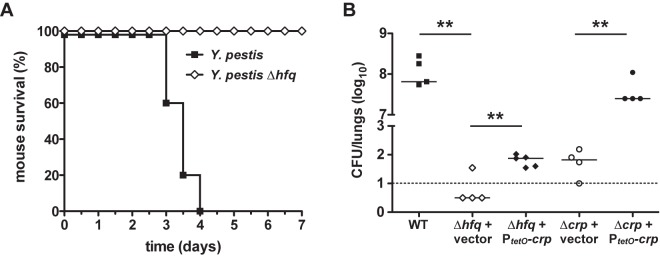
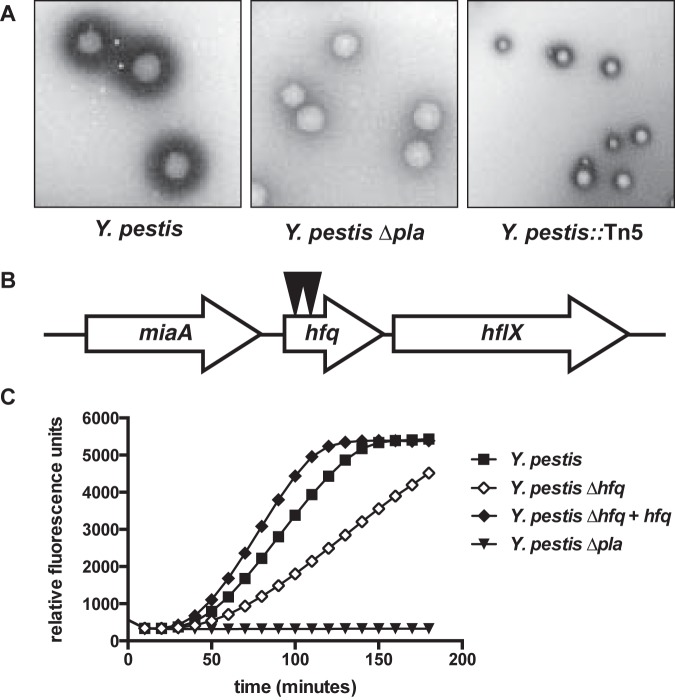
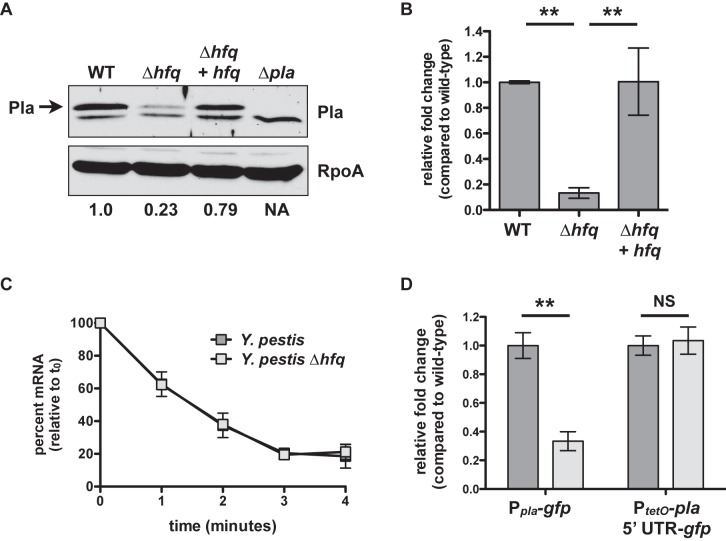
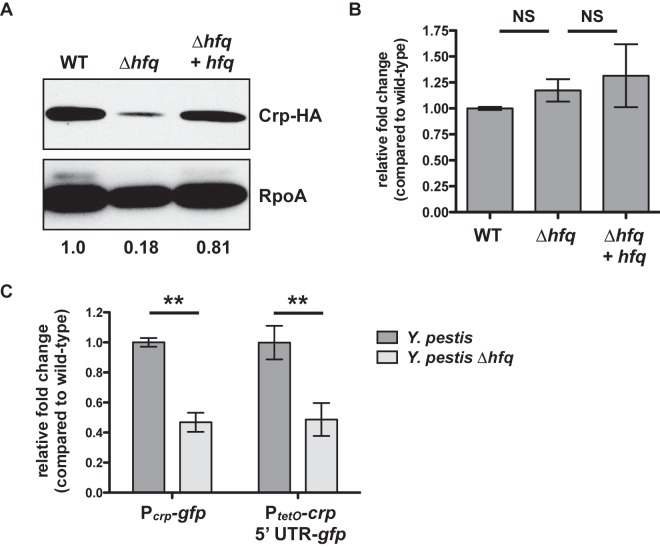
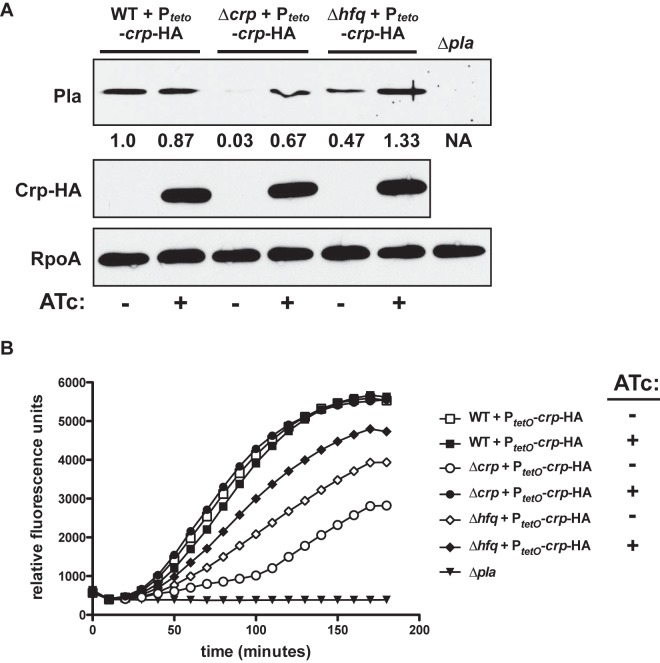
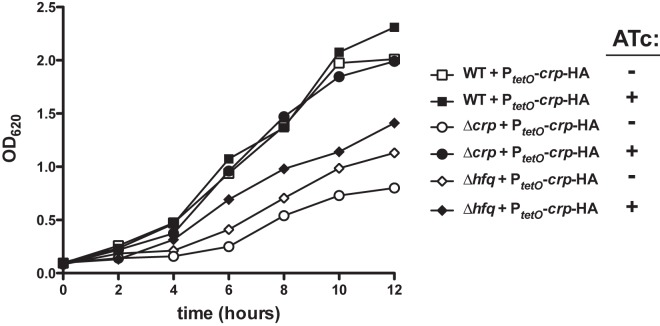
The cyclic AMP receptor protein (Crp) is a transcriptional regulator that controls the expression of numerous bacterial genes, usually in response to environmental conditions and particularly by sensing the availability of carbon. In the plague pathogen Yersinia pestis, Crp regulates the expression of multiple virulence factors, including components of the type III secretion system and the plasminogen activator protease Pla. The regulation of Crp itself, however, is distinctly different from that found in the well-studied Escherichia coli system. Here, we show that at physiological temperatures, the synthesis of Crp in Y. pestis is positively regulated at the posttranscriptional level. The loss of the small RNA chaperone Hfq results in decreased Crp protein levels but not in steady-state Crp transcript levels, and this regulatory effect occurs within the 5' untranslated region (UTR) of the Crp mRNA. The posttranscriptional activation of Crp synthesis is required for the expression of pla, and decoupling crp from Hfq through the use of an exogenously controlled promoter and 5' UTR increases Pla protein levels as well as partially rescues the growth defect associated with the loss of Hfq. Finally, we show that both Hfq and the posttranscriptional regulation of Crp contribute to the virulence of Y. pestis during pneumonic plague. The Hfq-dependent, posttranscriptional regulation of Crp may be specific to Yersinia species, and thus our data help explain the dramatic growth and virulence defects associated with the loss of Hfq in Y. pestis.
The Crp protein is a major transcriptional regulator in bacteria, and its synthesis is tightly controlled to avoid inappropriate induction of the Crp regulon. In this report, we provide the first evidence of Crp regulation in an Hfq-dependent manner at the posttranscriptional level. Our discovery that the synthesis of Crp in Yersinia pestis is Hfq dependent adds an additional layer of regulation to catabolite repression in this bacterium. Our work provides a mechanism by which the plague pathogen links not just the sensing of glucose or other carbon sources but also other signals that influence Crp abundance via the expression of small RNAs to the induction of the Crp regulon. In turn, this allows Y. pestis to fine-tune Crp levels to optimize virulence gene expression during plague infection and may allow the bacterium to adapt to its unique environmental niches.
环腺苷酸受体蛋白(Crp)是一种转录调节因子,可控制众多细菌基因的表达,通常是对环境条件作出反应,特别是通过感知碳的可用性。在鼠疫病原体鼠疫耶尔森菌中,Crp调节多种毒力因子的表达,包括III型分泌系统的组分和纤溶酶原激活蛋白酶Pla。然而,Crp自身的调节与在深入研究的大肠杆菌系统中发现的调节明显不同。在此,我们表明,在生理温度下,鼠疫耶尔森菌中Crp的合成在转录后水平受到正调控。小RNA伴侣蛋白Hfq的缺失导致Crp蛋白水平降低,但不影响Crp转录本的稳态水平,并且这种调节作用发生在Crp mRNA的5'非翻译区(UTR)内。Crp合成的转录后激活是pla表达所必需的,通过使用外源控制的启动子和5'UTR使crp与Hfq解偶联可增加Pla蛋白水平,并部分挽救与Hfq缺失相关的生长缺陷。最后,我们表明Hfq和Crp的转录后调节均有助于鼠疫耶尔森菌在肺鼠疫期间的毒力。Crp的Hfq依赖性转录后调节可能是耶尔森菌属特有的,因此我们的数据有助于解释与鼠疫耶尔森菌中Hfq缺失相关的显著生长和毒力缺陷。
Crp蛋白是细菌中的主要转录调节因子,其合成受到严格控制,以避免Crp调控子的不适当诱导。在本报告中,我们提供了首个关于Crp在转录后水平以Hfq依赖性方式进行调节的证据。我们发现鼠疫耶尔森菌中Crp的合成依赖于Hfq,这为该细菌的分解代谢物阻遏增加了一层额外的调节。我们的工作提供了一种机制,通过该机制,鼠疫病原体不仅将葡萄糖或其他碳源的感知,而且还将通过小RNA表达影响Crp丰度的其他信号与Crp调控子的诱导联系起来。反过来,这使鼠疫耶尔森菌能够微调Crp水平,以在鼠疫感染期间优化毒力基因表达,并可能使该细菌适应其独特的生态位。