Joy Marion E, Vollmer Laura L, Hulkower Keren, Stern Andrew M, Peterson Cameron K, Boltz R C Dutch, Roy Partha, Vogt Andreas
Department of Bioengineering, University of Pittsburgh, Pittsburgh, Pennsylvania, United States of America.
University of Pittsburgh Drug Discovery Institute, Pittsburgh, Pennsylvania, United States of America.
PLoS One. 2014 Feb 10;9(2):e88350. doi: 10.1371/journal.pone.0088350. eCollection 2014.
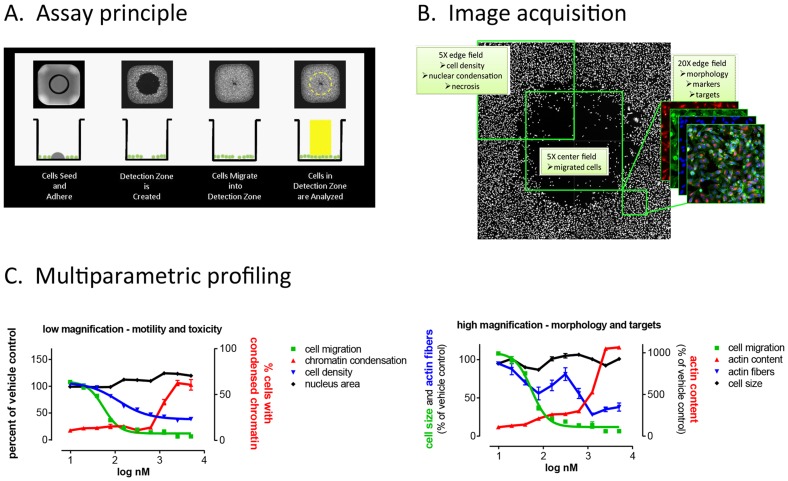
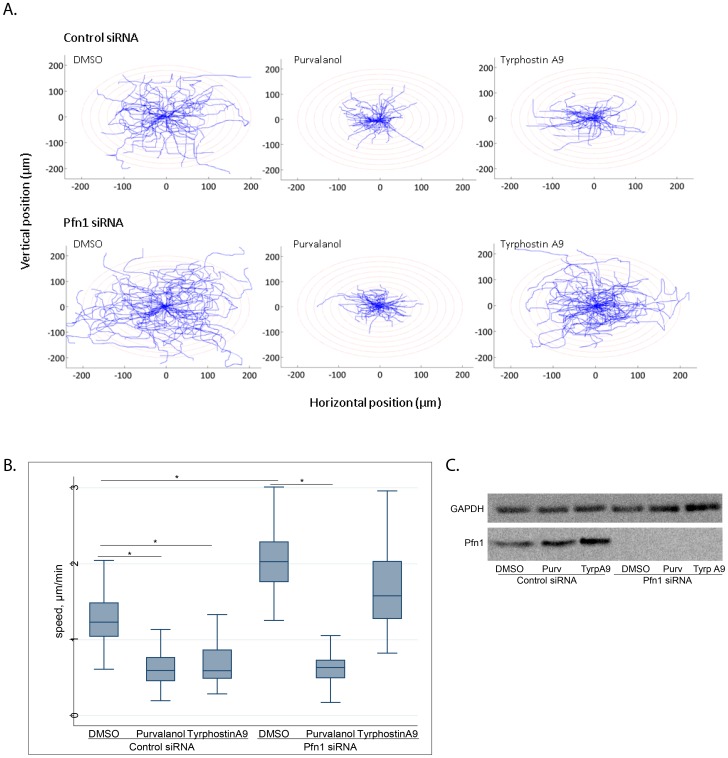
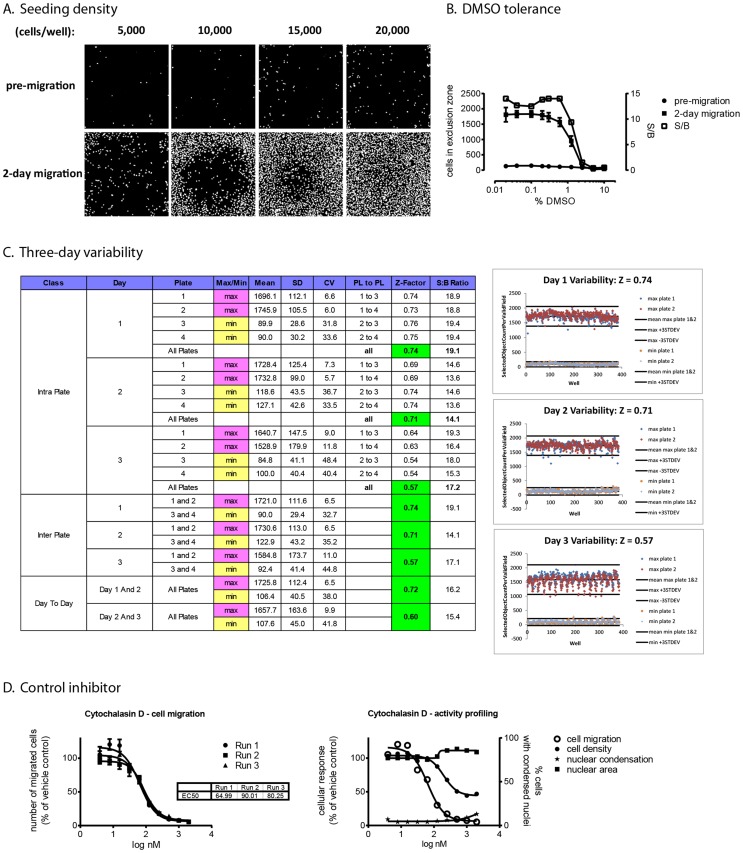
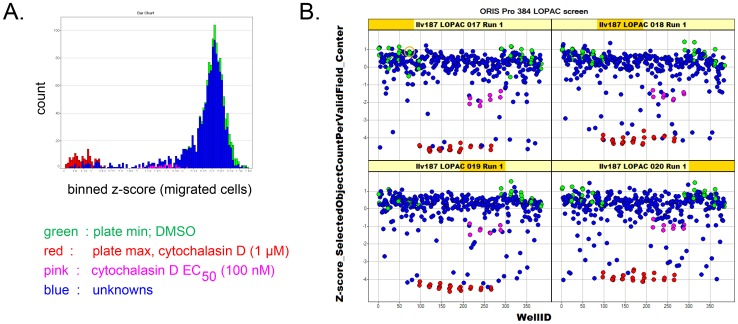
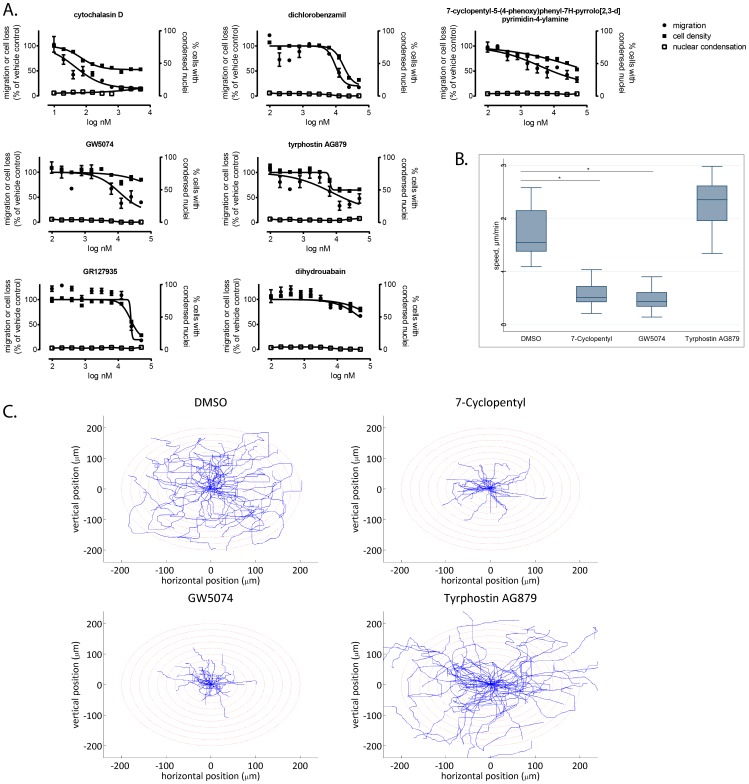
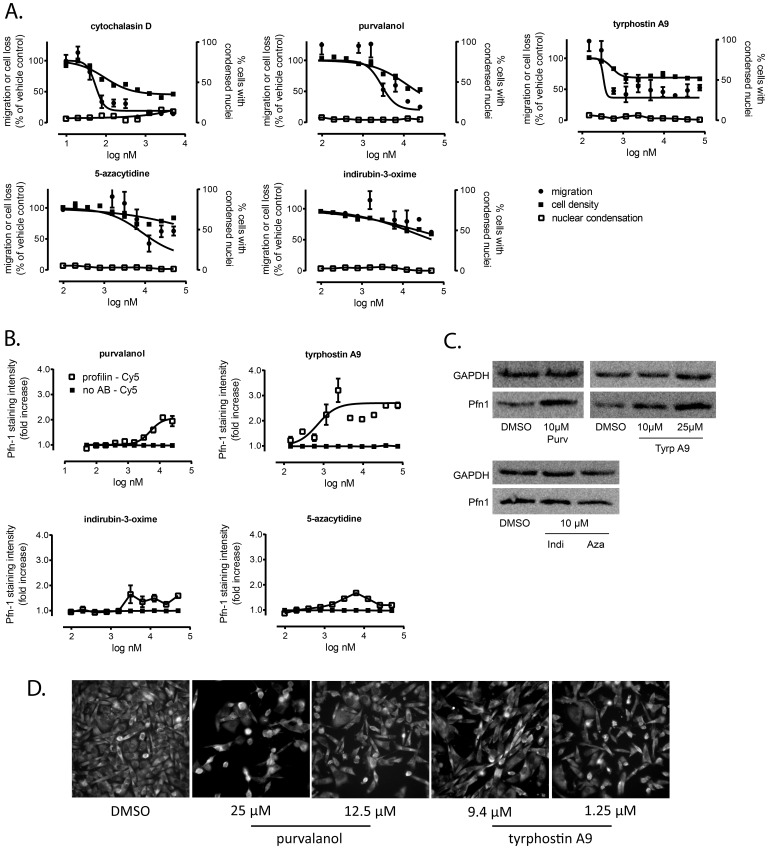
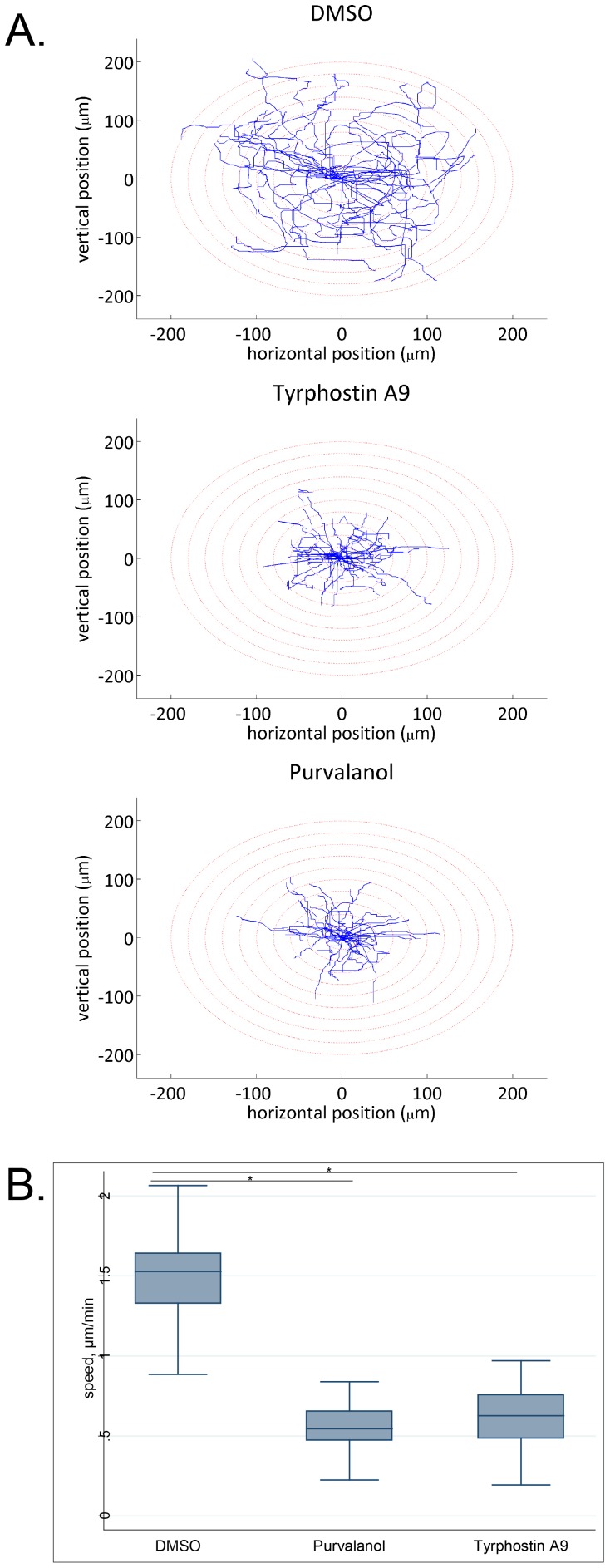
Profilin-1 (Pfn-1) is a ubiquitously expressed actin-binding protein that is essential for normal cell proliferation and migration. In breast cancer and several other adenocarcinomas, Pfn-1 expression is downregulated when compared to normal tissues. Previous studies from our laboratory have shown that genetically modulating Pfn-1 expression significantly impacts proliferation, migration, and invasion of breast cancer cells in vitro, and mammary tumor growth, dissemination, and metastatic colonization in vivo. Therefore, small molecules that can modulate Pfn-1 expression could have therapeutic potential in the treatment of metastatic breast cancer. The overall goal of this study was to perform a multiplexed phenotypic screen to identify compounds that inhibit cell motility through upregulation of Pfn-1. Screening of a test cassette of 1280 compounds with known biological activities on an Oris™ Pro 384 cell migration platform identified several agents that increased Pfn-1 expression greater than two-fold over vehicle controls and exerted anti-migratory effects in the absence of overt cytotoxicity in MDA-MB-231 human breast cancer cells. Concentration-response confirmation and orthogonal follow-up assays identified two bona fide inducers of Pfn-1, purvalanol and tyrphostin A9, that confirmed in single-cell motility assays and Western blot analyses. SiRNA-mediated knockdown of Pfn-1 abrogated the inhibitory effect of tyrphostin A9 on cell migration, suggesting Pfn-1 is mechanistically linked to tyrphostin A9's anti-migratory activity. The data illustrate the utility of the high-content cell motility assay to discover novel targeted anti-migratory agents by integrating functional phenotypic analyses with target-specific readouts in a single assay platform.
丝切蛋白-1(Pfn-1)是一种广泛表达的肌动蛋白结合蛋白,对正常细胞增殖和迁移至关重要。在乳腺癌和其他几种腺癌中,与正常组织相比,Pfn-1表达下调。我们实验室先前的研究表明,基因调控Pfn-1表达会显著影响乳腺癌细胞在体外的增殖、迁移和侵袭,以及在体内的乳腺肿瘤生长、扩散和转移定植。因此,能够调控Pfn-1表达的小分子可能在转移性乳腺癌治疗中具有治疗潜力。本研究的总体目标是进行多重表型筛选,以鉴定通过上调Pfn-1来抑制细胞运动的化合物。在Oris™ Pro 384细胞迁移平台上对1280种具有已知生物活性的化合物测试盒进行筛选,鉴定出几种在MDA-MB-231人乳腺癌细胞中使Pfn-1表达比溶剂对照增加两倍以上且在无明显细胞毒性的情况下发挥抗迁移作用的药物。浓度-反应确认和正交后续试验鉴定出两种Pfn-1的真正诱导剂,即嘌呤醇和 tyrphostin A9,它们在单细胞运动试验和蛋白质印迹分析中得到证实。SiRNA介导的Pfn-1敲低消除了tyrphostin A9对细胞迁移的抑制作用,表明Pfn-1在机制上与tyrphostin A9的抗迁移活性相关。数据说明了高内涵细胞运动试验通过在单个试验平台中将功能表型分析与靶标特异性读数相结合来发现新型靶向抗迁移药物的实用性。