Regal Jean F, Lawrence B Paige, Johnson Alex C, Lojovich Sarah J, O'Reilly Michael A
Department of Biomedical Sciences, University of Minnesota Medical School, Duluth, MN, USA.
Pediatr Allergy Immunol. 2014 Mar;25(2):180-6. doi: 10.1111/pai.12206. Epub 2014 Feb 13.
Infants born prematurely are often treated with supplemental oxygen, which can increase their risk for airway hyper-responsiveness (AHR), asthma, reduced lung function, and altered responses to respiratory viral infections later in childhood. Likewise, exposure of newborn mice to hyperoxia alters baseline pulmonary mechanics and the host response to influenza A virus infection in adult mice. Here, we use this mouse model to test the hypothesis that neonatal hyperoxia also promotes AHR and exacerbated allergen-induced symptoms in adult mice.
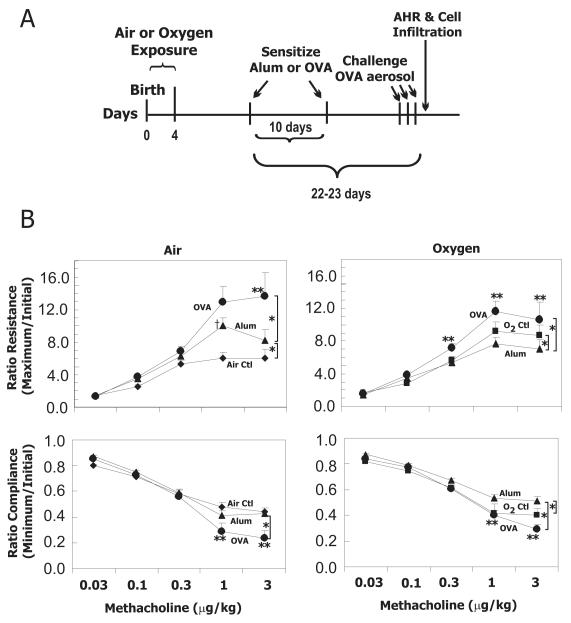
Baseline lung mechanics and AHR measured by methacholine provocation were assessed in adult male and female mice exposed to room air or 100% oxygen (hyperoxia) between post-natal days 0-4. AHR and lung inflammation were evaluated after adult female mice were sensitized with ovalbumin (OVA) plus alum and challenged with aerosolized OVA.
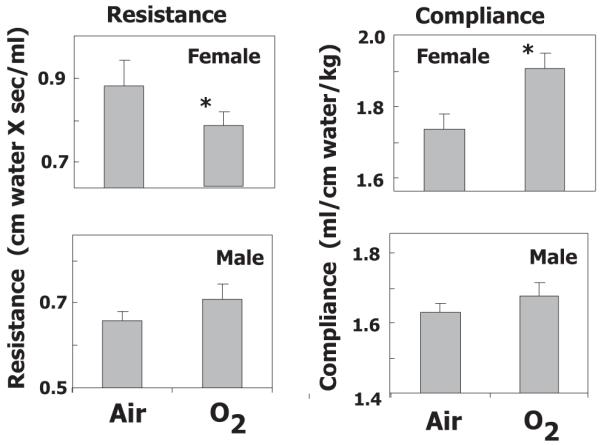
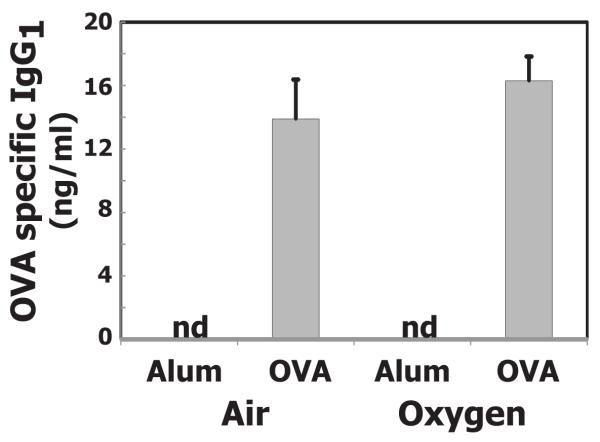
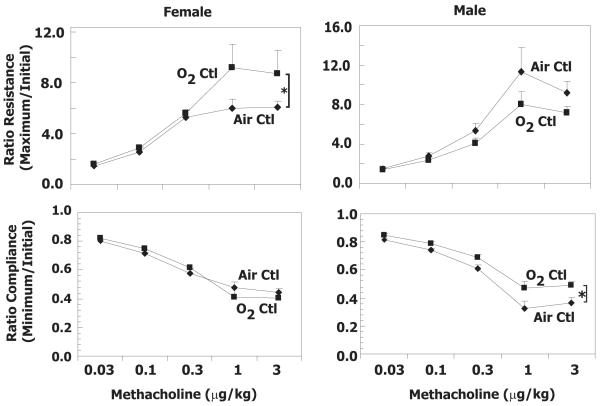
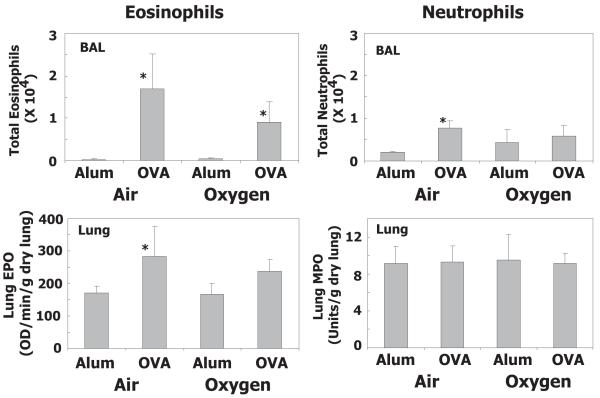
Baseline lung compliance increased and resistance decreased in adult female, but not male, mice exposed to neonatal hyperoxia compared with siblings exposed to room air. Neonatal hyperoxia significantly enhanced methacholine-induced AHR in female mice, but did not affect allergen-induced AHR to methacholine or lung inflammation.
Increased incidence of AHR and asthma is reported in children born prematurely and exposed to supplemental oxygen. Our findings in adult female mice exposed to hyperoxia as neonates suggest that this AHR reported in children born prematurely may reflect non-atopic wheezing due to intrinsic structural changes in airway development.
早产婴儿常接受补充氧气治疗,这会增加他们日后患气道高反应性(AHR)、哮喘、肺功能降低以及对儿童期呼吸道病毒感染反应改变的风险。同样,新生小鼠暴露于高氧环境会改变成年小鼠的基线肺力学以及宿主对甲型流感病毒感染的反应。在此,我们使用这种小鼠模型来检验新生儿高氧环境也会促进成年小鼠的AHR并加重变应原诱导症状的假说。
对出生后0至4天暴露于室内空气或100%氧气(高氧环境)的成年雄性和雌性小鼠,通过乙酰甲胆碱激发试验评估基线肺力学和AHR。成年雌性小鼠用卵清蛋白(OVA)加明矾致敏并用雾化OVA激发后,评估AHR和肺部炎症。
与暴露于室内空气的同窝小鼠相比,暴露于新生儿高氧环境的成年雌性小鼠(而非雄性小鼠)基线肺顺应性增加而阻力降低。新生儿高氧环境显著增强了雌性小鼠中乙酰甲胆碱诱导的AHR,但不影响变应原诱导的对乙酰甲胆碱的AHR或肺部炎症。
据报道,早产且暴露于补充氧气的儿童中AHR和哮喘的发病率增加。我们在新生期暴露于高氧环境的成年雌性小鼠中的研究结果表明,早产儿童中报告的这种AHR可能反映了由于气道发育内在结构变化导致的非特应性喘息。